 Loading...
| Jan 01, 1970 | Daily Report |
| RISING BHARAT | News Count (101789) | |
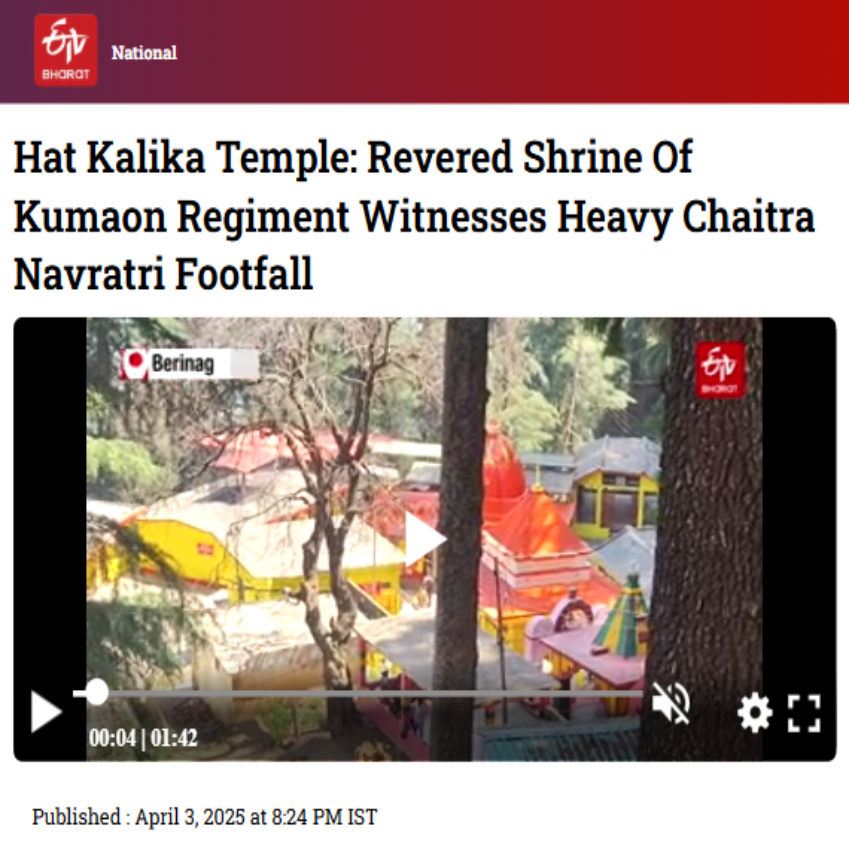
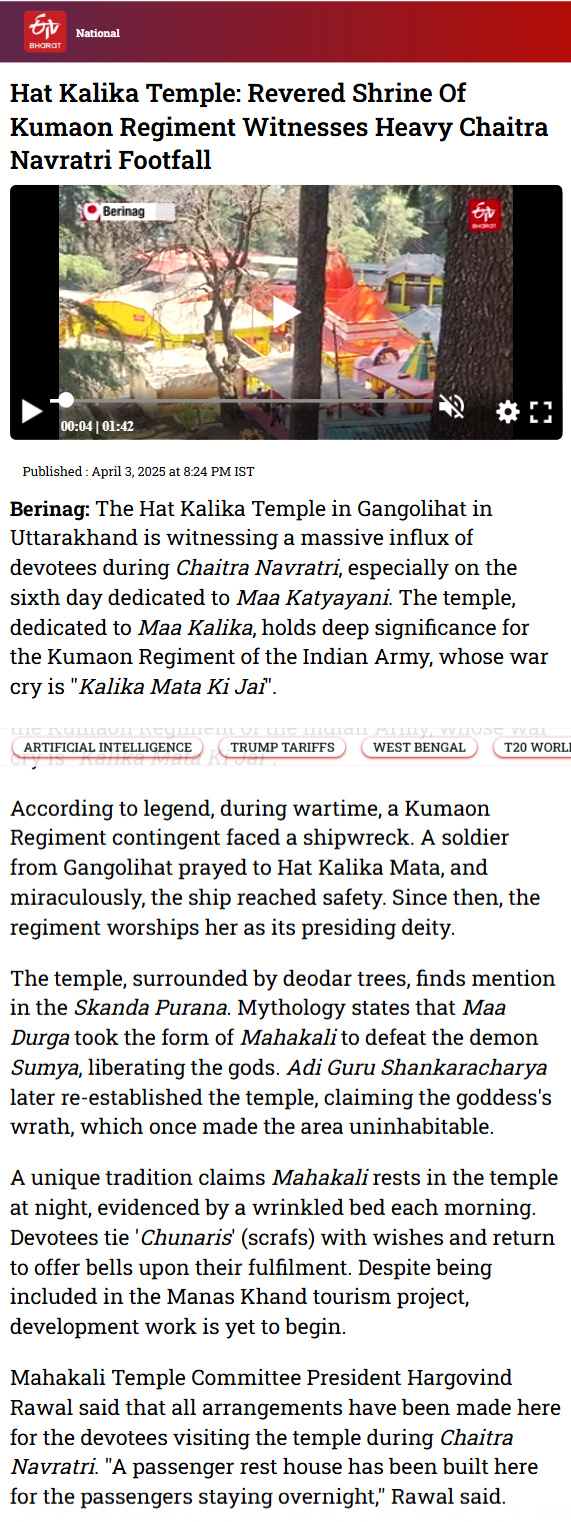
61. Hat Kalika Temple: Revered Shrine Of Kumaon Regiment Witnesses Heavy Chaitra Navratri Footfall
- The Hat Kalika Temple in Gangolihat in Uttarakhand is witnessing a massive influx of devotees during Chaitra Navratri, especially on the sixth day dedicated to Maa Katyayani. The temple, dedicated to Maa Kalika, holds deep significance for the Kumaon Regiment of the Indian Army, whose war cry is "Kalika Mata Ki Jai".
- According to legend, during wartime, a Kumaon Regiment contingent faced a shipwreck. A soldier from Gangolihat prayed to Hat Kalika Mata, and miraculously, the ship reached safety. Since then, the regiment worships her as its presiding deity.
- The temple, surrounded by deodar trees, finds mention in the Skanda Purana. Mythology states that Maa Durga took the form of Mahakali to defeat the demon Sumya, liberating the gods. Adi Guru Shankaracharya later re-established the temple, claiming the goddess's wrath, which once made the area uninhabitable.
- A unique tradition claims Mahakali rests in the temple at night, evidenced by a wrinkled bed each morning. Devotees tie 'Chunaris' (scrafs) with wishes and return to offer bells upon their fulfilment. Despite being included in the Manas Khand tourism project, development work is yet to begin.
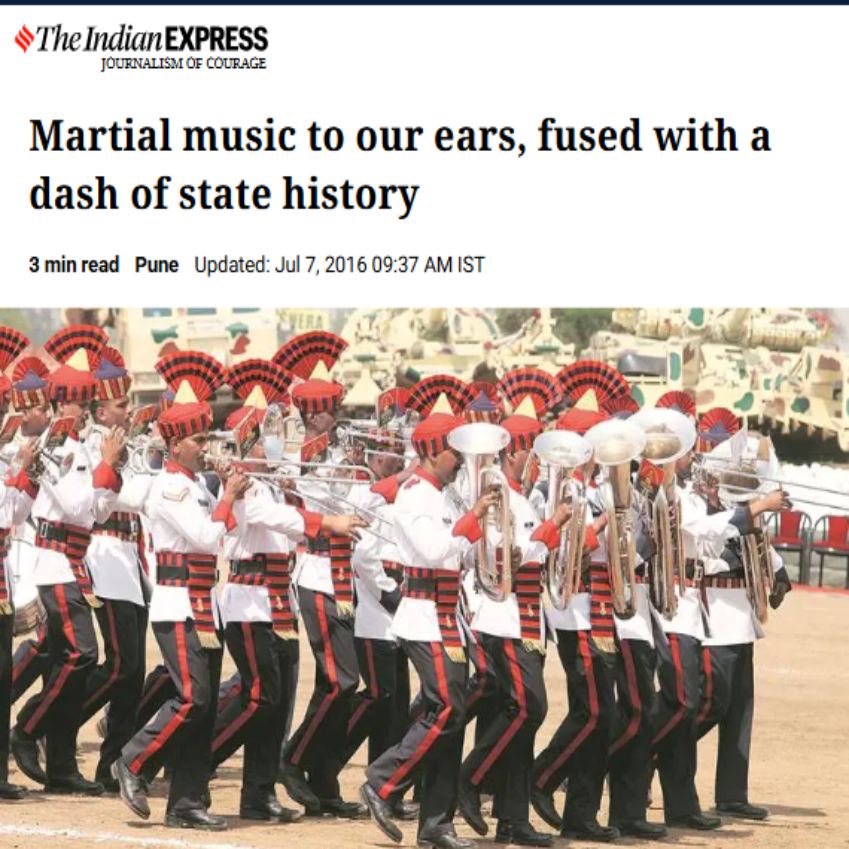
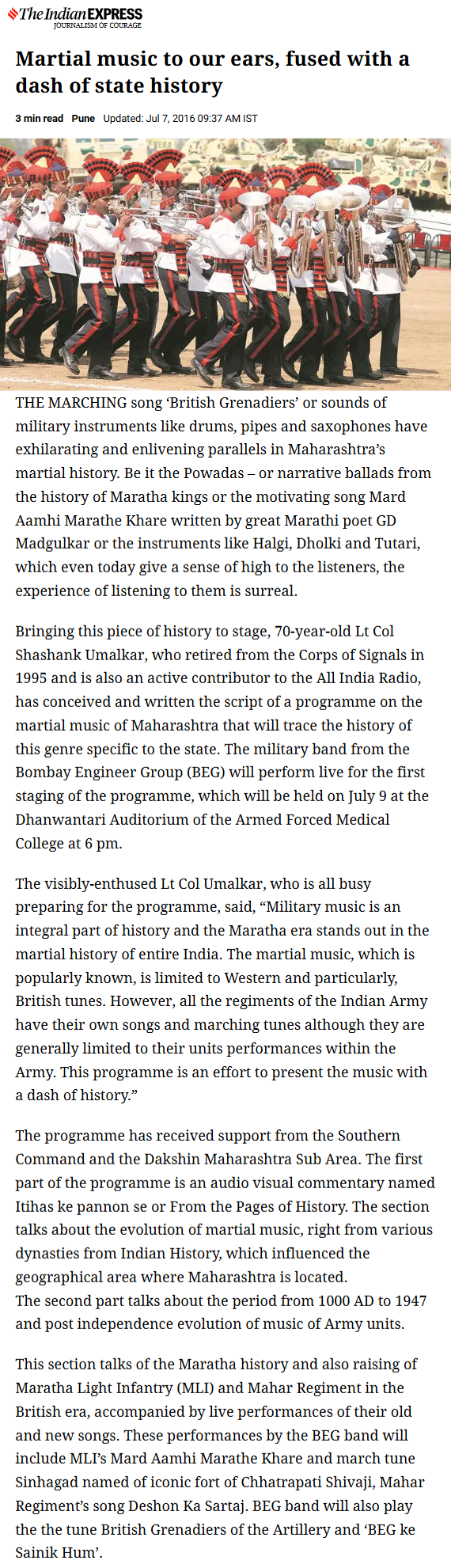
62. Martial music to our ears, fused with a dash of state history
- THE MARCHING song ‘British Grenadiers’ or sounds of military instruments like drums, pipes and saxophones have exhilarating and enlivening parallels in Maharashtra’s martial history.
- Be it the Powadas – or narrative ballads from the history of Maratha kings or the motivating song Mard Aamhi Marathe Khare written by great Marathi poet GD Madgulkar or the instruments like Halgi, Dholki and Tutari, which even today give a sense of high to the listeners, the experience of listening to them is surreal.
- Bringing this piece of history to stage, 70-year-old Lt Col Shashank Umalkar, who retired from the Corps of Signals in 1995 and is also an active contributor to the All India Radio, has conceived and written the script of a programme on the martial music of Maharashtra.
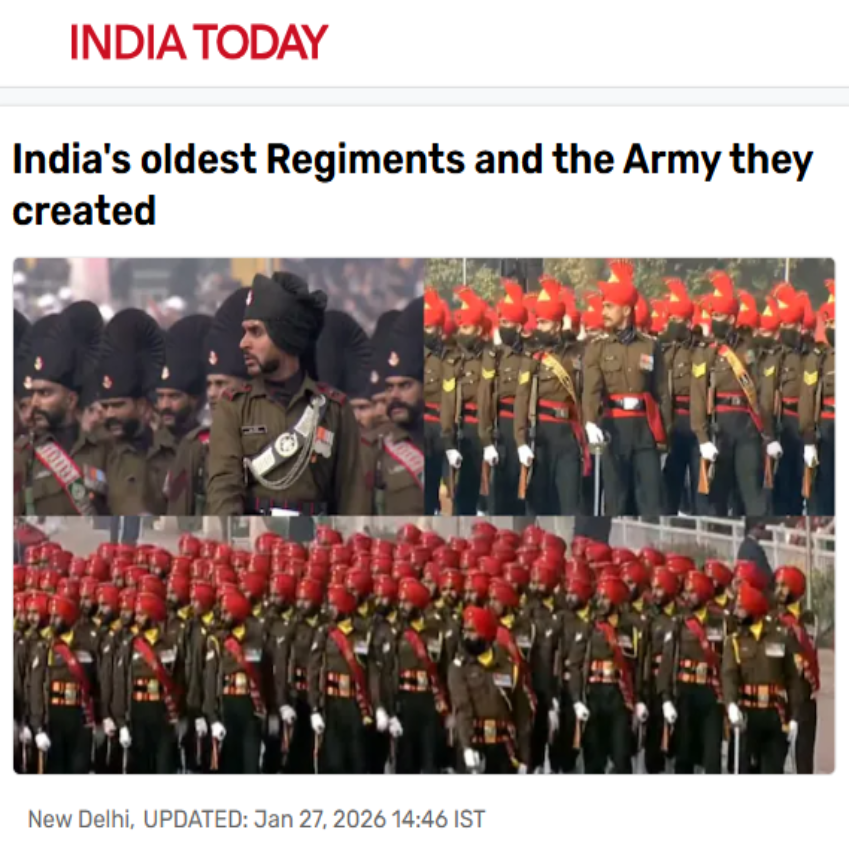
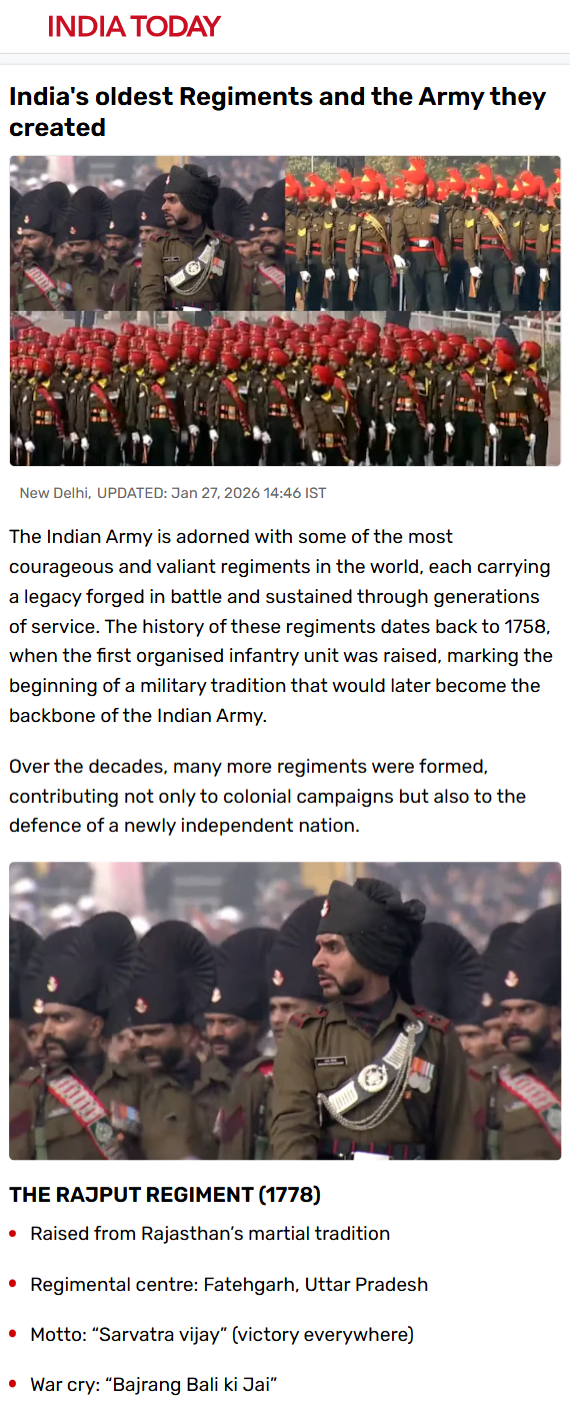
63. “Bol Bajrang Bali Ki Jai”: The Rajput Regiment’s Tradition of Victory Everywhere
- The Indian Army is adorned with some of the most courageous and valiant regiments in the world, each carrying a legacy forged in battle and sustained through generations of service.
- The Rajput Regiment is one of the oldest infantry regiments in the Indian Army, tracing its origins to 1778 with the raising of the 24th Bengal Native Infantry; it was reorganized in 1922 as the 7th Rajput Regiment and formalized in its current form post-1947 independence.
- It uses an instrumental quick march (commonly referred to as the "Rajput Regiment Theme" or standard army tunes), rooted in British parade traditions at approximately 120 steps per minute.
- This march, featuring bugle calls, energizes troops during Republic Day parades, passing-out ceremonies at Fatehgarh, and formal events.
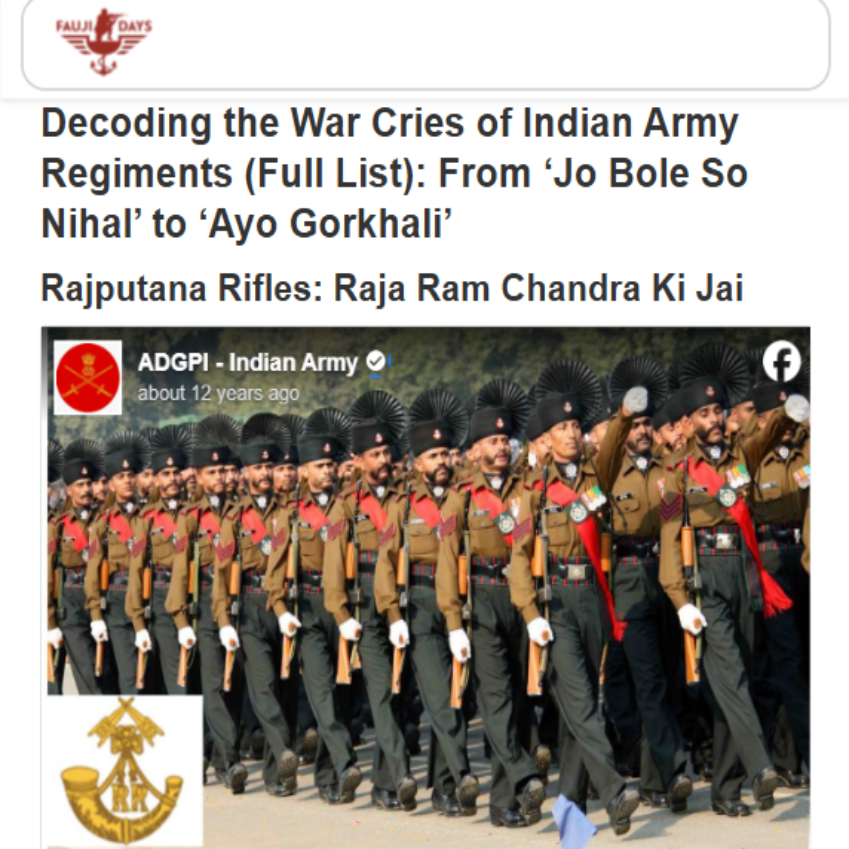
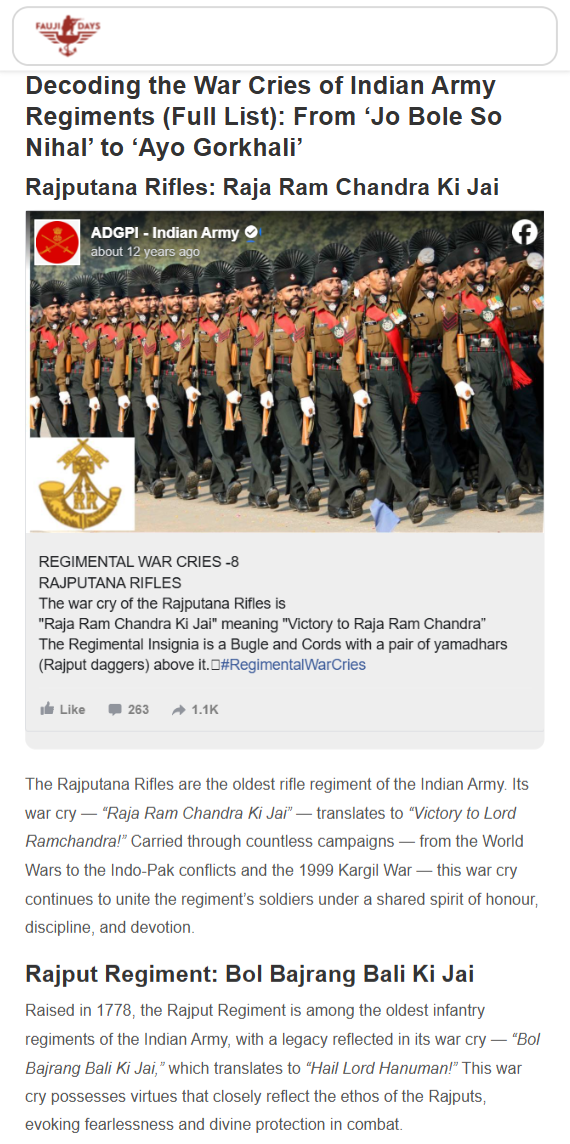
64. “Raja Ramachandra Ki Jai”: The Rajputana Rifles’ Cry of Faith and Ferocity
- The Rajputana Rifles are the oldest rifle regiment of the Indian Army. Its war cry — “Raja Ram Chandra Ki Jai” — translates to “Victory to Lord Ramchandra!” Carried through countless campaigns — from the World Wars to the Indo-Pak conflicts.
- The 1999 Kargil War — this war cry continues to unite the regiment’s soldiers under a shared spirit of honour, discipline, and devotion.
- Raised in 1778, the Rajput Regiment is among the oldest infantry regiments of the Indian Army, with a legacy reflected in its war cry — “Bol Bajrang Bali Ki Jai,” which translates to “Hail Lord Hanuman!” This war cry possesses virtues that closely reflect the ethos of the Rajputs, evoking fearlessness and divine protection in combat.

65. Madras Regiment: The Oldest Regiment in The Indian Army
- Originating about 300 years ago in the year 1750, Madras Regiment is the oldest regiment in the Indian Army. This brave platoon of soldiers took part in operations with both the British Indian Army and post-independence Indian Army and brought laurels to the regiment and country.
- The Madras Regiment has a long and checkered history of 3 Centuries. It was initially formed by the British East India Company in 1660 as the Madras European Regiment to fight the French Army and defend the south -eastern coastal parts of the Indian sub-continent.
- Major Stringer Lawrence, in 1748, structured the several companies of soldiers created by the East India Company into two battalions. Each battalion has 800 men and were divided into 8 companies.
- Active since its inception, the regiment has long rallied behind the war cry “Veer Madrasi Adikol Adikol Adikol,” which translates to “Brave Madrasi, strike and kill, strike and kill!” Steeped in centuries of tradition, this cry remains a powerful emblem of its valour, heritage, and unbroken service through generations.
66. Army Chief groves on `BadluRam Ka Badan` with Assam Rifles
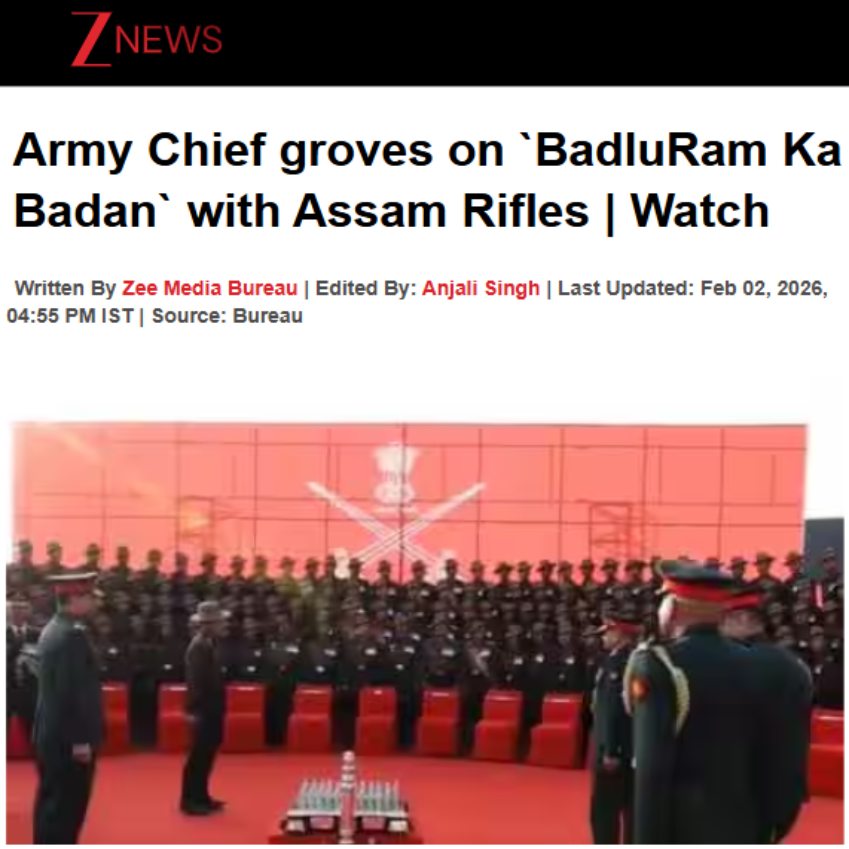
- General Upendra Dwivedi matched the Assam Regiment soldiers' energetic moves, sparking loud applause as they celebrated with high spirits. The troops danced to their traditional regimental folk song "Badlu Ram Ka Badan," a favorite for lively informal gatherings.
- The light moment was recorded when General Dwivedi felicitated Indian Army marching contingents, mounted units, and pipe bands for their excellent Republic Day 2026 Parade and Beating Retreat program. The event celebrated their sharp precision, iron discipline, and musical flair during the national festivities.
- “Badluram ka Badan” known for its lively beat and rustic lyrics, "Badlu Ram Ka Badan" fosters soldierly camaraderie and joy, particularly in eastern and northeastern regiments. It thrives at unit gatherings and victory bashes, its upbeat vibe symbolising rank-free bonding.
- "Badluram Ka Badan" is the iconic regimental song of the Indian Army's Assam Regiment, born from World War II grit. Composed in 1946 by Major M.T Proktor, it honours Rifleman Badluram, killed fighting Japanese forces at Kohima in 1944.
67. India-Japan collaboration for economic development of NE
- Prime Minister and Japanese Prime Minister Fumio Kishida welcomed the launch of the India-Japan Initiative for Sustainable Development of the North Eastern region.
- The India-Japan initiatives for sustainable development include “Initiative for Strengthening the Bamboo Value Chain in the North East” and cooperation in health care, forest resources management, connectivity and tourism in different states of the North East.
- Both the leaders appreciated the importance of India-Japan’s continued collaboration through the Act East Forum (AEF) for the sustainable economic development of North Eastern and for enhancing the region’s connectivity with Southeast Asia.
Click here to find 816 similar incidents of Focus on States -> North East India
68. Arunachal Pradesh to boost bamboo cultivation; ties up with CREDUCE – HPCL
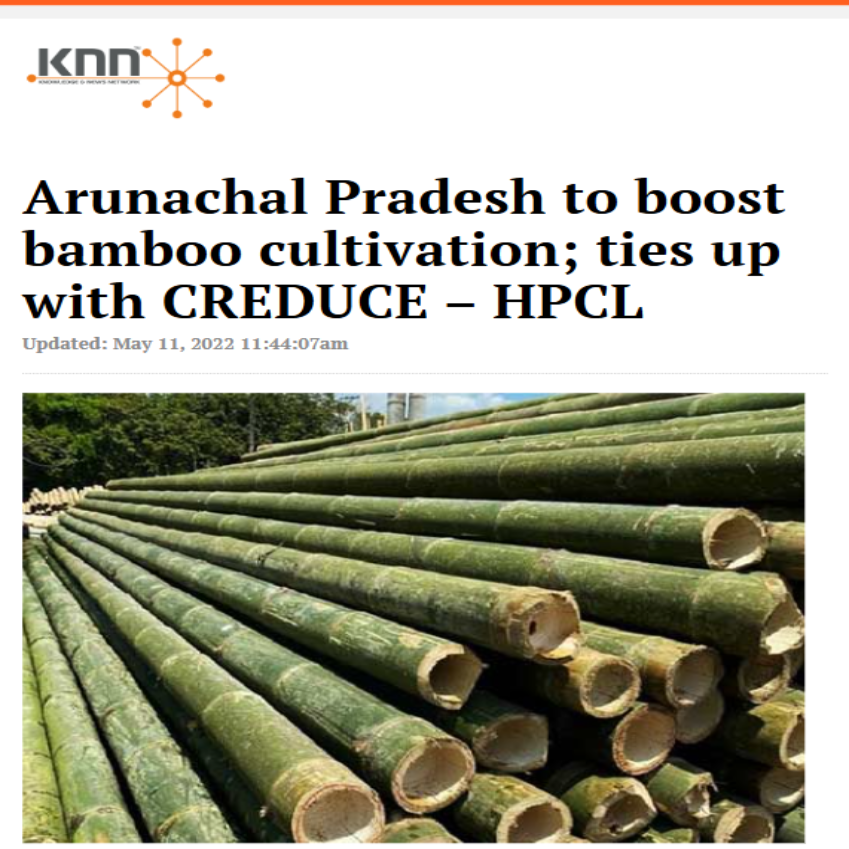
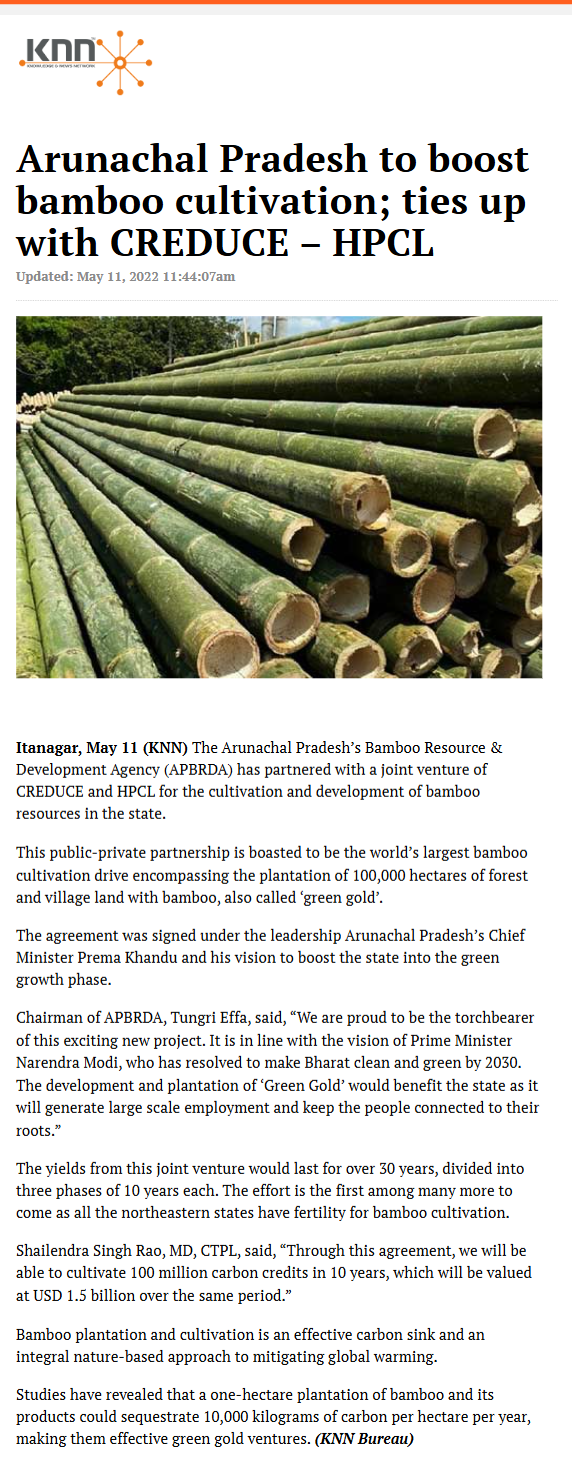
- The Arunachal Pradesh’s Bamboo Resource & Development Agency (APBRDA) has partnered with a joint venture of CREDUCE and HPCL for the cultivation and development of bamboo resources in the state.
- This public-private partnership is boasted to be the world’s largest bamboo cultivation drive encompassing the plantation of 100,000 hectares of forest and village land with bamboo, also called ‘green gold’.
- The agreement was signed under the leadership Arunachal Pradesh’s Chief Minister to boost the state into the green growth phase.
- The yields from this joint venture would last for over 30 years, divided into three phases of 10 years each. The effort is the first among many more to come as all the northeastern states have fertility for bamboo cultivation.
Click here to find 816 similar incidents of Focus on States -> North East India

69. First Bamboo Crushing Unit inaugurated
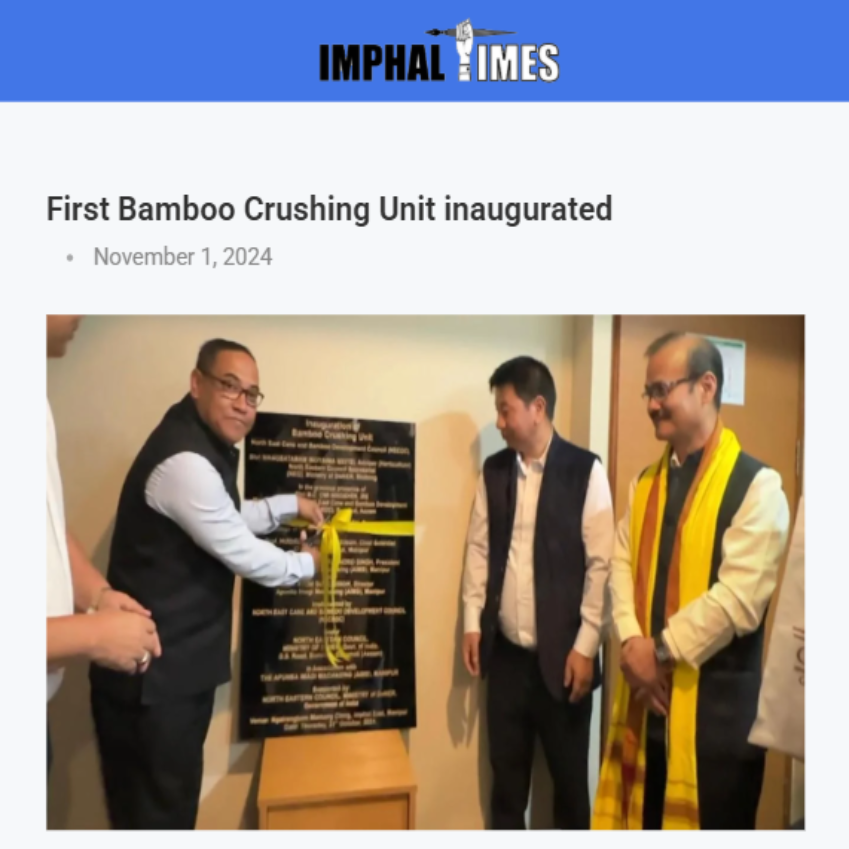
- North East Cane and Bamboo Development Council under the North Eastern Council, Ministry of DoNER, Government of India associated with The Apunba Imagi Machasing (AIMS), inaugurated the first Bamboo Crushing Unit at Ngairengbam Mamang Ching, Imphal East.
- Bamboo Powder as an Integrated Farming of Livestock, Crop, and Fish in North East India is the first time in India and the project uses bamboo powder as a sustainable feed supplement for livestock, natural fertiliser for crops, and ammonia absorbent for fish ponds.
- The agricultural productivity will improve and reduce cost while promoting healthy farming in the region. The inauguration of the Bamboo Crushing Unit marks an important landmark in the path of agricultural innovation for Northeast India.
Click here to find 816 similar incidents of Focus on States -> North East India


70. From 461 to 45k hectares: Tripura’s bold bamboo expansion drive for industrial use
- The Tripura government has taken up a five-year plan to expand the bamboo production area exclusively for industrial use by nearly 100 times to 45,000 hectares of land.
- Around 70 per cent of the country’s requirement of agarbatti bamboo sticks is supplied by Tripura and the government is keen to bring more such industries in the state. The northeastern state, which has an abundant bamboo resource, produces 21 species of bamboo.
- As of now, Tripura produces bamboo on 461.32 hectares exclusively for industrial use and we plan to increase that to 45,000 hectares in five years from 2025-26. Nine-thousand hectares will be added in each of these five years.
- The TBM has raised high-density bamboo plantation in 461.32 hectares from 2018-19 to 2024-25 exclusively for commercial purposes. Tripura has 4.20 lakh hectares of bamboo-bearing areas, according to the Forest Survey of India 2023 report.
Click here to find 816 similar incidents of Focus on States -> North East India