 Loading...
| Jan 01, 1970 | Daily Report |
| RISING BHARAT | News Count (101805) | |
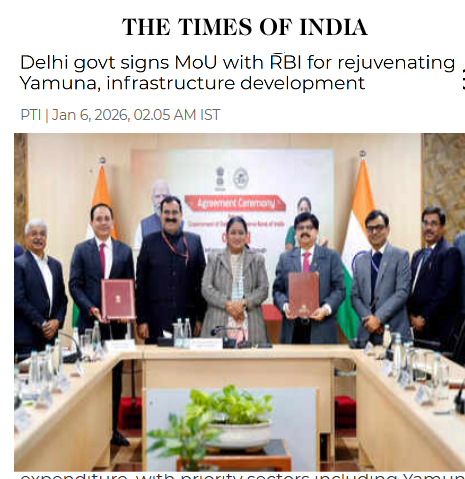
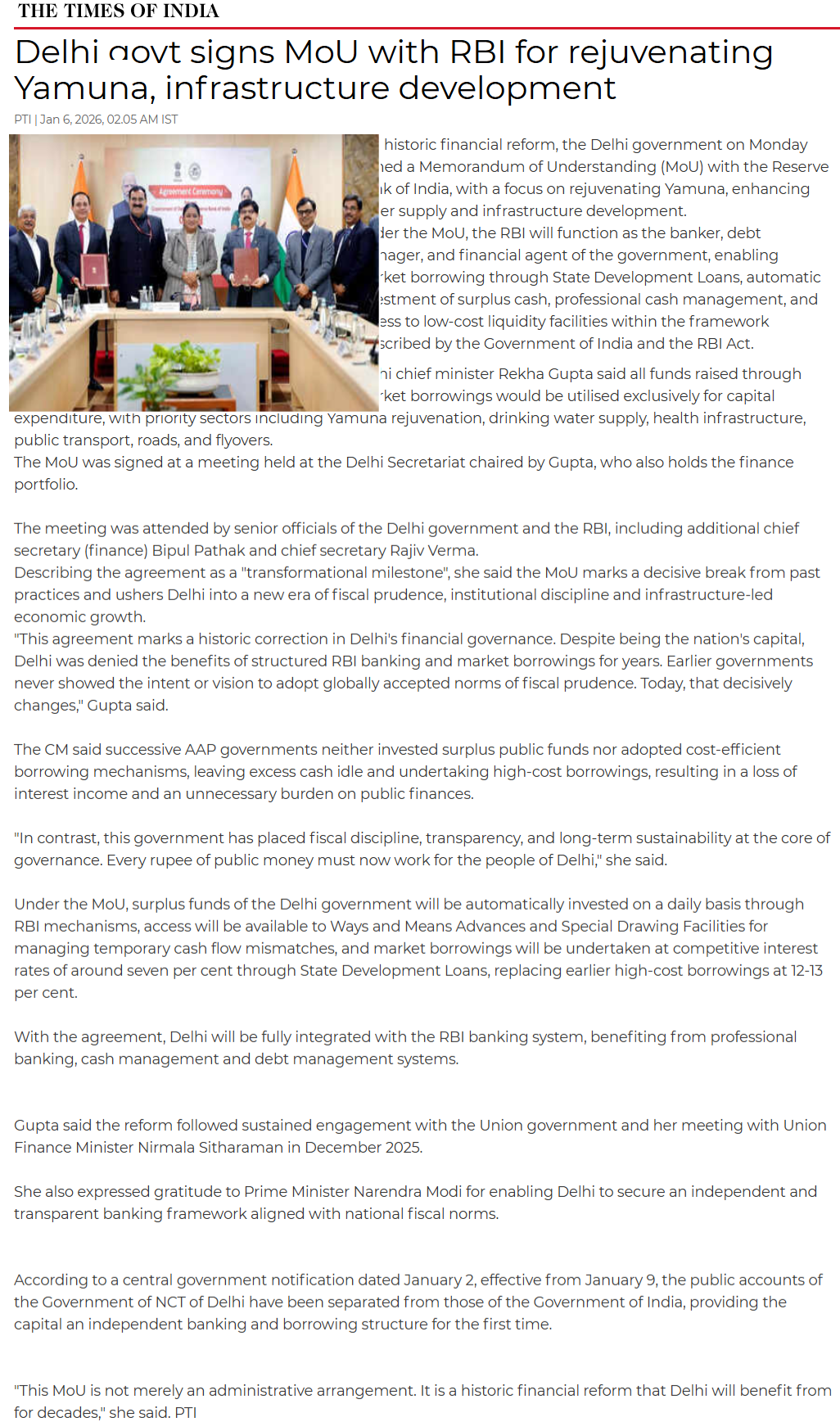
361. Delhi govt signs MoU with RBI for rejuvenating Yamuna, infrastructure development
- On 5 January 2026, Delhi CM signed a historic MoU with RBI to transform the city’s finances, focusing on Yamuna rejuvenation, water supply, and infrastructure development including health, roads, public transport, and flyovers.
- The agreement was signed at the Delhi Secretariat, following a Government of India notification on 2 January 2026 (effective 9 January 2026) that separated Delhi’s public accounts from the Centre’s, giving the capital an independent banking and borrowing framework.
- The RBI will act as banker, debt manager, and financial agent, enabling market borrowings (7% interest), automatic investment of surplus funds, and professional cash and debt management, ensuring fiscal discipline, transparency, and capital expenditure for long-term infrastructure-led growth.
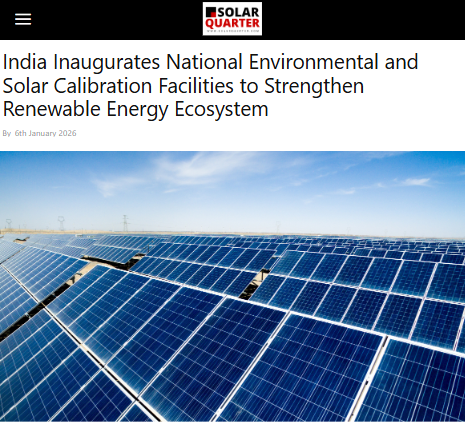
362. India Inaugurates National Environmental and Solar Calibration Facilities to Strengthen Renewable Energy Ecosystem
- On January 6, 2026, It was reported That, at CSIR–NPL in New Delhi district, Delhi, India inaugurated the National Environmental Standard Laboratory and the National Primary Standard Facility for Solar Cell Calibration to boost environmental and renewable energy capabilities.
- CSIR–NPL developed the facilities, with the solar calibration centre built in collaboration with PTB Germany, enabling India-specific calibration, high-precision testing, and reduced dependence on foreign laboratories.
- The solar facility achieves 0.35% uncertainty using L-DSR technology; the environmental lab supports NCAP compliance, boosts investor confidence, and strengthens India’s clean energy ecosystem as a leading wind–solar producer.
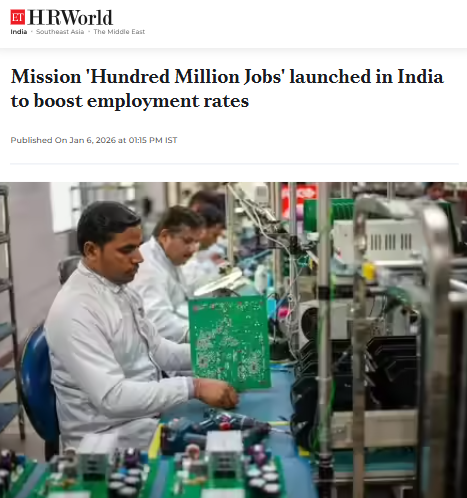
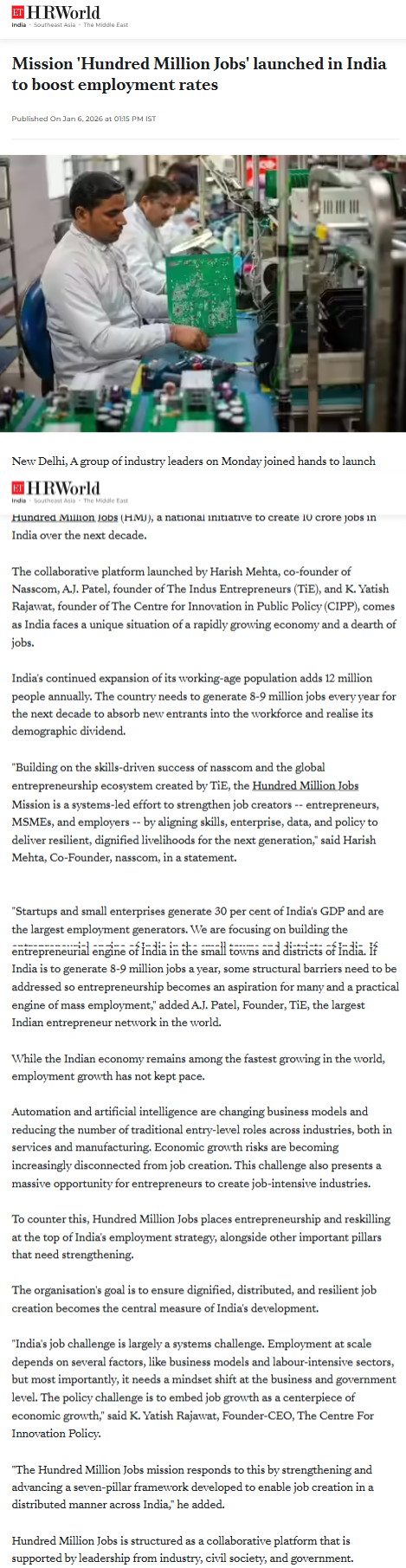
363. Mission 'Hundred Million Jobs' launched in India to boost employment rates
- On On January 5, 2026 in New Delhi, the Hundred Million Jobs (HMJ) national initiative was launched to create 10 crore jobs in India over the next ten years amid rising workforce growth.
- The platform was launched by Harish Mehta (Nasscom), A.J. Patel (TiE), and K. Yatish Rajawat (CIPP), focusing on entrepreneurship, MSMEs, reskilling, and policy alignment to enable large-scale job creation.
- India adds 12 million workers annually and needs 8–9 million jobs yearly; HMJ uses a seven-pillar framework, emphasising startups, small enterprises, and distributed, dignified employment as a core measure of national development.


364. India’s Pharma Exports Touch $30.47 Billion in FY25, Up 9.4%: PHARMEXCIL
- On 5 January 2026, PHARMEXCIL informed Commerce Secretary that India’s pharmaceutical exports reached $30.47 billion in FY 2024–25, growing 9.4 % year-on-year, with India remaining the third-largest pharma producer globally.
- The figures cover FY 2024–25, and India supplies medicines to over 150 countries. The domestic pharma market, now $60 billion, is projected to reach $130 billion by 2030.
- PHARMEXCIL held meetings with officials to align policies, boost industry–academia collaboration, and support initiatives like Chintan Shivir and iPHEX 2026, focusing on innovation, capacity building, market access, and global competitiveness, reinforcing India’s position as the “pharmacy of the world.”
Click here to find 859 similar incidents of Bharat Economic Growth -> Increasing Exports
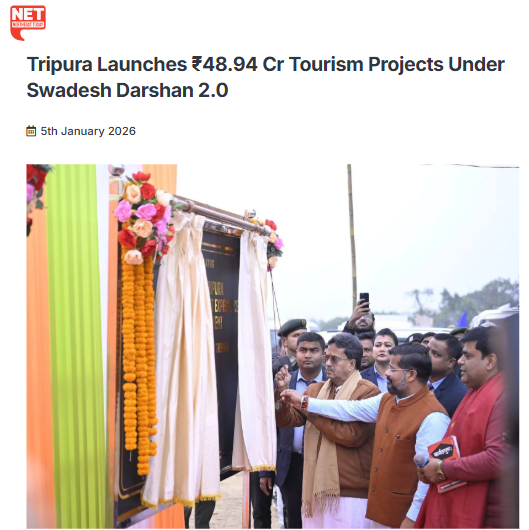
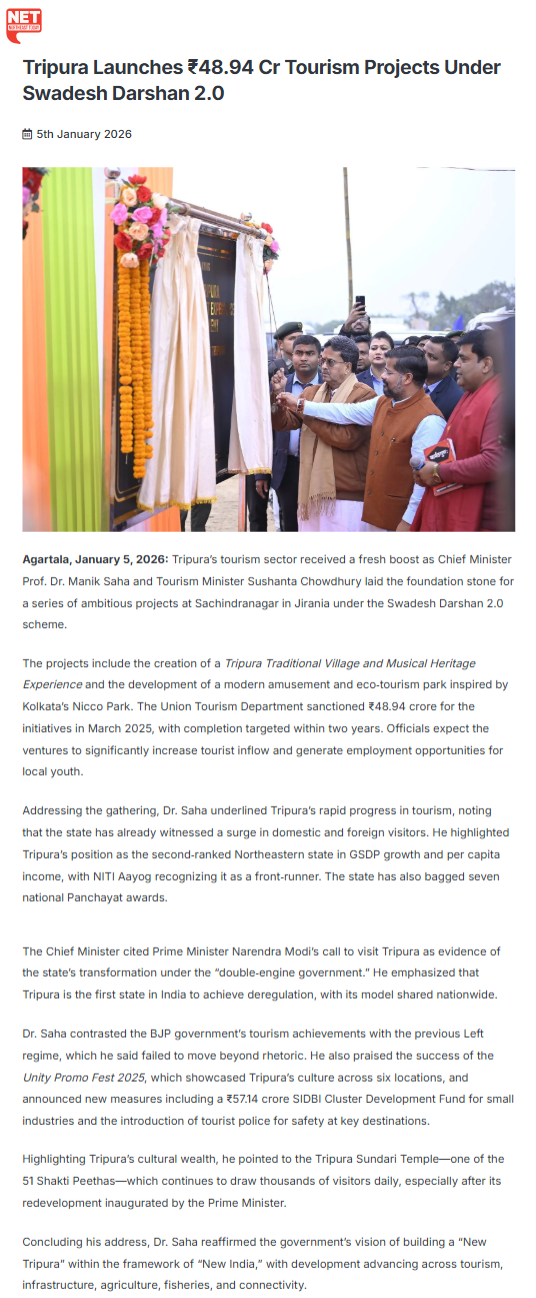
365. Tripura Launches ₹48.94 Cr Tourism Projects Under Swadesh Darshan 2.0
- On 5th January 2026, Tripura Chief Minister and Tourism Ministerlaid the foundation stone for ₹48.94 crore tourism projects at Sachindranagar, Jirania under the Swadesh Darshan 2.0 scheme, including a Tripura Traditional Village, Musical Heritage Experience, and a modern amusement and eco‑tourism park inspired by Kolkata’s Nicco Park.
- Sanctioned by the Union Tourism Department in March 2025, the projects are planned for completion within two years. They aim to enhance Tripura’s tourism infrastructure, attract more domestic and foreign visitors, and leverage sites like the Tripura Sundari Temple, a prominent Shakti Peetha.
- These initiatives are designed to boost tourist inflow, create employment for local youth, and promote Tripura’s cultural and ecological heritage. Additional measures include a ₹57.14 crore SIDBI Cluster Development Fund for small industries and the introduction of tourist police to improve safety at key destinations, contributing to the state’s vision of “New Tripura” within “New India”.
Click here to find 241 similar incidents of Make in India / Atmanirbhar -> Tourism
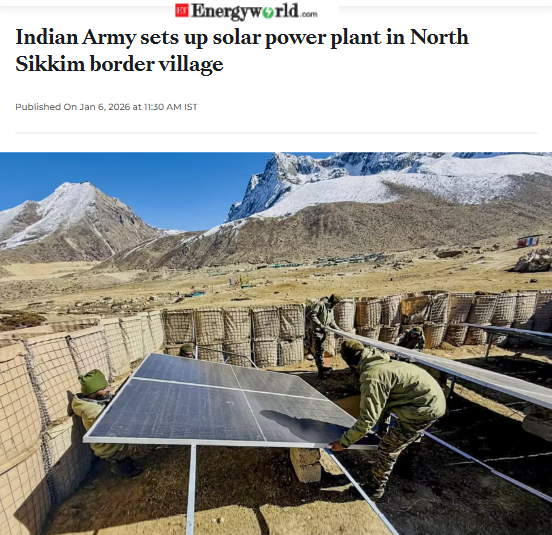
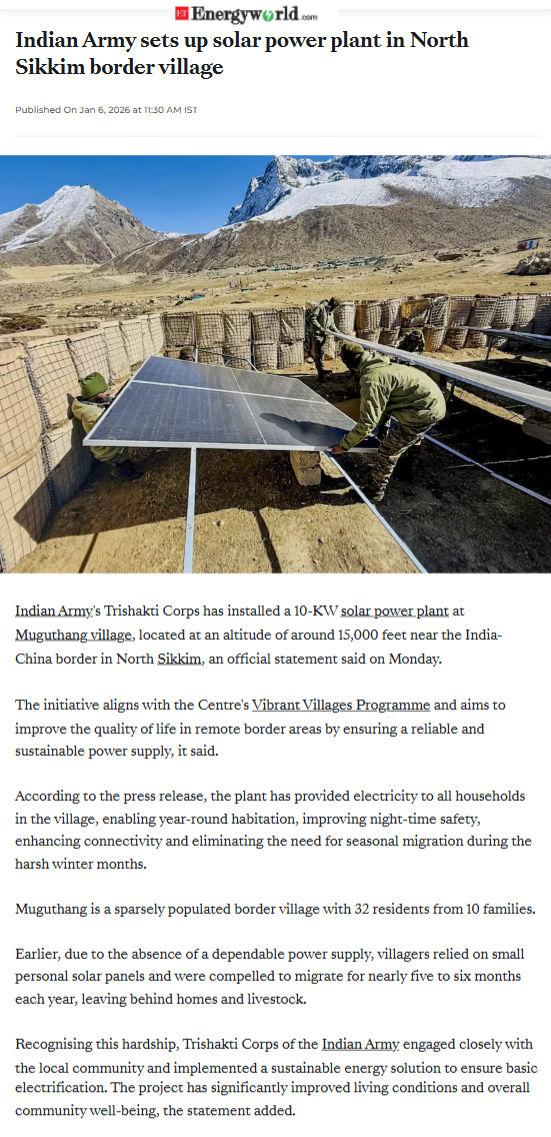
366. Indian Army sets up solar power plant in North Sikkim border village
- On January 6,2026,the Indian Army’s Trishakti Corps has installed a 10‑kilowatt solar power plant in Muguthang village, a remote settlement near the India‑China border in North Sikkim, bringing a reliable source of electricity to all homes in the area.
- Commissioned in January 2026, the plant now operates at an altitude of around 15,000 feet, providing year‑round electricity to the village’s 32 residents from 10 families, which was previously without dependable power and forced to endure seasonal migration during harsh winters.
- Implemented under the Centre’s Vibrant Villages Programme, the project was developed in consultation with the local community to ensure basic electrification, enhance night‑time safety, improve connectivity, and significantly improve living conditions, enabling residents to stay in their homes throughout the year.
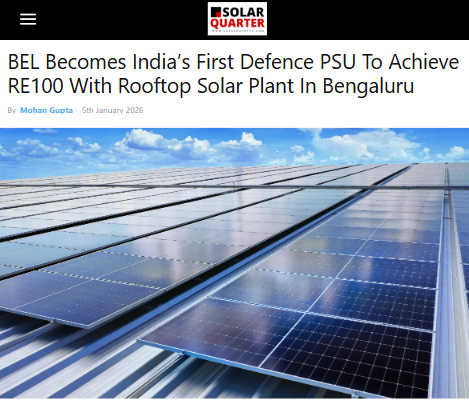
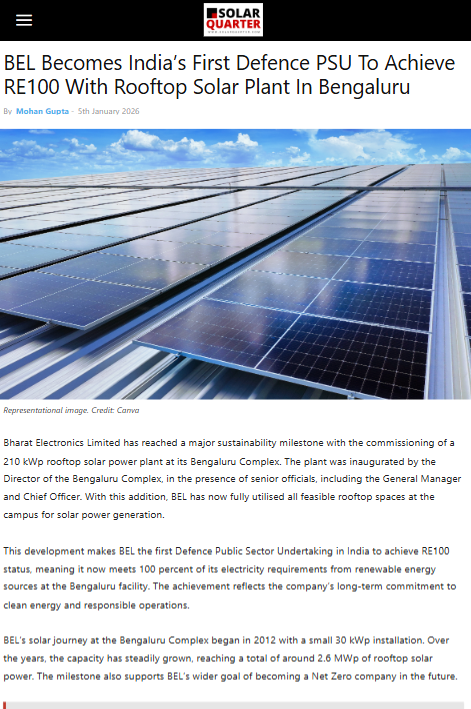
367. BEL Becomes India’s First Defence PSU To Achieve RE100 With Rooftop Solar Plant In Bengaluru
- On December 05, 2026 It was reported that, at the Bengaluru Complex, Bharat Electronics Limited commissioned a 210 kWp rooftop solar power plant, fully utilising all feasible rooftop spaces for solar generation.
- The plant was inaugurated by the Director of the Bengaluru Complex in the presence of senior officials, enabling BEL to achieve RE100 status by sourcing 100% of its electricity needs at the campus from renewable energy.
- BEL’s solar capacity at the campus has grown from 30 kWp in 2012 to about 2.6 MWp today; the milestone supports its long-term goal of becoming a Net Zero company and sets a benchmark for Defence PSUs.
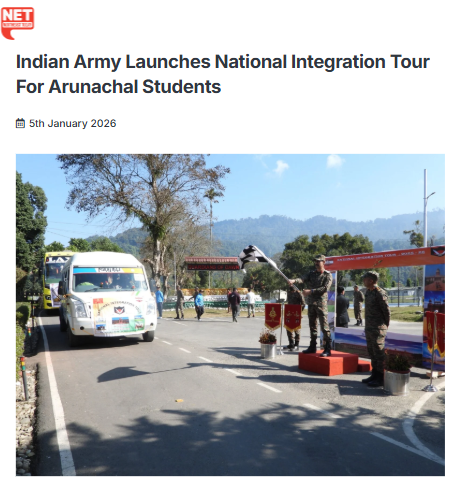
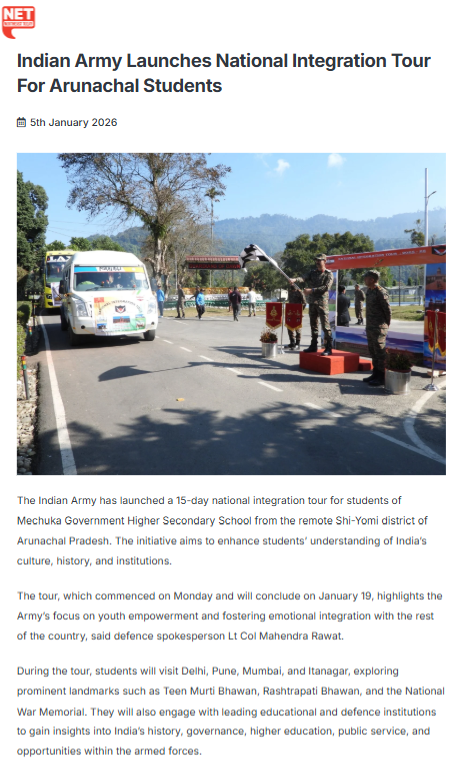
368. Indian Army Launches National Integration Tour For Arunachal Students
- On January 5, 2026 the Indian Army began a 15-day national integration tour for students of Mechuka Government Higher Secondary School from Shi-Yomi district, Arunachal Pradesh, concluding on January 19.
- The initiative, explained by defence spokesperson Mahendra Rawat, is being conducted through guided educational travel, institutional visits, and interactions aimed at youth empowerment and emotional integration with the nation.
- Students will visit Delhi, Pune, Mumbai, and Itanagar, including landmarks like Teen Murti Bhawan, Rashtrapati Bhawan, and the National War Memorial, while engaging with defence and educational institutions to learn about governance, history, and armed forces careers.
Click here to find 446 similar incidents of Government Initiatives for Citizens -> Citizen

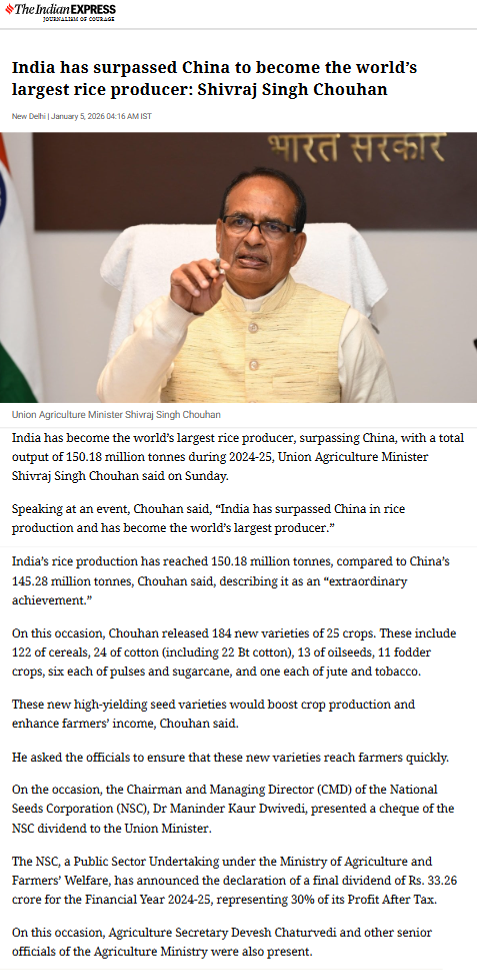
369. India has surpassed China to become the world’s largest rice producer: Shivraj Singh Chouhan
- On January 4, 2026 in India, Union Agriculture Minister announced that India became the world’s largest rice producer in 2024–25 with an output of 150.18 million tonnes, surpassing China.
- The achievement was driven by Indian farmers and agricultural institutions through improved farming practices and seed innovation, with the government supporting rapid dissemination of advanced, high-yield crop varieties to farmers nationwide.
- India produced 150.18 million tonnes of rice versus China’s 145.28 million; 184 new crop varieties were released, and National Seeds Corporation declared a ₹33.26 crore dividend for FY 2024–25, reflecting strong sector performance.
Click here to find 859 similar incidents of Bharat Economic Growth -> Increasing Exports
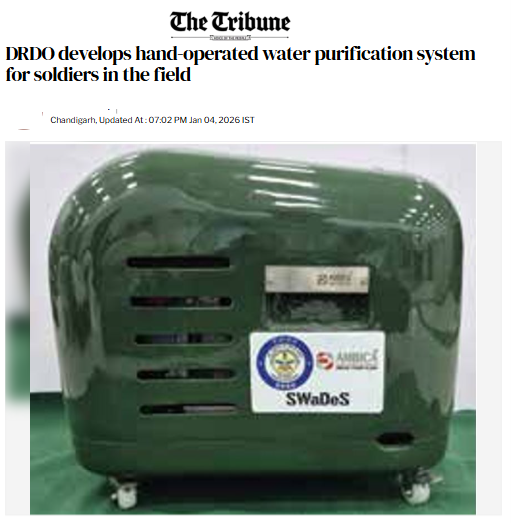
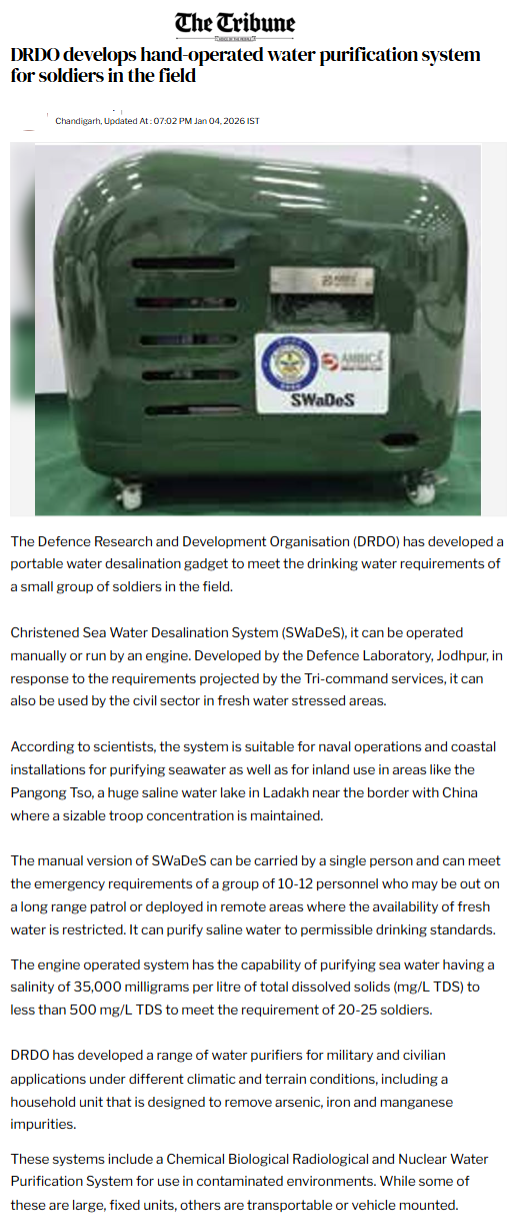
370. DRDO develops hand-operated water purification system for soldiers in the field
- On January 4,2026,DRDO has developed the Sea Water Desalination System (SWaDeS) through its Defence Laboratory, Jodhpur, to provide portable drinking water solutions for soldiers by converting saline and seawater into potable water, based on the operational requirements of the tri-services.
- Developed in January 2026, the system is designed for deployment in coastal, naval and inland saline regions such as Pangong Tso in Ladakh, where availability of fresh water is limited for troops stationed in remote and high-altitude areas.
- The manual version supports 10–12 soldiers in emergencies, while the engine-operated version purifies seawater with 35,000 mg/L TDS to below 500 mg/L TDS, supplying safe drinking water to 20–25 personnel; the technology can also be used in civilian water-stressed areas.