 Loading...
| Jan 01, 1970 | Daily Report |
| RISING BHARAT | News Count (101875) | |

281. NHAI launches pilot project for real-time stray cattle safety alert on National Highways
- On January 14, 2026, NHAI launched a pilot project on the Jaipur–Agra and Jaipur–Rewari National Highway corridors to provide real-time stray cattle safety alerts and reduce accidents caused by sudden cattle movement.
- NHAI, in partnership with Reliance Jio under a recently signed MoU, is delivering location-based alerts through upgraded telecom infrastructure, issuing Flash SMS and voice warnings about 10 km before cattle-prone highway stretches.
- Alerts are based on mapped high-risk zones using accident data and field inputs, sent in Hindi with safeguards against alert fatigue, and may be expanded nationwide after evaluating the pilot’s effectiveness to enhance highway safety and user experience.
Click here to find 423 similar incidents of Make in India / Atmanirbhar -> Roads and Highways
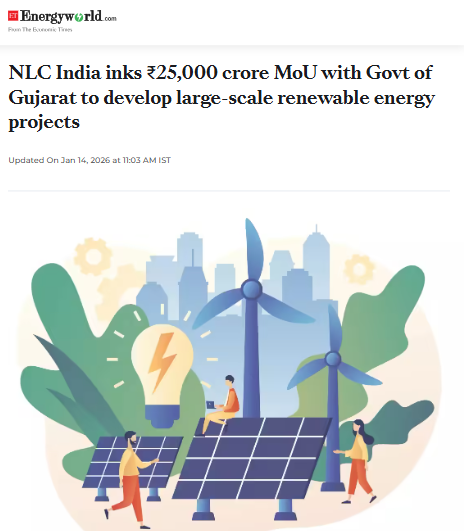
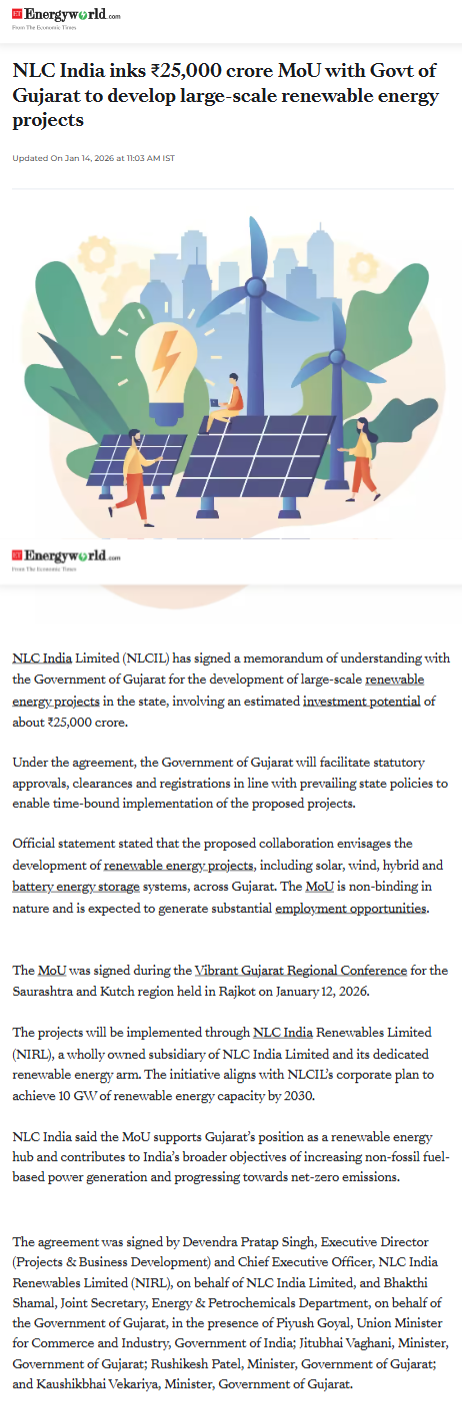
282. NLC India inks ₹25,000 crore MoU with Govt of Gujarat to develop large-scale renewable energy projects
- On January 12, 2026, in Rajkot, NLC India Limited and the Government of Gujarat signed an MoU to develop large-scale renewable energy projects, including solar, wind, hybrid and battery storage, across Gujarat.
- NLC India Limited, through its subsidiary NLC India Renewables Limited (NIRL), will implement the projects, while the Gujarat government will facilitate statutory approvals, clearances and registrations under existing state policies.
- The ₹25,000 crore non-binding MoU aims to generate employment, support Gujarat as a renewable energy hub, help NLCIL achieve 10 GW renewable capacity by 2030, and contribute to India’s non-fossil power and net-zero targets.
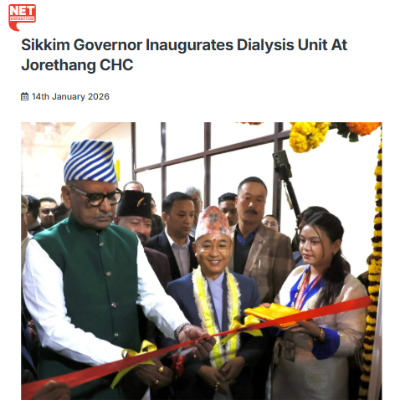
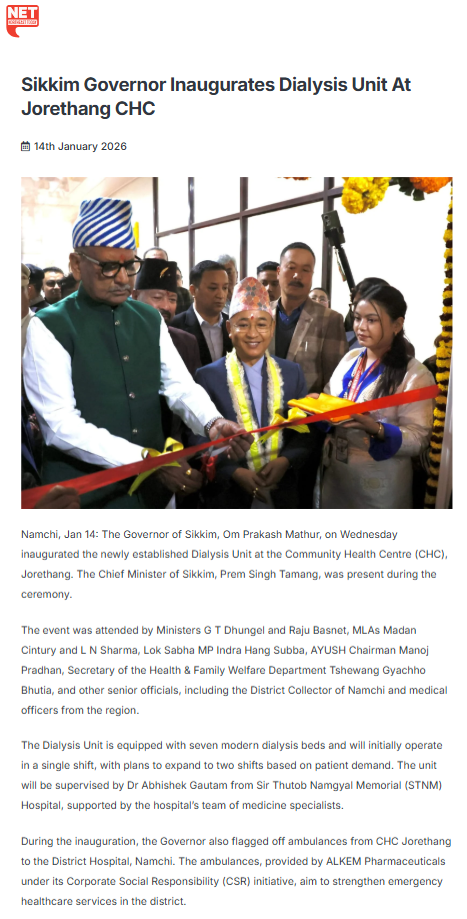
283. Sikkim Governor Inaugurates Dialysis Unit At Jorethang CHC
- On January 14, 2026, Sikkim Governor inaugurated a newly established Dialysis Unit at the Community Health Centre (CHC) in Jorethang, expanding critical healthcare infrastructure in the state.
- The inauguration took place at Jorethang CHC in Namchi district, Sikkim on January 14, 2026, bringing advanced medical services closer to rural and semi‑urban patients
- The unit was launched to provide essential kidney care and reduce the need for long travel for dialysis patients, improving healthcare access and outcomes for people with chronic kidney conditions in the region.
Click here to find 219 similar incidents of North East India -> Developments in North East India
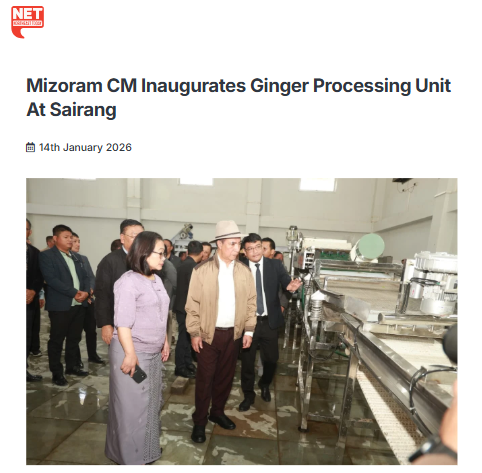
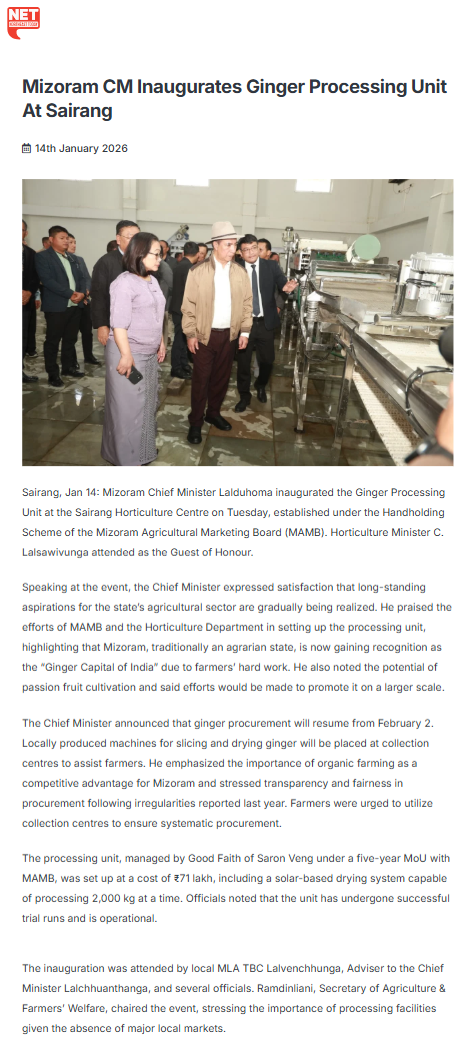
284. Mizoram CM Inaugurates Ginger Processing Unit At Sairang
- On January 14, 2026, Mizoram Chief Minister inaugurates the state-of-the-art ginger processing unit at Sairang, empowering local farmers with enhanced value addition and higher incomes.
- This facility, developed under the Mizoram Agricultural Marketing Board’s Handholding Scheme, is a major step towards modernizing ginger production and supply chains in Mizoram.
- The project supports the Bana Kaih procurement scheme, promising better market access and sustainable growth for Mizoram’s agricultural communities.
Click here to find 90 similar incidents of North East India -> Industrial Development
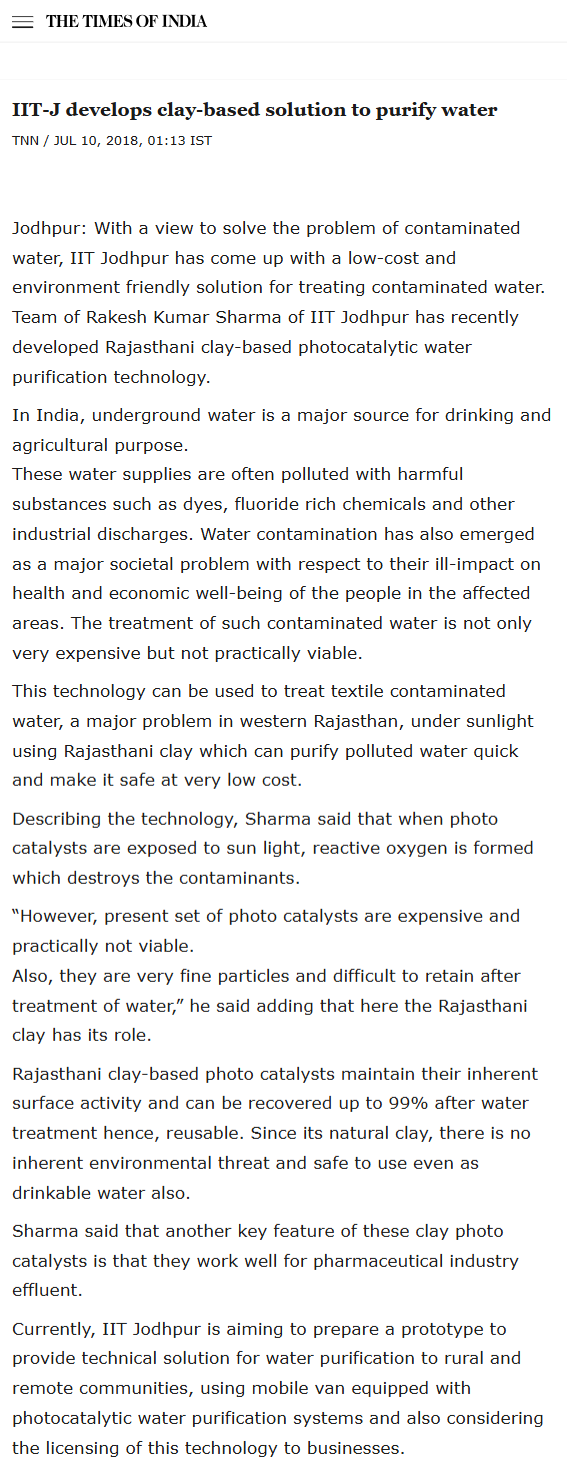
285. IIT Jodhpur Developed Low-Cost Clay Photocatalyst for Clean Water
- IIT Jodhpur has come up with a low-cost and environment friendly solution for treating contaminated water. Team of Rakesh Kumar Sharma of IIT Jodhpur has recently developed Rajasthani clay-based photocatalytic water purification technology.
- In India, underground water is a major source for drinking and agricultural purpose. These water supplies are often polluted with harmful substances such as dyes, fluoride rich chemicals and other industrial discharges.
- Describing the technology, when photo catalysts are exposed to sun light, reactive oxygen is formed which destroys the contaminants. The technology can be used to treat textile contaminated water, a major problem in western Rajasthan, under sunlight using Rajasthani clay which can purify polluted water quick and make it safe at very low cost.
- Currently, IIT Jodhpur is aiming to prepare a prototype to provide technical solution for water purification to rural and remote communities, using mobile van equipped with photocatalytic water purification systems and also considering the licensing of this technology to businesses.
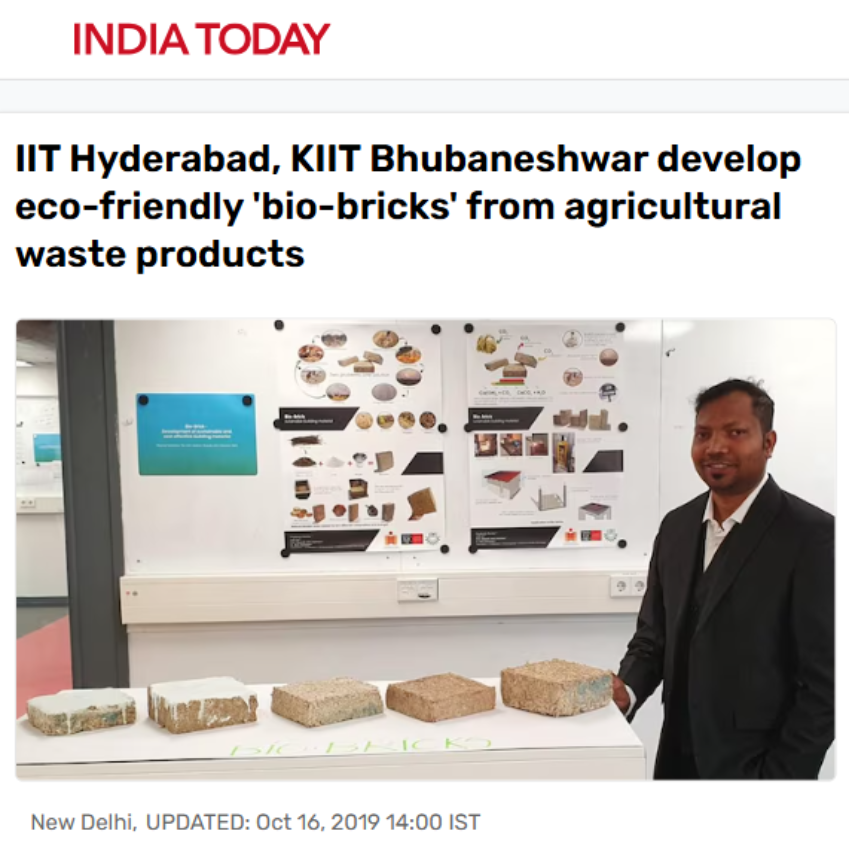

286. IIT Hyderabad, KIIT Bhubaneshwar develop eco-friendly 'bio-bricks' from agricultural waste products
- IIT Hyderabad and KIIT School of Architecture, Bhubaneshwar, have developed bio-bricks for construction from agricultural waste products. Their development serves the dual purposes of waste management and development of eco-friendly, sustainable building materials.
- "Clay bricks, for example, not only use up fertile topsoil, but their manufacturing process also emits significant amounts of carbon dioxide into the atmosphere. Repurposing of agricultural wastes is particularly important in India. More than 500 million tons of agricultural waste is produced in the country every year.
- Recognising this problem, the Building Materials and Technology Promotion Council (BMTPC) was set up in the 1990's by the Central Government to develop eco-friendly and energy-efficient building materials, providing impetus into repurposing agricultural and industrial waste items into construction materials.
- Not only is this release prevented in the making of bio-bricks, but the lime in each brick also absorbs 322.2 grams carbon dioxide from the air during curing, which makes it carbon-negative or environmentally sustainable.
287. IIT Kharagpur Created Biodegradable Packaging from Cucumber Peel Waste
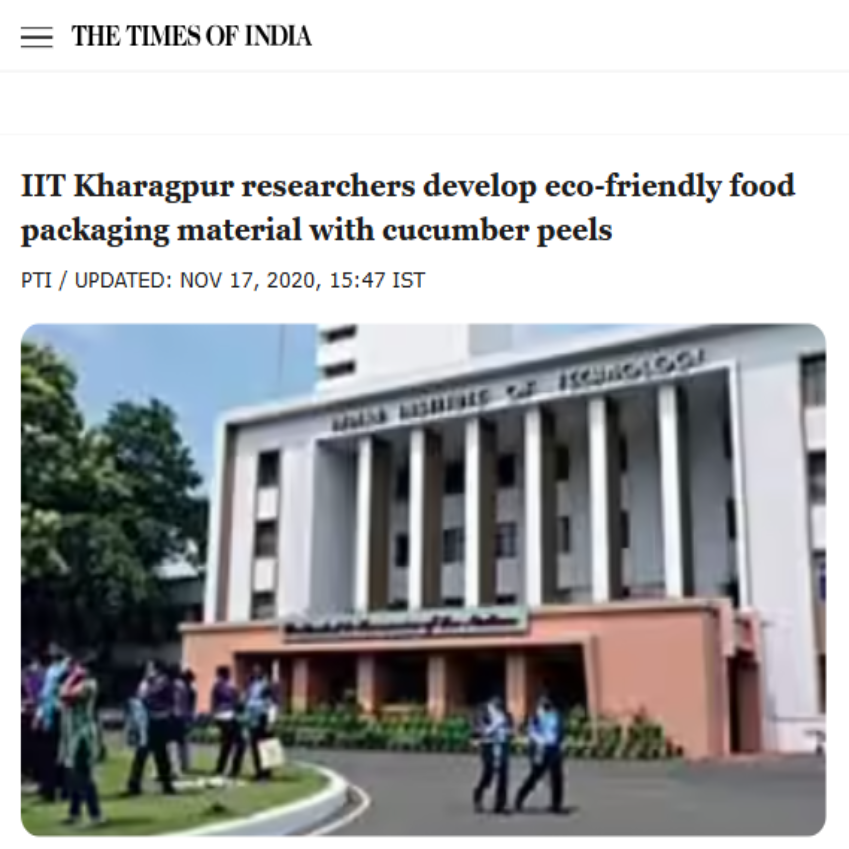
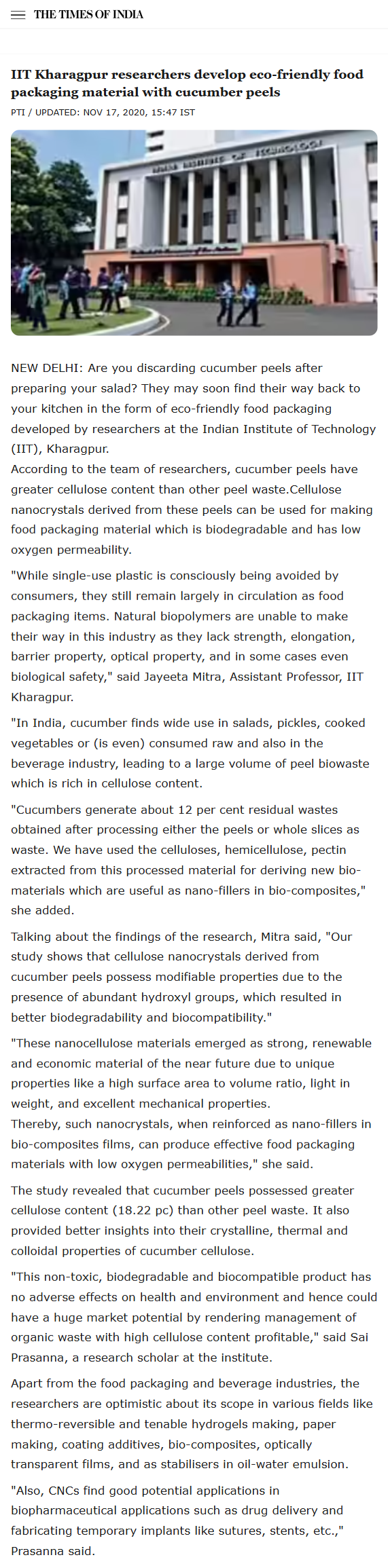
- Cucumber peels may soon be seen in a new avatar — eco-friendly packaging of food materials. Researchers from the Indian Institute of Technology (IIT), Kharagpur, developed cellulose nanocrystals from cucumber peels with high cellulose content that could be used instead of single-use plastic for food packaging material.
- The cellulose nanomaterial developed displayed strength, elongation, barrier and optical properties possessed by natural biopolymers. Cucumbers generate about 12 per cent residual wastes obtained after processing either the peels or whole slices as waste.
- The cellulose nanocrystals possess modifiable properties, which resulted in better biodegradability and biocompatibility. These nanocellulose materials are strong, renewable and economic material of the near future.
- Apart from the food packaging and beverage industries, researchers are optimistic about its scope in various fields such as paper-making, coating additives, food packaging materials, bio-composites, optically transparent films, etc
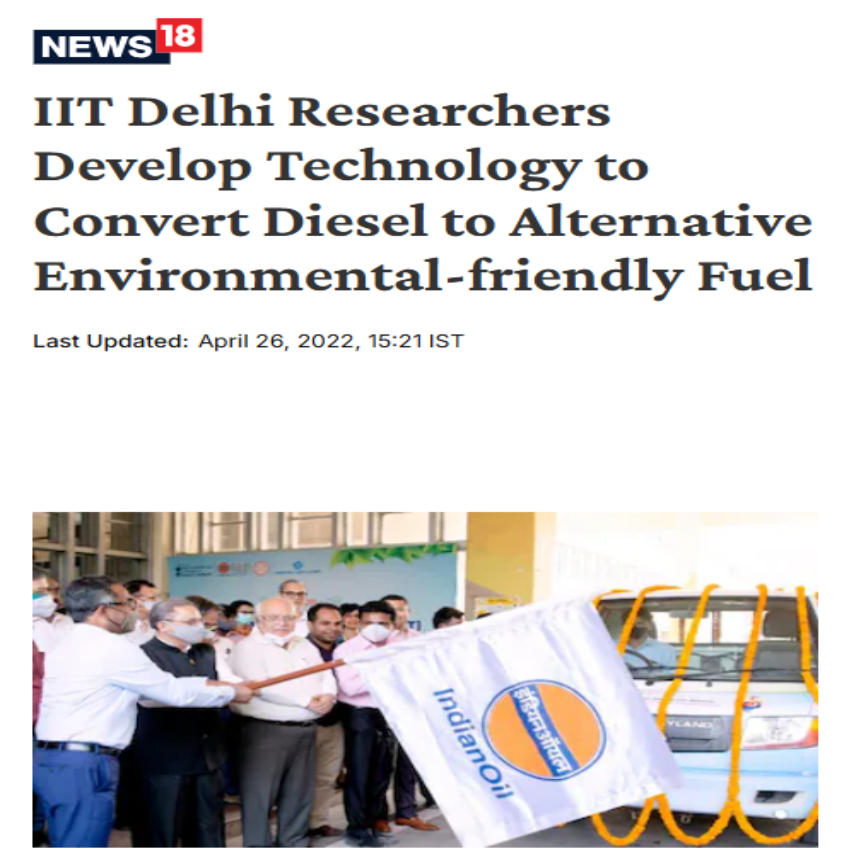

288. IIT Delhi Researchers Develop Technology to Convert Diesel to Alternative Environmental-friendly Fuel
- The Indian Institute of Technology (IIT) Delhi researchers have developed a technology, which enables a diesel-powered automotive vehicle to run in flex fuel mode — environment-friendly Dimethyl Ether (DME).
- Dimethyl Ether (DME) is one of the alternative fuels to compression ignition engines and vehicles. It can be produced from biomass, coal, industrial wastes, municipal solid wastes, black liquor (a by-product of pulp) through gasification and the Fisher-Tropsch synthesis process.
- The technology has been developed by the researchers of the institute’s Department of Energy Science and Engineering (DESE), Indian Oil Corporation (IOC R&D), and Ashok Leyland Ltd. They have converted a diesel-powered automotive vehicle into a flex fuel vehicle on a pilot basis.
- The technology produces less/negligible smoke, soot and PM emission. It has lower noise with smoother engine or vehicle operation.
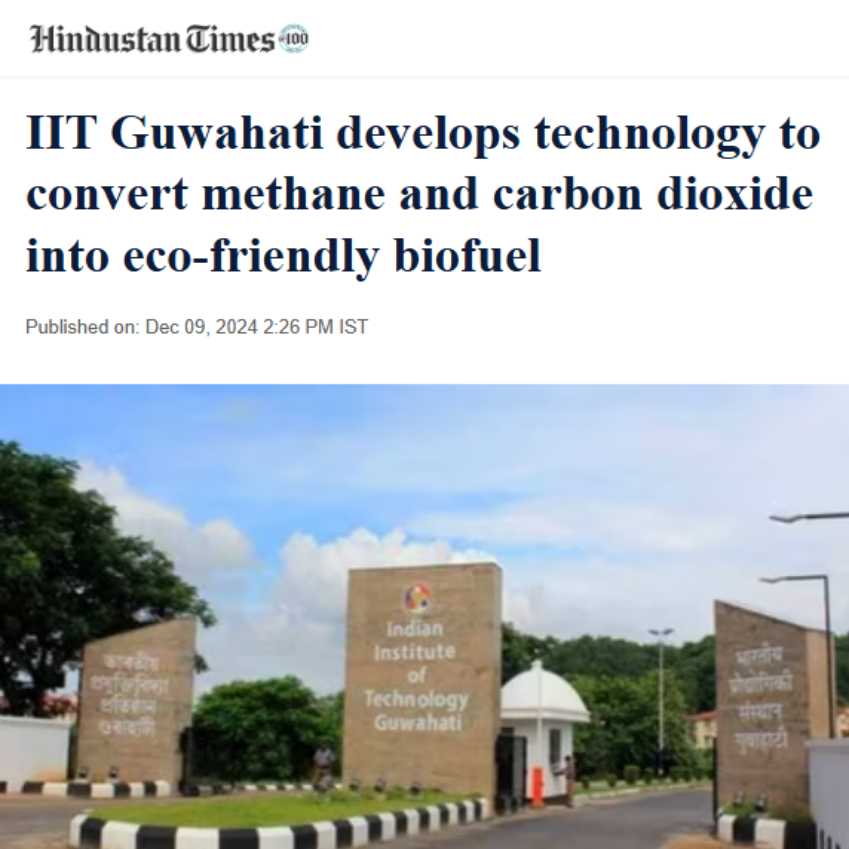
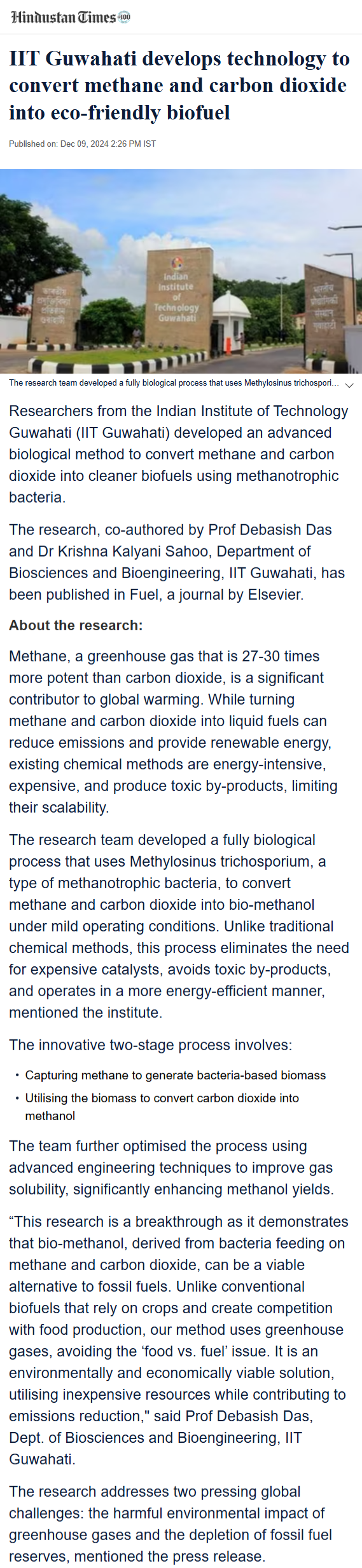
289. IIT Guwahati develops technology to convert methane and carbon dioxide into eco-friendly biofuel
- IIT Guwahati, developed an advanced biological method to convert methane and carbon dioxide into cleaner biofuels using methanotrophic bacteria. Methane, a greenhouse gas that is 27-30 times more potent than carbon dioxide, is a significant contributor to global warming.
- While turning methane and carbon dioxide into liquid fuels can reduce emissions and provide renewable energy, existing chemical methods are energy-intensive, expensive, and produce toxic by-products, limiting their scalability.
- The research team developed a fully biological process that uses Methylosinus trichosporium, a type of methanotrophic bacteria, to convert methane and carbon dioxide into bio-methanol under mild operating conditions.
- Unlike traditional chemical methods, this process eliminates the need for expensive catalysts, avoids toxic by-products, and operates in a more energy-efficient manner, mentioned the institute.
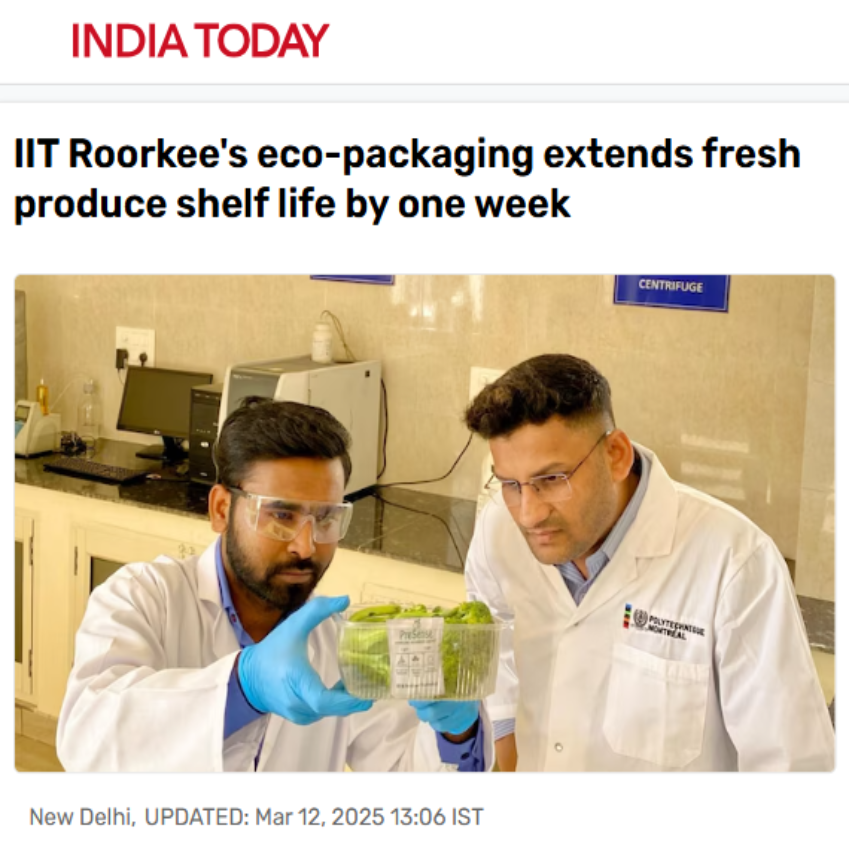
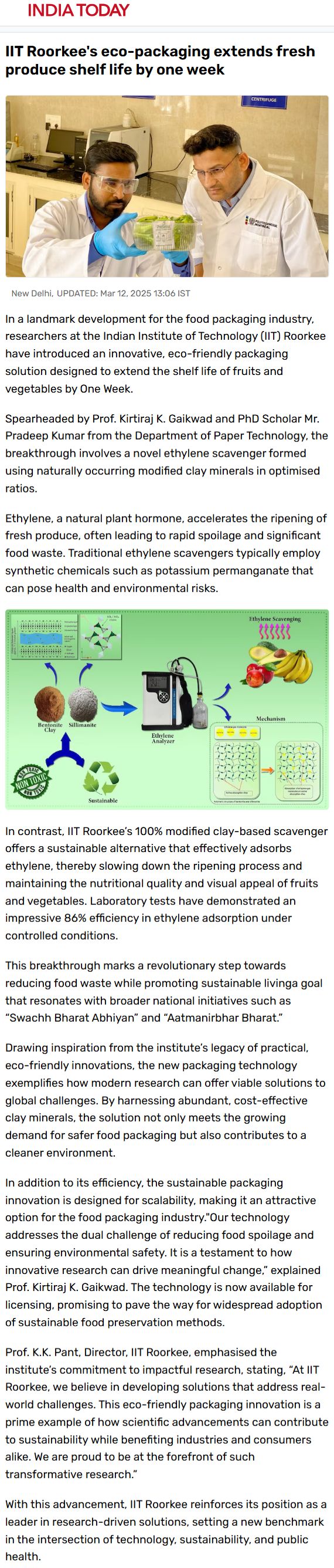
290. IIT Roorkee's eco-packaging extends fresh produce shelf life by one week
- In a landmark development for the food packaging industry, researchers at the Indian Institute of Technology (IIT) Roorkee have introduced an innovative, eco-friendly packaging solution designed to extend the shelf life of fruits and vegetables by One Week.
- Ethylene, a natural plant hormone, accelerates the ripening of fresh produce, often leading to rapid spoilage and significant food waste. Traditional ethylene scavengers typically employ synthetic chemicals such as potassium permanganate that can pose health and environmental risks.
- In contrast, IIT Roorkee’s 100% modified clay-based scavenger offers a sustainable alternative that effectively adsorbs ethylene, thereby slowing down the ripening process and maintaining the nutritional quality and visual appeal of fruits and vegetables.
- The breakthrough marks a revolutionary step towards reducing food waste while promoting sustainable livinga goal that resonates with broader national initiatives such as “Swachh Bharat Abhiyan” and “Aatmanirbhar Bharat.”