 Loading...
| Jan 01, 1970 | Daily Report |
| RISING BHARAT | News Count (101805) | |
281. IIT Hyderabad Created Biodegradable Packaging Film from Sludge and Eggshell Waste
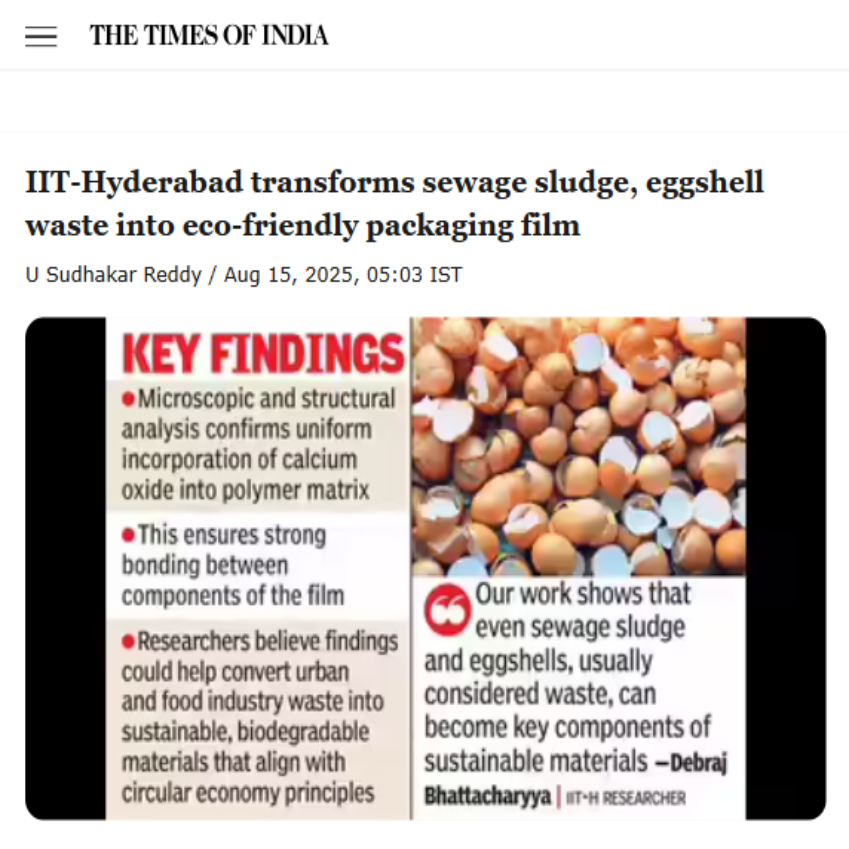
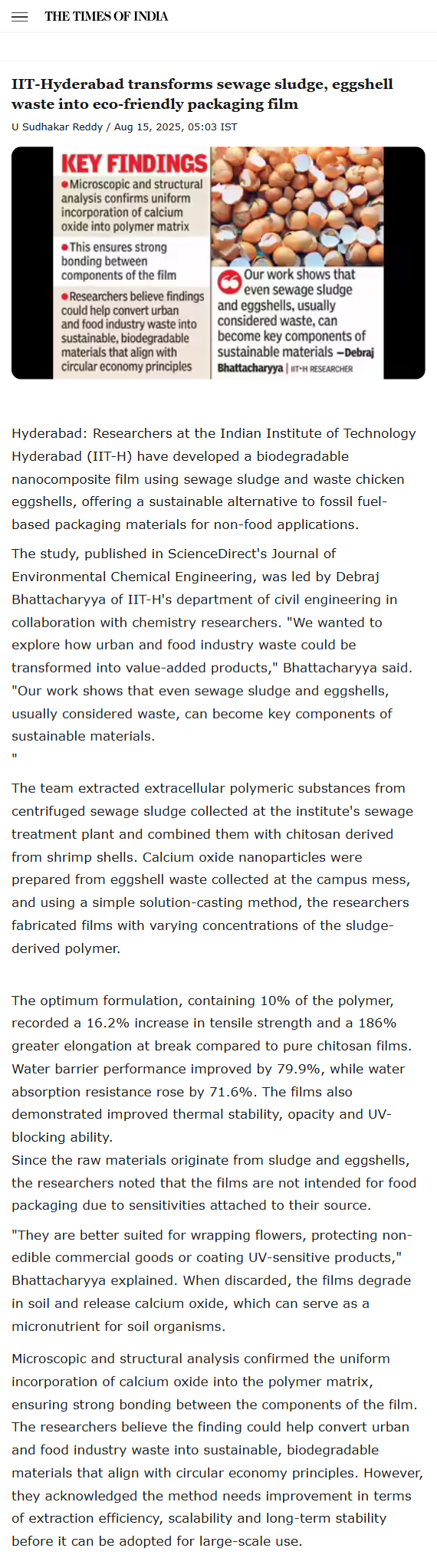
- Researchers at the Indian Institute of Technology Hyderabad (IIT-H) have developed a biodegradable nanocomposite film using sewage sludge and waste chicken eggshells, offering a sustainable alternative to fossil fuel-based packaging materials for non-food applications.
- The team extracted extracellular polymeric substances from centrifuged sewage sludge collected at the institute's sewage treatment plant and combined them with chitosan derived from shrimp shells.
- Calcium oxide nanoparticles were prepared from eggshell waste collected at the campus mess, and using a simple solution-casting method, the researchers fabricated films with varying concentrations of the sludge-derived polymer.
- The optimum formulation, containing 10% of the polymer, recorded a 16.2% increase in tensile strength and a 186% greater elongation at break compared to pure chitosan films. Water barrier performance improved by 79.9%, while water absorption resistance rose by 71.6%. The films also demonstrated improved thermal stability, opacity and UV-blocking ability.
282. IIT Roorkee Transfers Innovative Water Purification Technology to JS Aquaritin Global Pvt. Ltd.
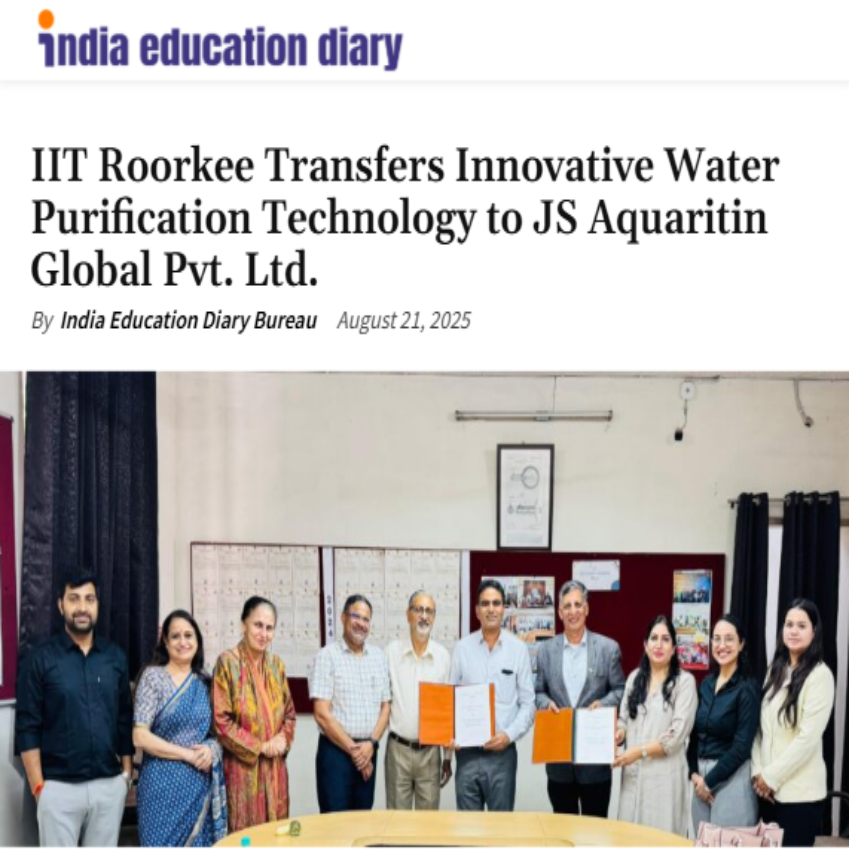
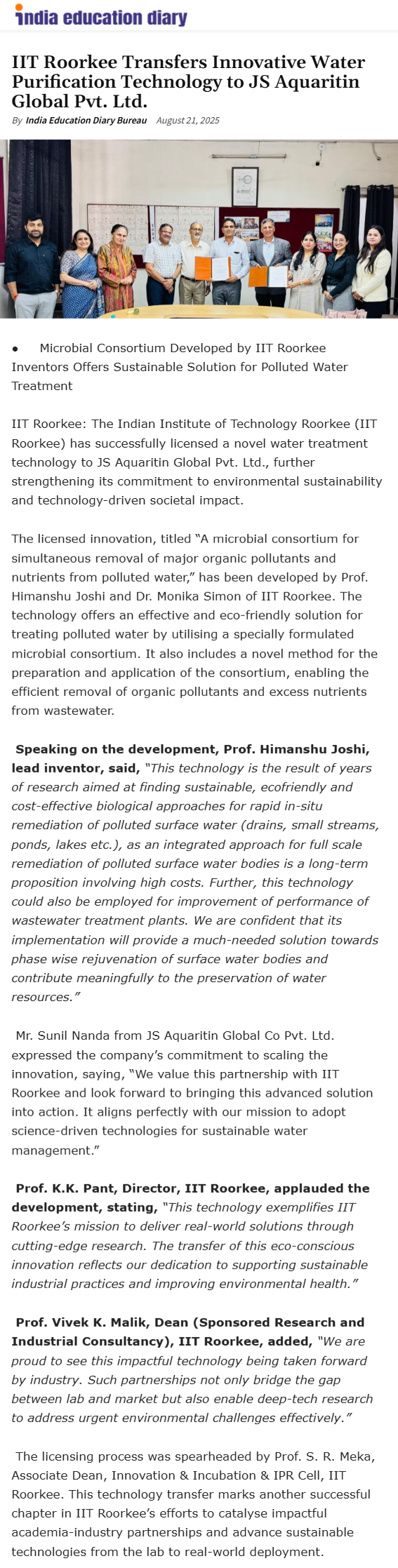
- The Indian Institute of Technology Roorkee (IIT Roorkee) has successfully licensed a novel water treatment technology to JS Aquaritin Global Pvt. Ltd., further strengthening its commitment to environmental sustainability and technology-driven societal impact.
- The licensed innovation, titled “A microbial consortium for simultaneous removal of major organic pollutants and nutrients from polluted water,” has been developed by Prof. Himanshu Joshi and Dr. Monika Simon of IIT Roorkee.
- The technology offers an effective and eco-friendly solution for treating polluted water by utilising a specially formulated microbial consortium. It also includes a novel method for the preparation and application of the consortium, enabling the efficient removal of organic pollutants and excess nutrients from wastewater.
283. IIT (BHU) & Integral University Developed Low-Cost Method for High-Oil Microalgae
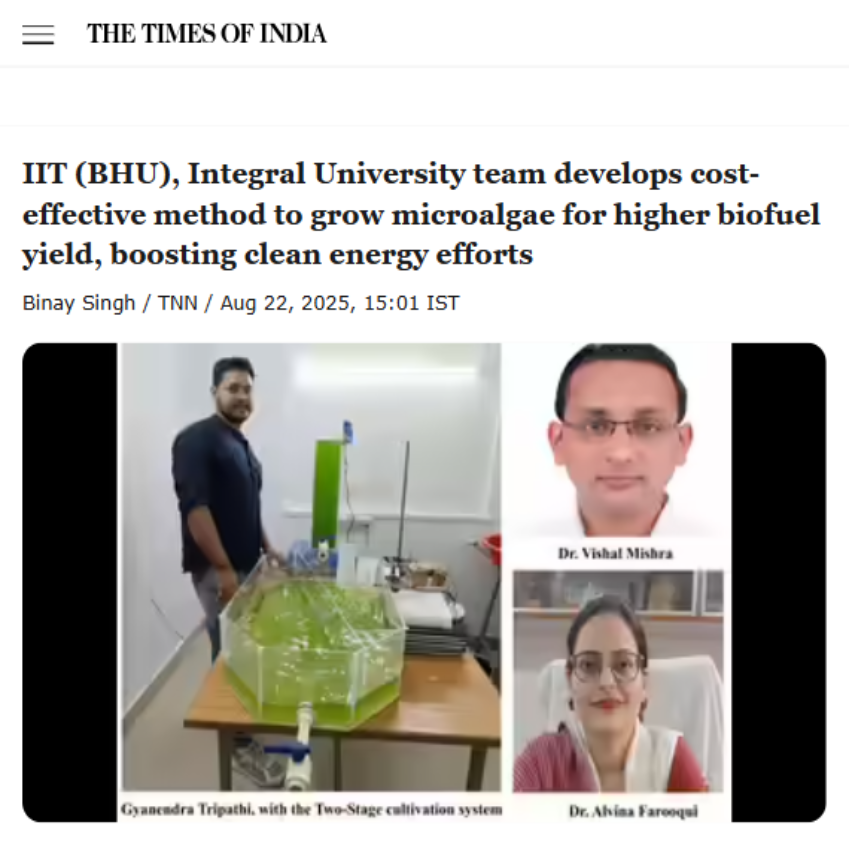
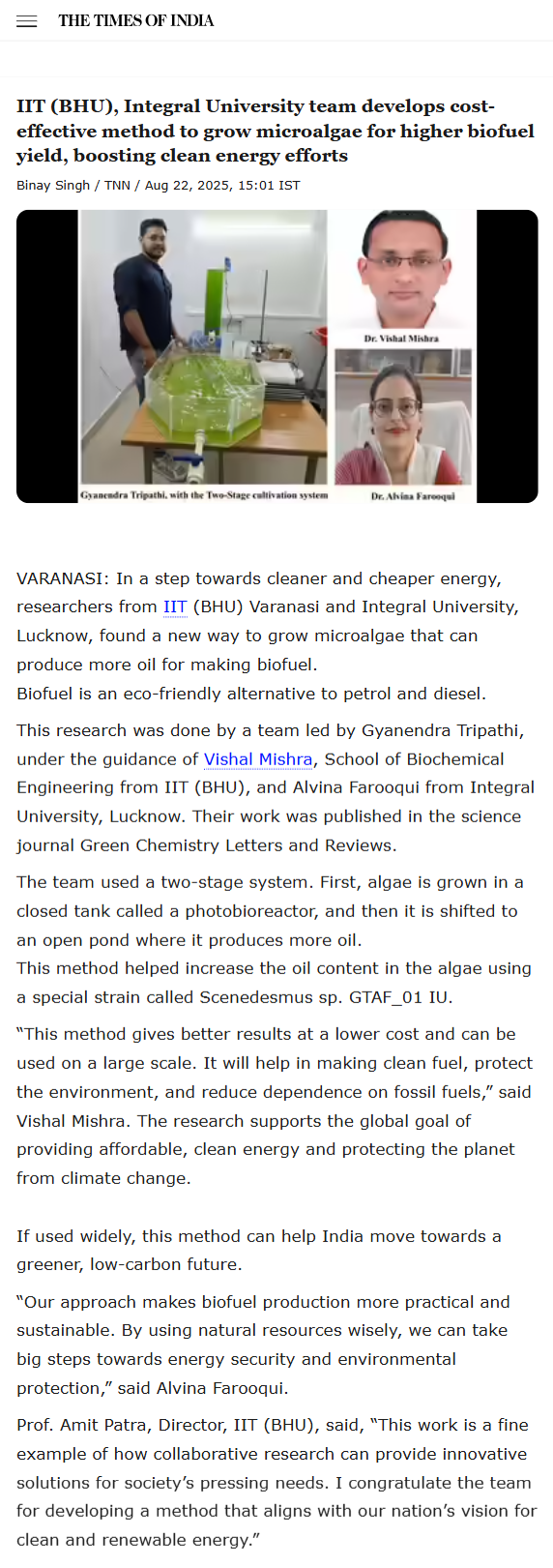
- In a step towards cleaner and cheaper energy, researchers from IIT (BHU) Varanasi and Integral University, Lucknow, found a new way to grow microalgae that can produce more oil for making biofuel. Biofuel is an eco-friendly alternative to petrol and diesel.
- The research was done by a team led by Gyanendra Tripathi, under the guidance of Vishal Mishra, School of Biochemical Engineering from IIT (BHU), and Alvina Farooqui from Integral University, Lucknow.
- The team used a two-stage system. First, algae is grown in a closed tank called a photobioreactor, and then it is shifted to an open pond where it produces more oil. This method helped increase the oil content in the algae using a special strain called Scenedesmus sp. GTAF_01 IU.
- The research supports the global goal of providing affordable, clean energy and protecting the planet from climate change. If used widely, this method can help India move towards a greener, low-carbon future.
284. IIT Bhilai Developed Low-Cost, Eco-Friendly Method for PET Plastic Recycling
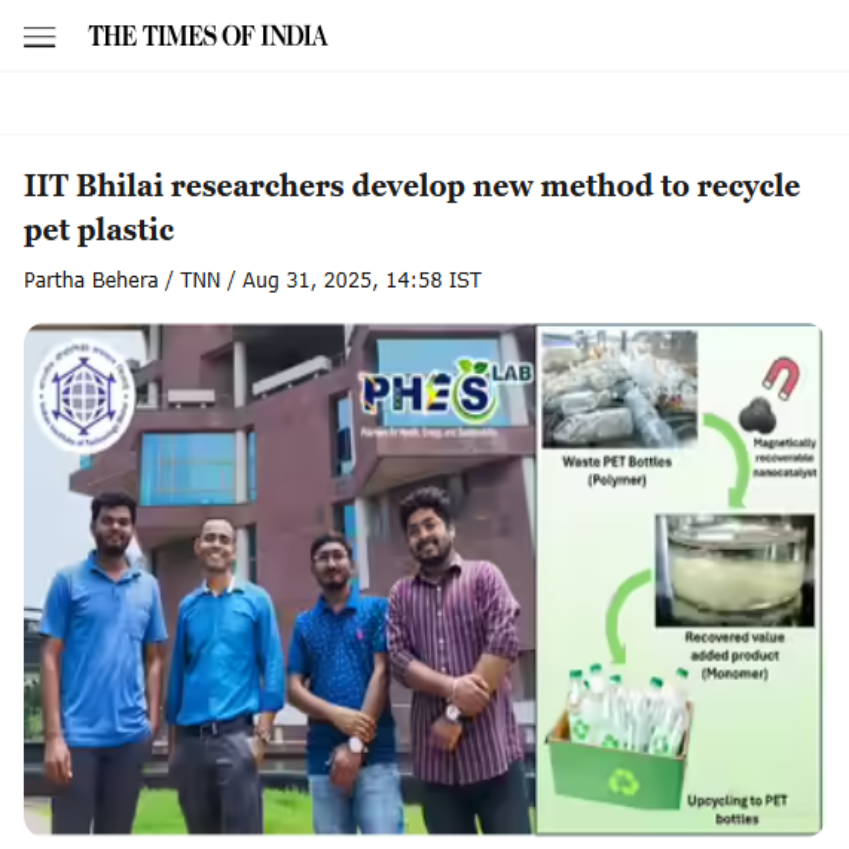
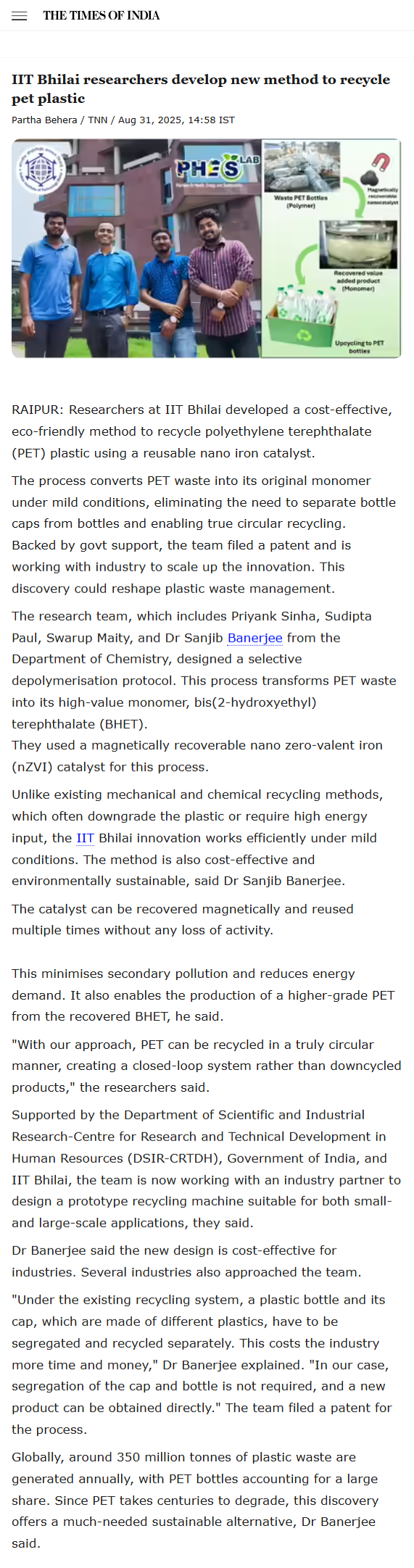
- Researchers at IIT Bhilai developed a cost-effective, eco-friendly method to recycle polyethylene terephthalate (PET) plastic using a reusable nano iron catalyst.
- The process converts PET waste into its original monomer under mild conditions, eliminating the need to separate bottle caps from bottles and enabling true circular recycling. Backed by govt support, the team filed a patent and is working with industry to scale up the innovation.
- The process were transforms PET waste into its high-value monomer, bis(2-hydroxyethyl) terephthalate (BHET). They used a magnetically recoverable nano zero-valent iron (nZVI) catalyst for this process.
- Unlike existing mechanical and chemical recycling methods, which often downgrade the plastic or require high energy input, the IIT Bhilai innovation works efficiently under mild conditions. The method is also cost-effective and environmentally sustainable.
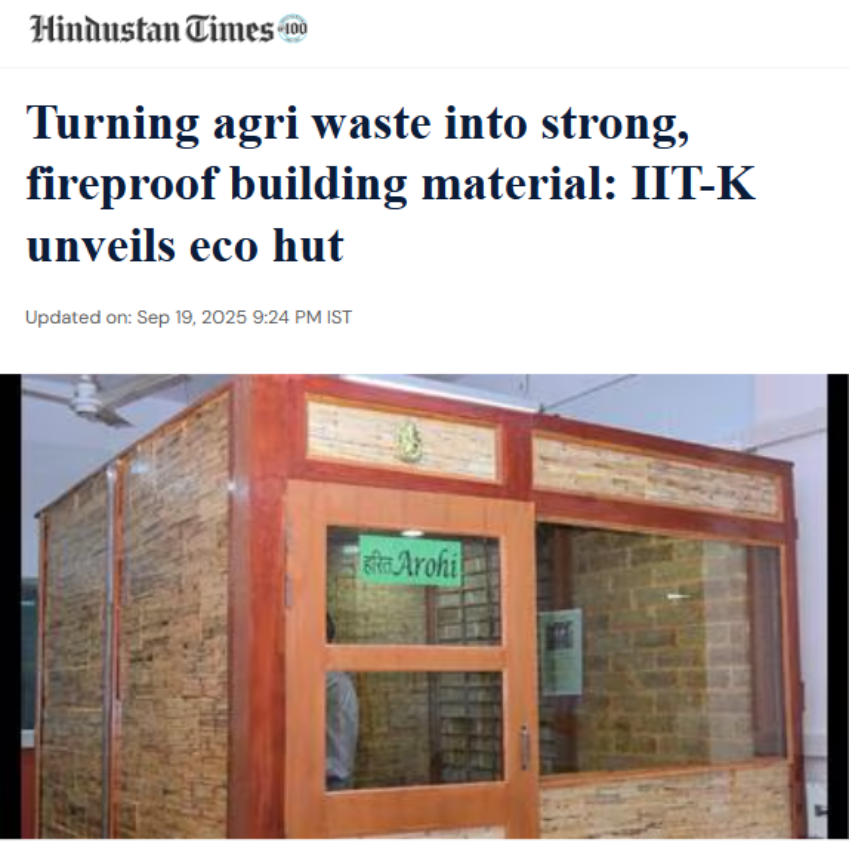

285. Turning agri waste into strong, fireproof building material: IIT-K unveils eco hut
- The Indian Institute of Technology, Kanpur (IIT-K), showcased an innovative eco hut built entirely with local wild cane grass and agricultural waste. Named as Harit Arohi Kutir, the product has superior compressive strength, fire resistance (tested up to 1100°C) and is a major step towards greener, resilient infrastructure for India and beyond.
- The team led by Deepak Kumar Maurya (who completed PhD from IIT-K) and guided by Prof CS Upadhyay envisions applications in low-rise buildings, toilets, resorts, and disaster-relief shelters, paving the way for a new paradigm in green construction.
- The genesis of this research work is rooted in a project of DRDO where researchers were working on low cost, light weight, blast and ballistic resistance sheets. And it was from there, we were searching for materials that are low cost, light weight, energy absorbing and carry load also.
- Innovative eco-bricks and sandwich panels were made from crop residue, lime, jaggery and lentils. The material is resistant to termites, moisture and weather effects and its load-bearing capacity supports up to 1300 kg — ideal for 2-3 storey structures, added Maurya.
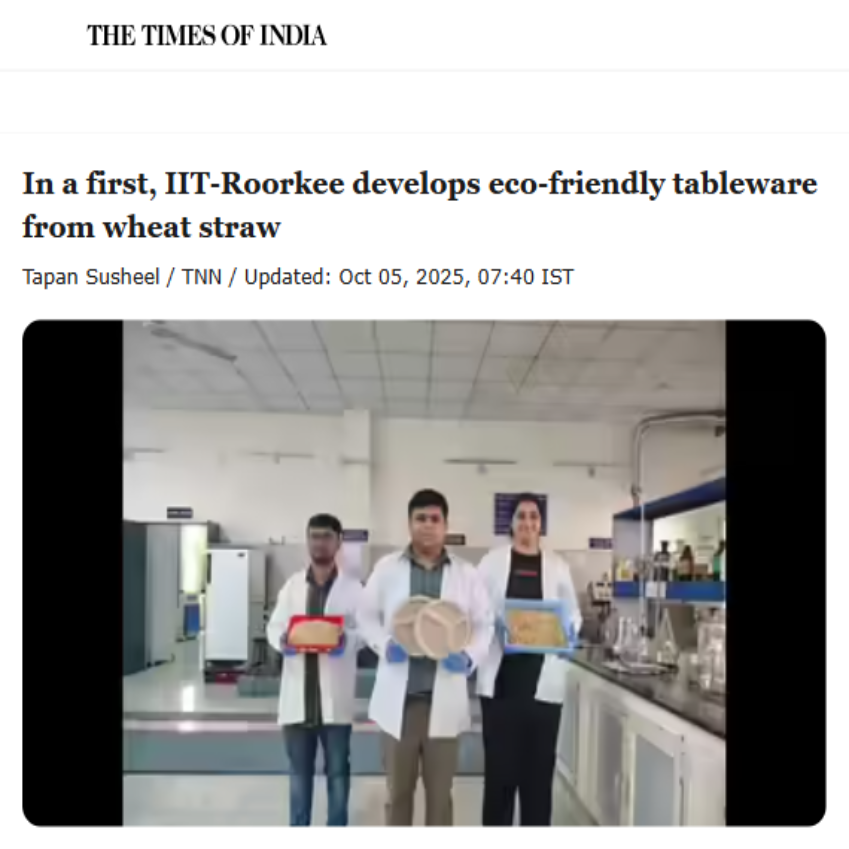
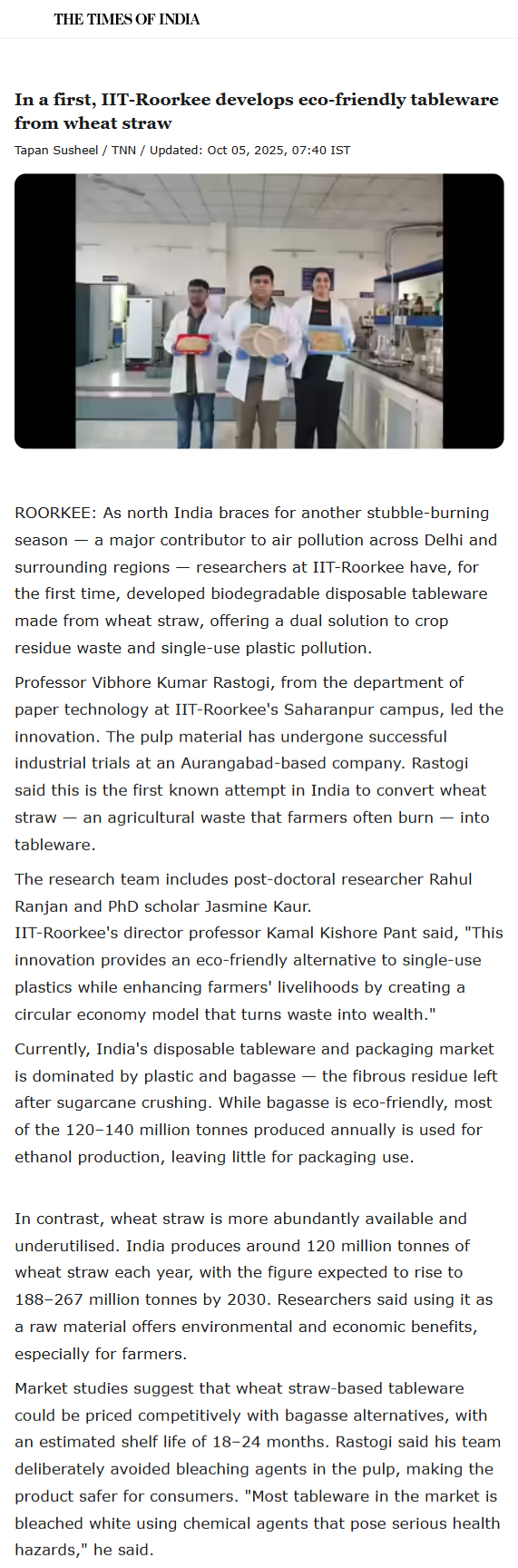
286. IIT Roorkee Developed Biodegradable Tableware from Wheat Straw
- As north India braces for another stubble-burning season — a major contributor to air pollution across Delhi and surrounding regions — researchers at IIT-Roorkee have, for the first time, developed biodegradable disposable tableware made from wheat straw, offering a dual solution to crop residue waste and single-use plastic pollution.
- Currently, India's disposable tableware and packaging market is dominated by plastic and bagasse — the fibrous residue left after sugarcane crushing. While bagasse is eco-friendly, most of the 120–140 million tonnes produced annually is used for ethanol production, leaving little for packaging use.
- In contrast, wheat straw is more abundantly available and underutilised. India produces around 120 million tonnes of wheat straw each year, with the figure expected to rise to 188–267 million tonnes by 2030. Researchers said using it as a raw material offers environmental and economic benefits, especially for farmers.
- Wheat straw-based tableware could be priced competitively with bagasse alternatives, with an estimated shelf life of 18–24 months. Rastogi said his team deliberately avoided bleaching agents in the pulp, making the product safer for consumers.
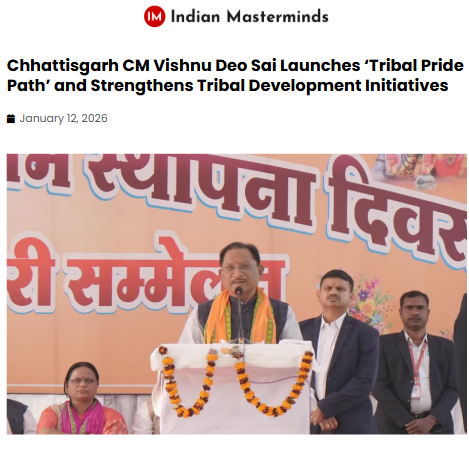
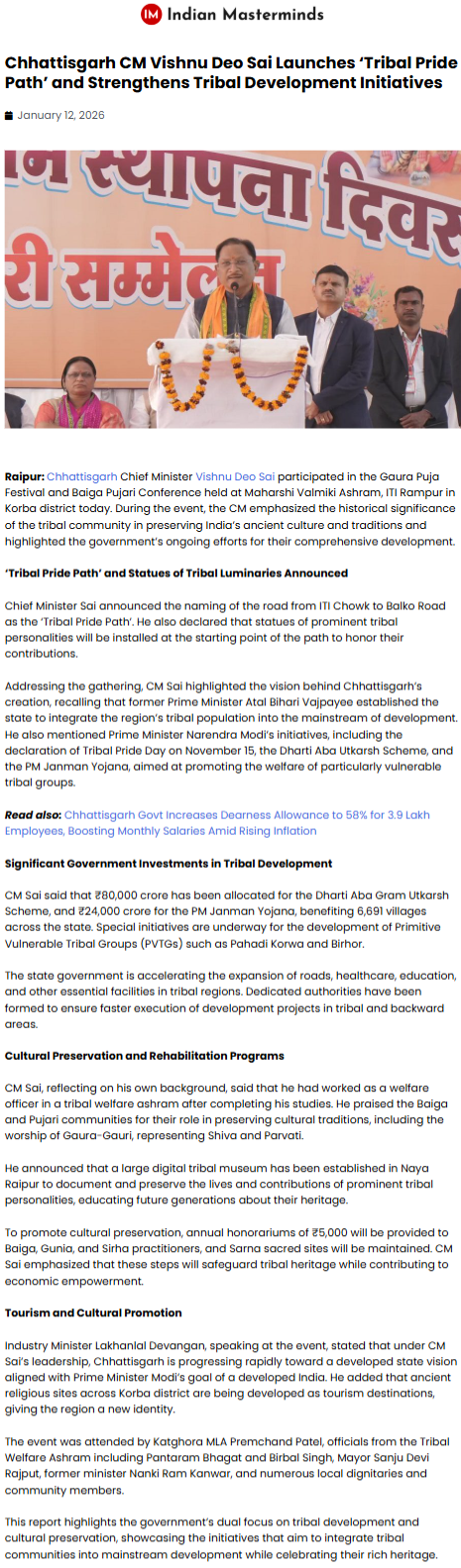
287. Chhattisgarh CM Vishnu Deo Sai Launches ‘Tribal Pride Path’ and Strengthens Tribal Development Initiatives
- On 12 January 2026, CM participated in the Gaura Puja Festival and Baiga Pujari Conference at Maharshi Valmiki Ashram, ITI Rampur, Korba district, Chhattisgarh, emphasizing tribal culture, development, and heritage preservation.
- CM Sai announced the ‘Tribal Pride Path’ road naming, installation of tribal luminary statues, and highlighted central and state schemes like Dharti Aba Gram Utkarsh Scheme and PM Janman Yojana to integrate tribal communities into mainstream development.
- ₹80,000 crore and ₹24,000 crore were allocated for tribal schemes benefiting 6,691 villages; focus included PVTGs, digital tribal museum in Naya Raipur, annual honorariums for traditional practitioners, tourism development, and preservation of Sarna sites.
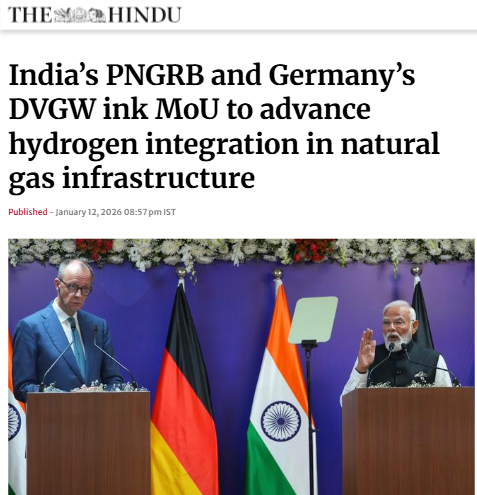
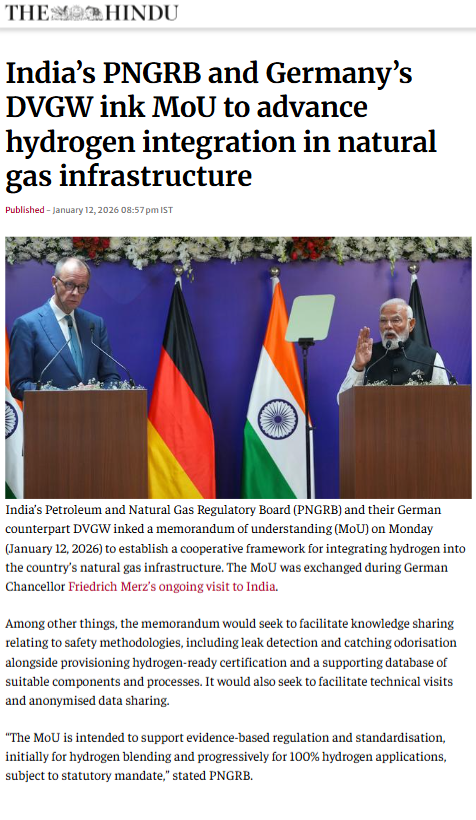
288. India’s PNGRB and Germany’s DVGW ink MoU to advance hydrogen integration in natural gas infrastructure
- On January 12, 2026, India’s Petroleum and Natural Gas Regulatory Board and Germany’s DVGW have signed an MoU on January 12, 2026, to integrate hydrogen into India’s natural gas infrastructure.
- India’s Petroleum and Natural Gas Regulatory Board and Germany’s DVGW have signed an MoU to integrate hydrogen into India’s natural gas infrastructure.
- India and Germany have partnered to make natural gas networks hydrogen-ready, enabling safe hydrogen blending and future clean-fuel use.
Click here to find 869 similar incidents of Indian Diplomacy -> Diplomatic Initiatives
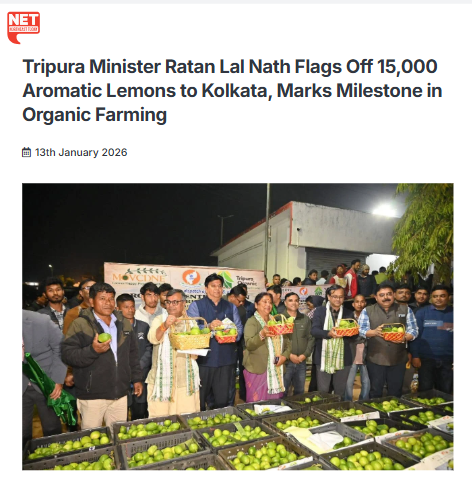
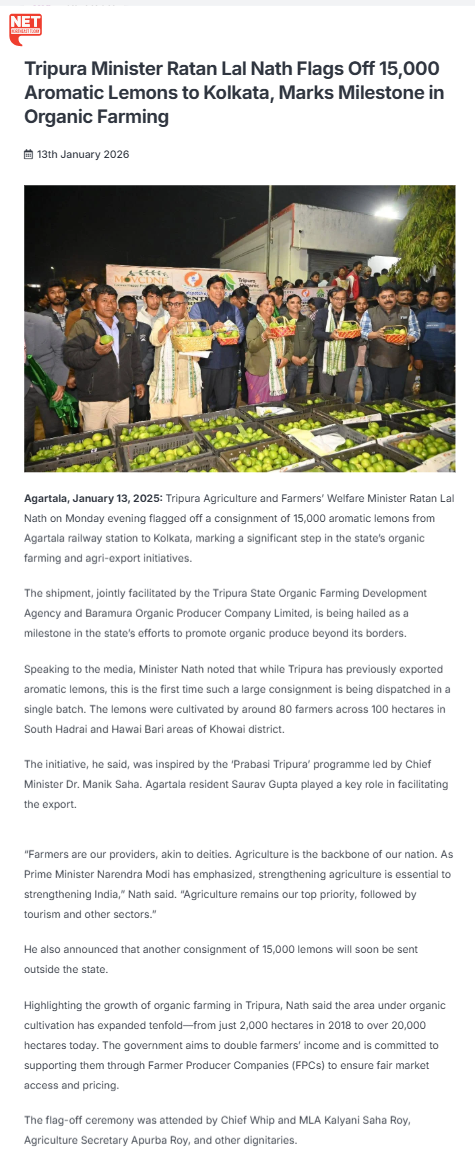
289. Tripura Minister Ratan Lal Nath Flags Off 15,000 Aromatic Lemons to Kolkata, Marks Milestone in Organic Farming
- On January 13, 2026, Tripura’s Agriculture and Farmers’ Welfare Minister flagged off a consignment of 15,000 organically grown aromatic/scented lemons from Agartala to Kolkata, showcasing the state’s expanding organic farming reach.
- The lemons were cultivated by around 80 farmers across about 100 hectares under organic methods, reflecting rapid growth in organic cultivation in the state.
- Tripura’s organic farming area has expanded dramatically in recent years, helping local growers access larger national markets like Kolkata and signalling rising demand for chemical-free agricultural products.
Click here to find 219 similar incidents of North East India -> Developments in North East India

290. Massive Healthcare Push Positions J&K As Emerging Medical Hub
- On January 13, 2026, Jammu & Kashmir is rapidly expanding its healthcare infrastructure with two new All India Institutes of Medical Sciences (AIIMS), 12 medical colleges, 17 critical care blocks, and over 3,000 wellness centres strengthening services from tertiary care to grassroots levels.
- The initiatives include not only hospitals and colleges, but also large plans for a 500-bed hospital with aged care facilities, hotel and residential services aimed at delivering wide-ranging healthcare support and improving overall patient experience.
- These efforts are part of a strategic push to transform J&K into a major medical hub, enhancing access to quality healthcare, reducing the need for long-distance travel for treatment, and attracting patients from surrounding regions.