 Loading...
| Jan 01, 1970 | Daily Report |
| RISING BHARAT | News Count (101854) | |
281. IIT Roorkee's eco-packaging extends fresh produce shelf life by one week
Innovation and startups, ISRO/Defense/Water infrastructure/EV and other sectors
->
Innovations in Bharat
English
Uttarakhand
(Dehradun)
India Today
|
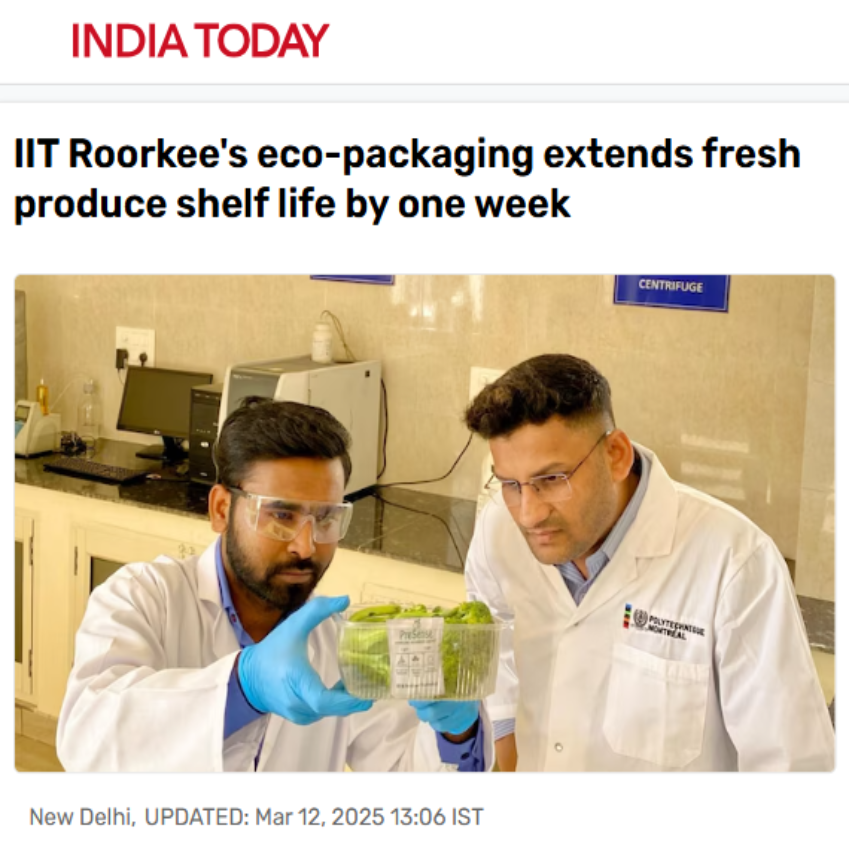
- In a landmark development for the food packaging industry, researchers at the Indian Institute of Technology (IIT) Roorkee have introduced an innovative, eco-friendly packaging solution designed to extend the shelf life of fruits and vegetables by One Week.
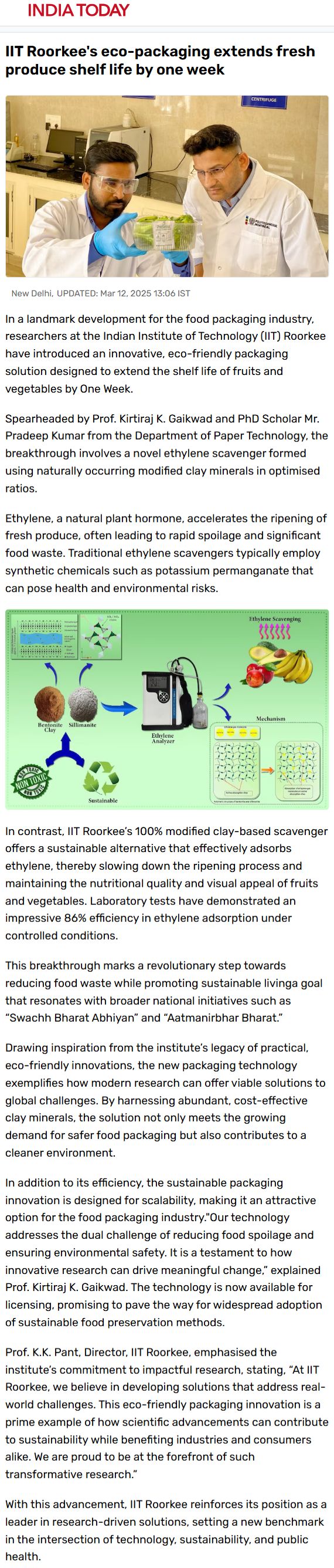
- Ethylene, a natural plant hormone, accelerates the ripening of fresh produce, often leading to rapid spoilage and significant food waste. Traditional ethylene scavengers typically employ synthetic chemicals such as potassium permanganate that can pose health and environmental risks.
- In contrast, IIT Roorkee’s 100% modified clay-based scavenger offers a sustainable alternative that effectively adsorbs ethylene, thereby slowing down the ripening process and maintaining the nutritional quality and visual appeal of fruits and vegetables.
- The breakthrough marks a revolutionary step towards reducing food waste while promoting sustainable livinga goal that resonates with broader national initiatives such as “Swachh Bharat Abhiyan” and “Aatmanirbhar Bharat.”
282. IIT Kharagpur Developed Graphene-Based Tech for 99% Oil-Water Separation
Innovation and startups, ISRO/Defense/Water infrastructure/EV and other sectors
->
Innovations in Bharat
English
West Bengal
(Paschim Medinipur (West Medinipur))
The Times Of India
|
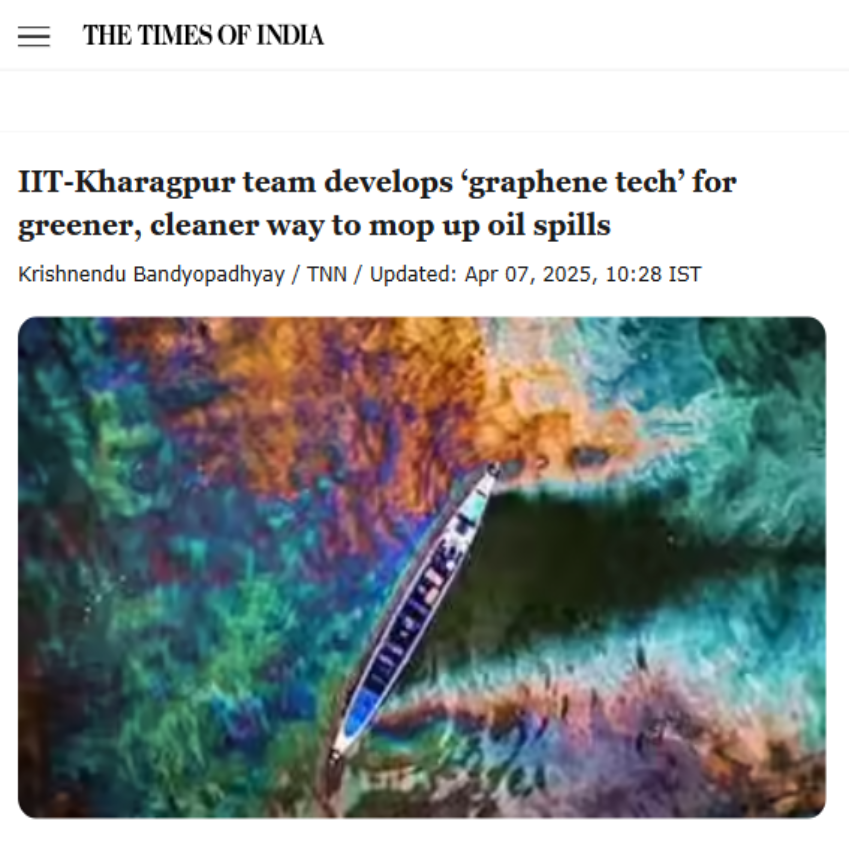
- Researchers from Indian Institute of Technology, Kharagpur (IIT-Kgp) have developed a 'graphene-based' technology that could change the way the world tackles oil spills, which wreak havoc on aquatic biodiversity.
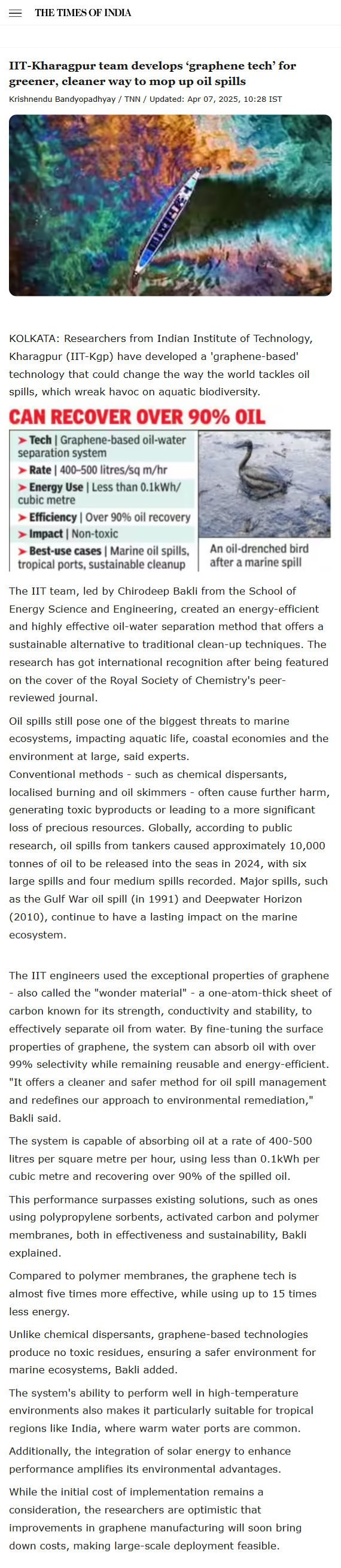
- The IIT team, led by Chirodeep Bakli from the School of Energy Science and Engineering, created an energy-efficient and highly effective oil-water separation method that offers a sustainable alternative to traditional clean-up techniques.
- Oil spills still pose one of the biggest threats to marine ecosystems, impacting aquatic life, coastal economies and the environment at large, said experts. Conventional methods - such as chemical dispersants, localised burning and oil skimmers - often cause further harm, generating toxic byproducts.
- The system is capable of absorbing oil at a rate of 400-500 litres per square metre per hour, using less than 0.1kWh per cubic metre and recovering over 90% of the spilled oil.

283. Assam: Revolutionary water treatment system costs just Rs 20 per 1,000 litres
Innovation and startups, ISRO/Defense/Water infrastructure/EV and other sectors
->
Innovations in Bharat
English
Assam
(Guwahati)
India Today
|
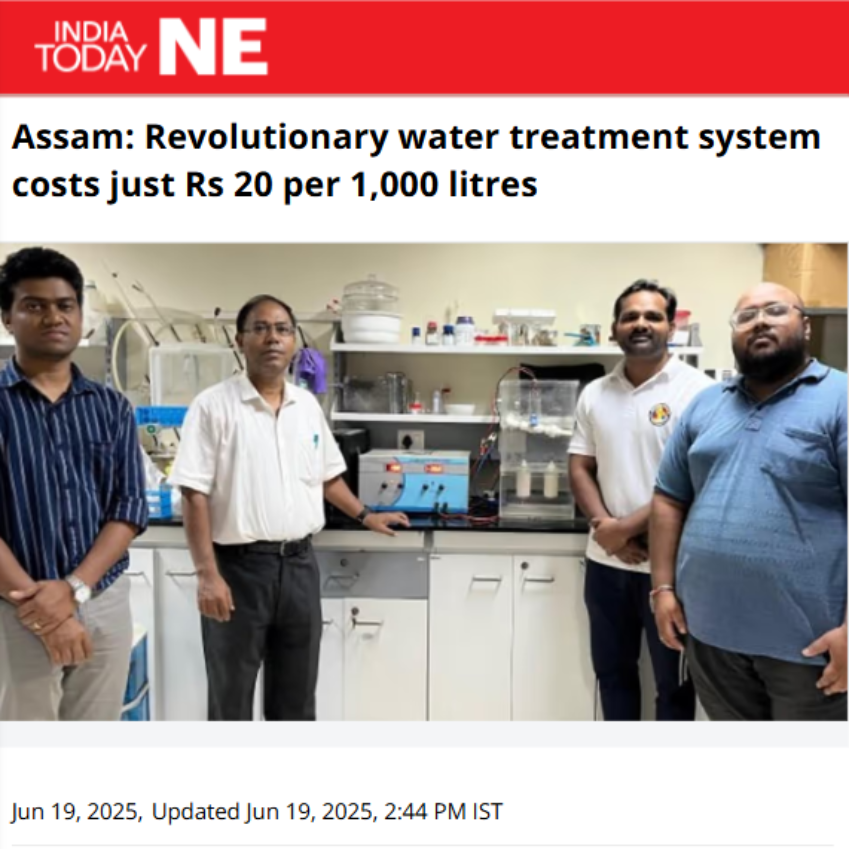
- The Indian Institute of Technology Guwahati have developed a game-changing water treatment system that could transform access to safe drinking water across India's fluoride-affected regions. The innovative technology treats contaminated groundwater for just Rs 20 per 1,000 litres while processing up to 20,000 litres daily.
- The four-step treatment system addresses a critical health crisis affecting millions of Indians, particularly in states like Rajasthan, Telangana, Andhra Pradesh, Karnataka, Haryana, and Gujarat, where excessive fluoride in groundwater causes skeletal fluorosis—a debilitating condition that hardens bones and stiffens joints.
- Their findings, published in the prestigious ACS ES&T Water journal, demonstrate the technology's ability to remove 94 per cent of iron and 89 per cent of fluoride from contaminated water, bringing levels within Indian safety standards.
- The treatment process begins with aeration, where a specially designed aerator adds oxygen to remove dissolved iron. The water then passes through an electrocoagulation unit, where a mild electric current flows through aluminum electrodes, releasing charged metal particles that bind with contaminants.
284. IIT Indore Developed Cement-Free Geopolymer Concrete with 80% Lower Emissions
Innovation and startups, ISRO/Defense/Water infrastructure/EV and other sectors
->
Innovations in Bharat
English
Madhya Pradesh
(Indore)
The Times Of India
|
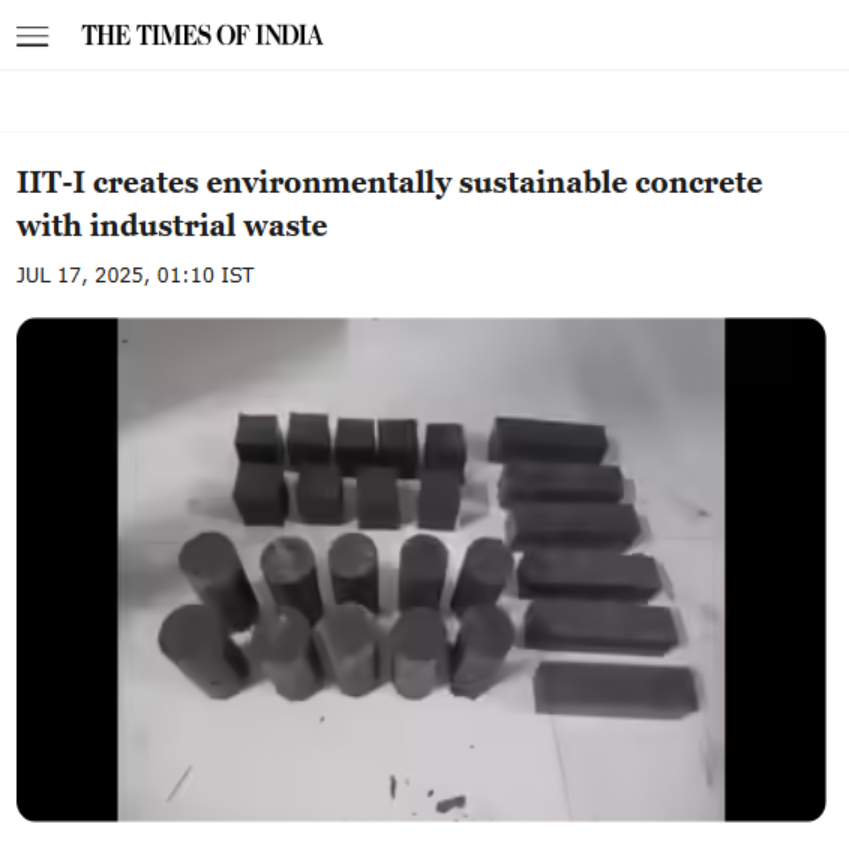
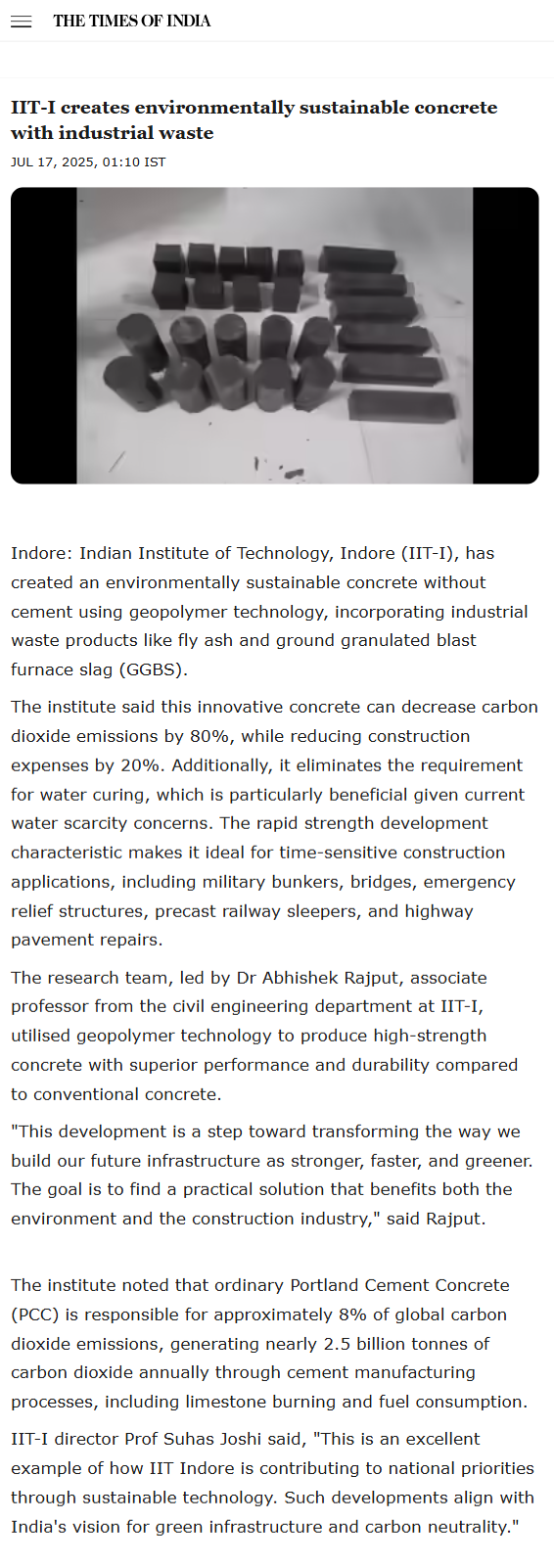
- Indian Institute of Technology, Indore (IIT-I), has created an environmentally sustainable concrete without cement using geopolymer technology, incorporating industrial waste products like fly ash and ground granulated blast furnace slag (GGBS).
- The institute said this innovative concrete can decrease carbon dioxide emissions by 80%, while reducing construction expenses by 20%. Additionally, it eliminates the requirement for water curing, which is particularly beneficial given current water scarcity concerns.
- The rapid strength development characteristic makes it ideal for time-sensitive construction applications, including military bunkers, bridges, emergency relief structures, precast railway sleepers, and highway pavement repairs.
285. IIT Hyderabad Created Biodegradable Packaging Film from Sludge and Eggshell Waste
Innovation and startups, ISRO/Defense/Water infrastructure/EV and other sectors
->
Innovations in Bharat
English
Telangana
(Hyderabad)
The Times Of India
|
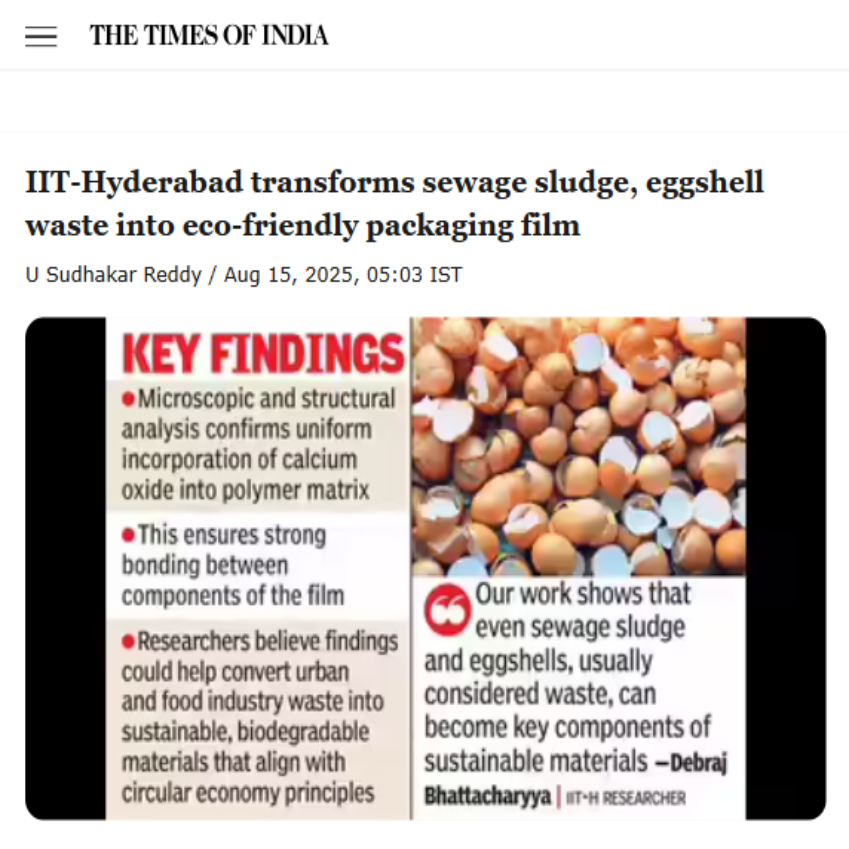
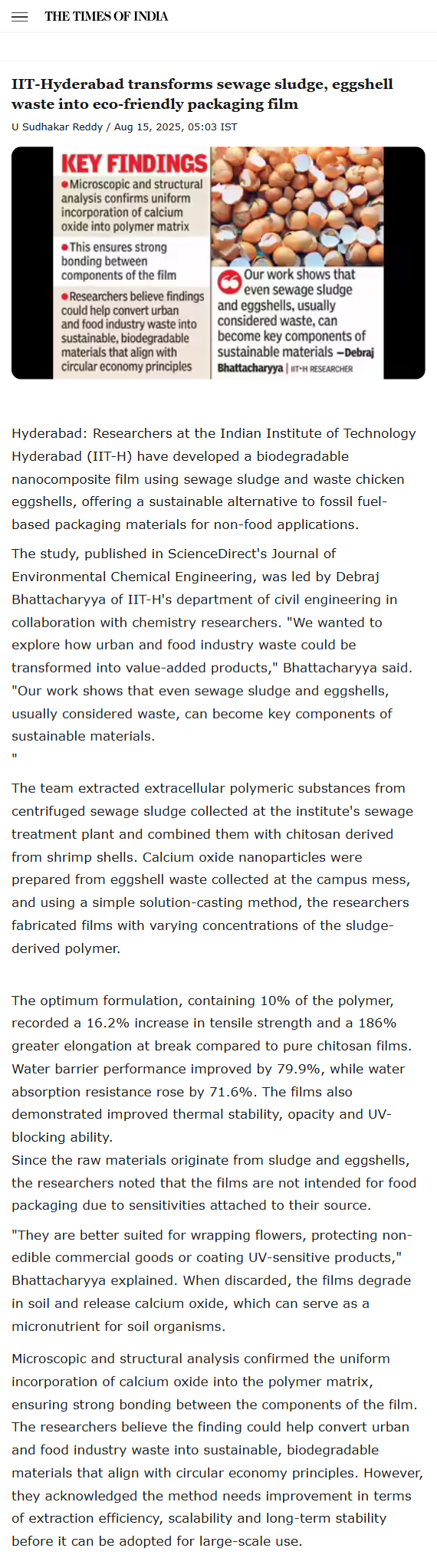
- Researchers at the Indian Institute of Technology Hyderabad (IIT-H) have developed a biodegradable nanocomposite film using sewage sludge and waste chicken eggshells, offering a sustainable alternative to fossil fuel-based packaging materials for non-food applications.
- The team extracted extracellular polymeric substances from centrifuged sewage sludge collected at the institute's sewage treatment plant and combined them with chitosan derived from shrimp shells.
- Calcium oxide nanoparticles were prepared from eggshell waste collected at the campus mess, and using a simple solution-casting method, the researchers fabricated films with varying concentrations of the sludge-derived polymer.
- The optimum formulation, containing 10% of the polymer, recorded a 16.2% increase in tensile strength and a 186% greater elongation at break compared to pure chitosan films. Water barrier performance improved by 79.9%, while water absorption resistance rose by 71.6%. The films also demonstrated improved thermal stability, opacity and UV-blocking ability.
286. IIT Roorkee Transfers Innovative Water Purification Technology to JS Aquaritin Global Pvt. Ltd.
Innovation and startups, ISRO/Defense/Water infrastructure/EV and other sectors
->
Innovations in Bharat
English
Uttar Pradesh
(Saharanpur)
INDIA EDUCATION DIARY
|
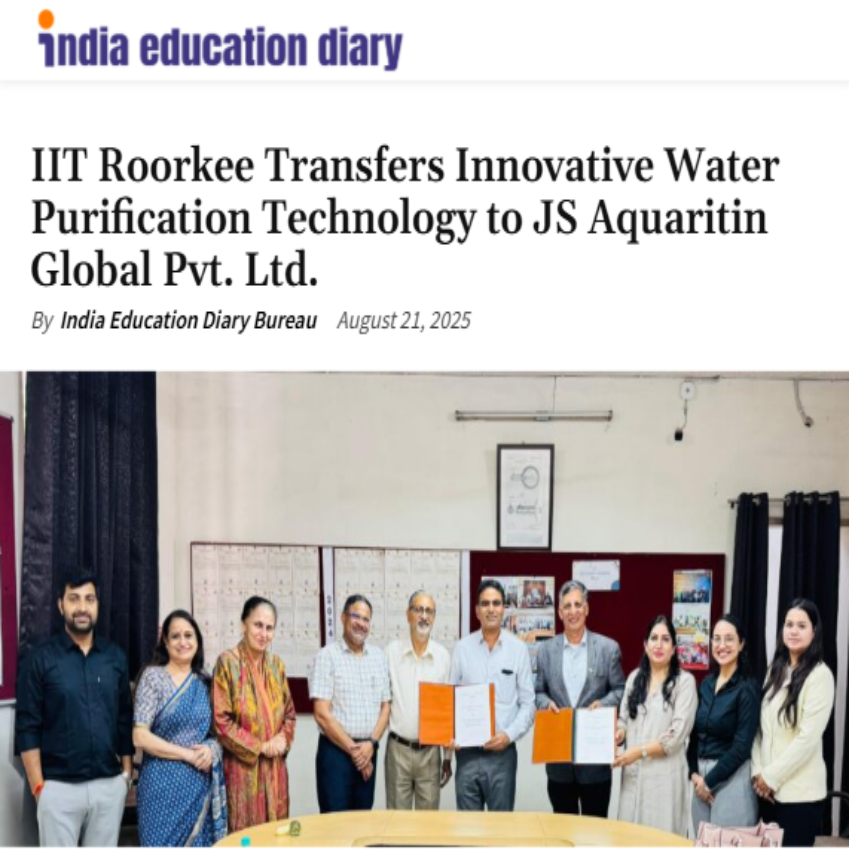
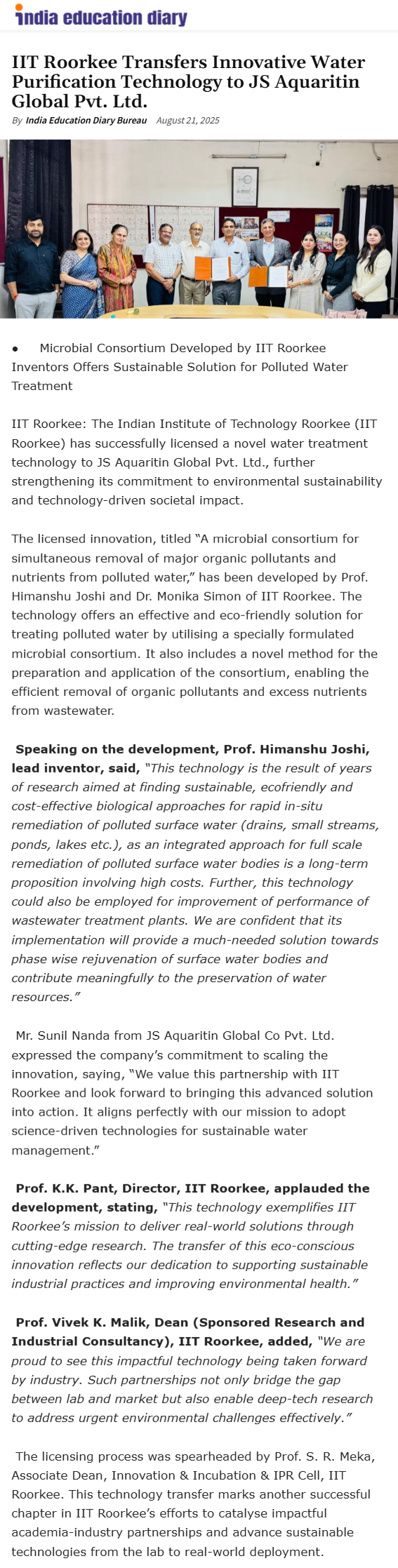
- The Indian Institute of Technology Roorkee (IIT Roorkee) has successfully licensed a novel water treatment technology to JS Aquaritin Global Pvt. Ltd., further strengthening its commitment to environmental sustainability and technology-driven societal impact.
- The licensed innovation, titled “A microbial consortium for simultaneous removal of major organic pollutants and nutrients from polluted water,” has been developed by Prof. Himanshu Joshi and Dr. Monika Simon of IIT Roorkee.
- The technology offers an effective and eco-friendly solution for treating polluted water by utilising a specially formulated microbial consortium. It also includes a novel method for the preparation and application of the consortium, enabling the efficient removal of organic pollutants and excess nutrients from wastewater.
287. IIT (BHU) & Integral University Developed Low-Cost Method for High-Oil Microalgae
Innovation and startups, ISRO/Defense/Water infrastructure/EV and other sectors
->
Innovations in Bharat
English
Uttar Pradesh
(Varanasi)
The Times Of India
|
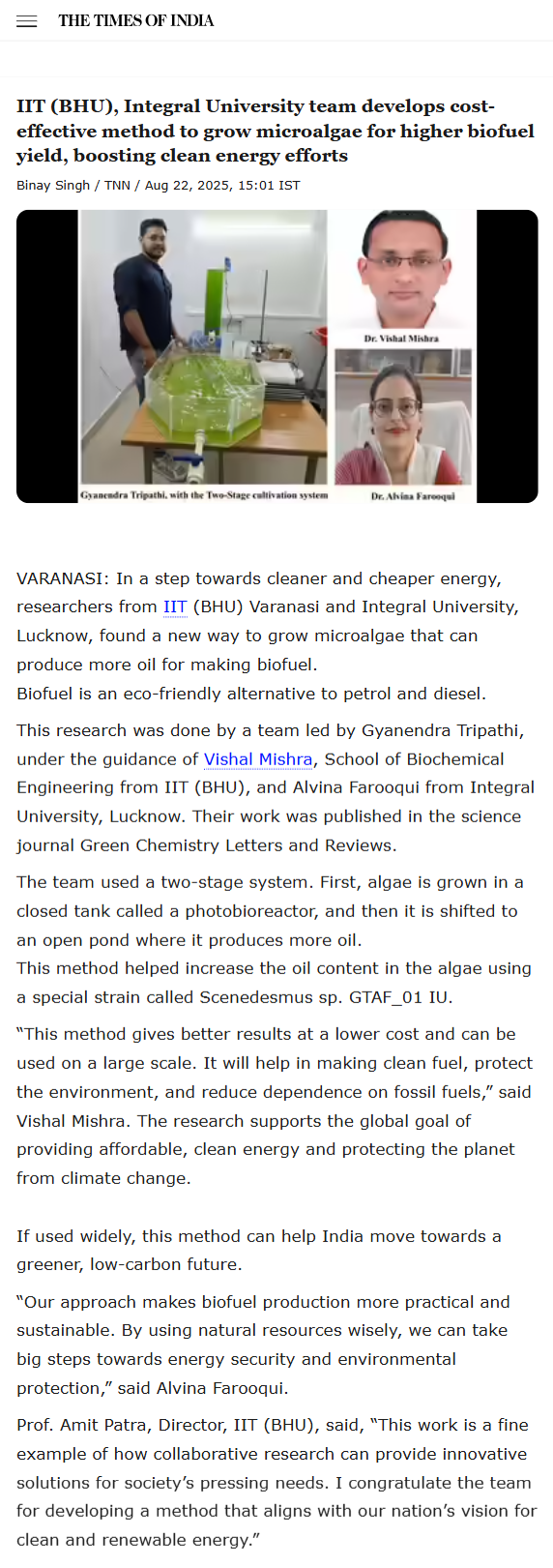
- In a step towards cleaner and cheaper energy, researchers from IIT (BHU) Varanasi and Integral University, Lucknow, found a new way to grow microalgae that can produce more oil for making biofuel. Biofuel is an eco-friendly alternative to petrol and diesel.
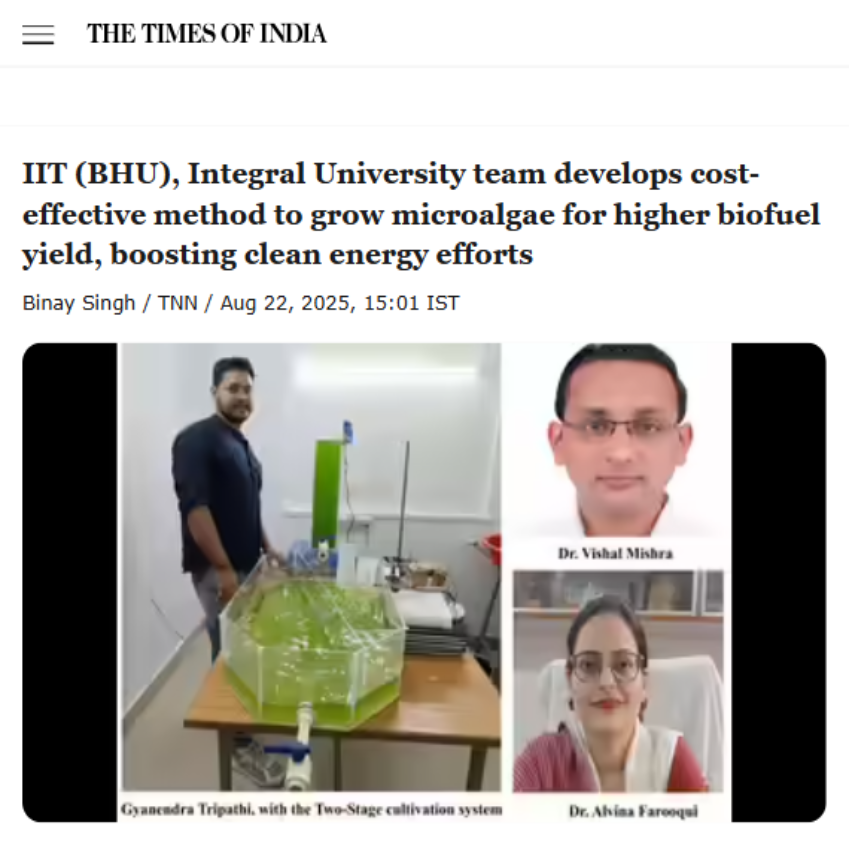
- The research was done by a team led by Gyanendra Tripathi, under the guidance of Vishal Mishra, School of Biochemical Engineering from IIT (BHU), and Alvina Farooqui from Integral University, Lucknow.
- The team used a two-stage system. First, algae is grown in a closed tank called a photobioreactor, and then it is shifted to an open pond where it produces more oil. This method helped increase the oil content in the algae using a special strain called Scenedesmus sp. GTAF_01 IU.
- The research supports the global goal of providing affordable, clean energy and protecting the planet from climate change. If used widely, this method can help India move towards a greener, low-carbon future.
288. IIT Bhilai Developed Low-Cost, Eco-Friendly Method for PET Plastic Recycling
Innovation and startups, ISRO/Defense/Water infrastructure/EV and other sectors
->
Innovations in Bharat
English
Chhattisgarh
(Durg)
The Times Of India
|
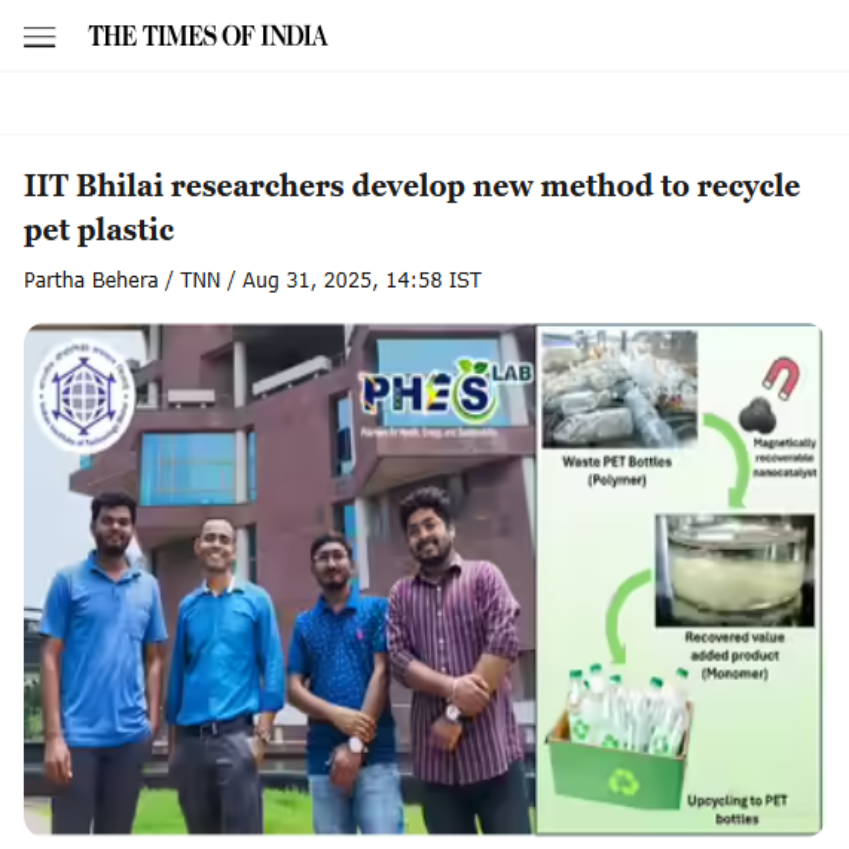
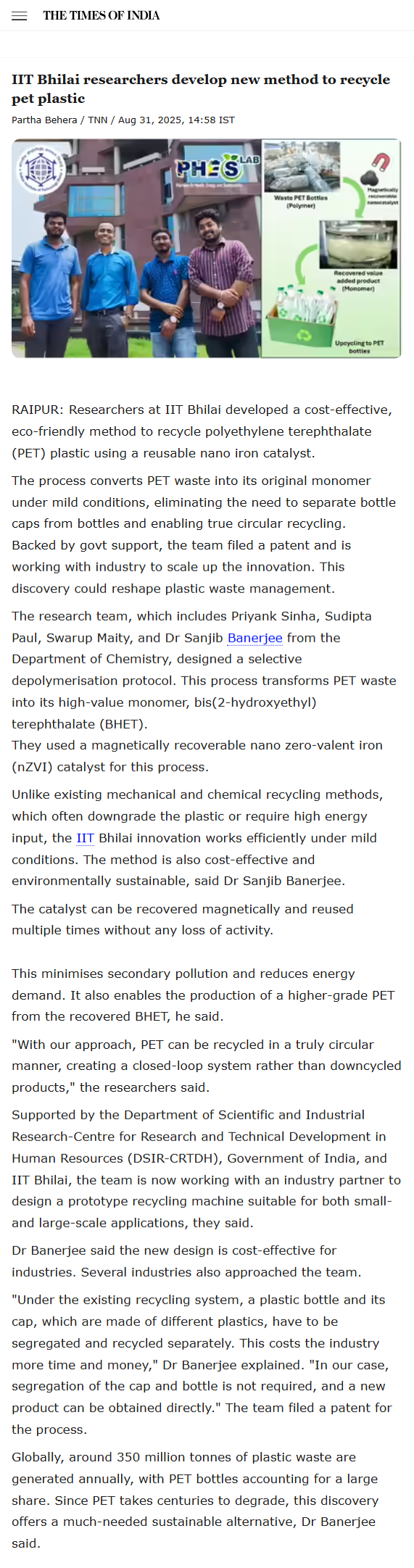
- Researchers at IIT Bhilai developed a cost-effective, eco-friendly method to recycle polyethylene terephthalate (PET) plastic using a reusable nano iron catalyst.
- The process converts PET waste into its original monomer under mild conditions, eliminating the need to separate bottle caps from bottles and enabling true circular recycling. Backed by govt support, the team filed a patent and is working with industry to scale up the innovation.
- The process were transforms PET waste into its high-value monomer, bis(2-hydroxyethyl) terephthalate (BHET). They used a magnetically recoverable nano zero-valent iron (nZVI) catalyst for this process.
- Unlike existing mechanical and chemical recycling methods, which often downgrade the plastic or require high energy input, the IIT Bhilai innovation works efficiently under mild conditions. The method is also cost-effective and environmentally sustainable.

289. Turning agri waste into strong, fireproof building material: IIT-K unveils eco hut
Innovation and startups, ISRO/Defense/Water infrastructure/EV and other sectors
->
Innovations in Bharat
English
Uttar Pradesh
(Kanpur Nagar)
Hindustan Times
|
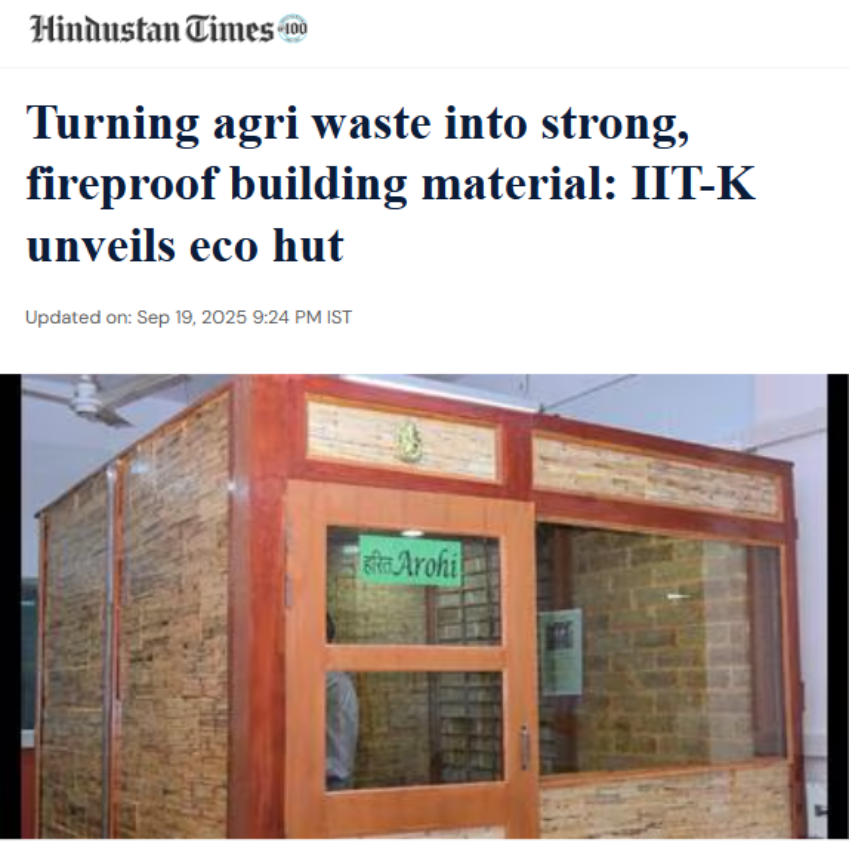
- The Indian Institute of Technology, Kanpur (IIT-K), showcased an innovative eco hut built entirely with local wild cane grass and agricultural waste. Named as Harit Arohi Kutir, the product has superior compressive strength, fire resistance (tested up to 1100°C) and is a major step towards greener, resilient infrastructure for India and beyond.
- The team led by Deepak Kumar Maurya (who completed PhD from IIT-K) and guided by Prof CS Upadhyay envisions applications in low-rise buildings, toilets, resorts, and disaster-relief shelters, paving the way for a new paradigm in green construction.
- The genesis of this research work is rooted in a project of DRDO where researchers were working on low cost, light weight, blast and ballistic resistance sheets. And it was from there, we were searching for materials that are low cost, light weight, energy absorbing and carry load also.
- Innovative eco-bricks and sandwich panels were made from crop residue, lime, jaggery and lentils. The material is resistant to termites, moisture and weather effects and its load-bearing capacity supports up to 1300 kg — ideal for 2-3 storey structures, added Maurya.
290. IIT Roorkee Developed Biodegradable Tableware from Wheat Straw
Innovation and startups, ISRO/Defense/Water infrastructure/EV and other sectors
->
Innovations in Bharat
English
Uttar Pradesh
(Saharanpur)
The Times Of India
|
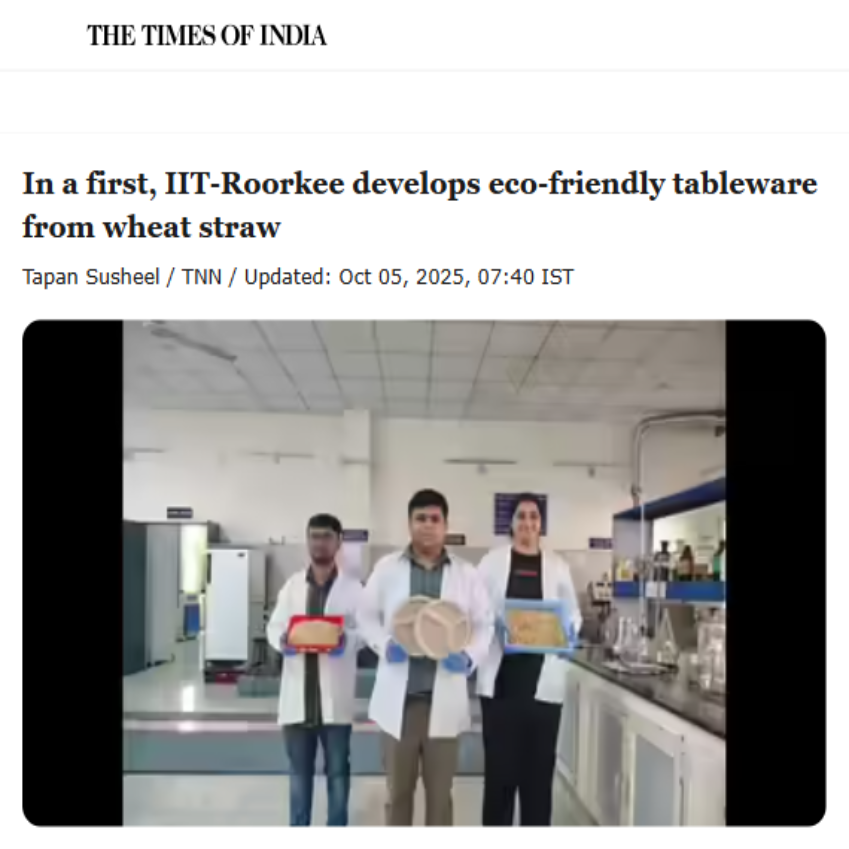
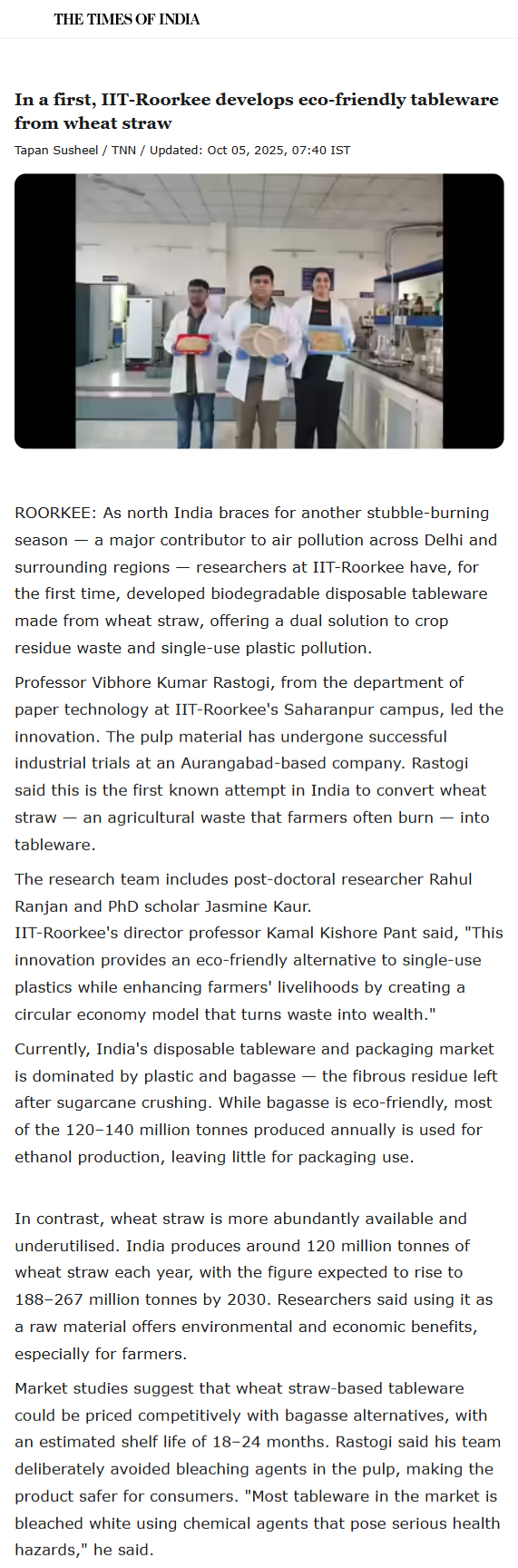
- As north India braces for another stubble-burning season — a major contributor to air pollution across Delhi and surrounding regions — researchers at IIT-Roorkee have, for the first time, developed biodegradable disposable tableware made from wheat straw, offering a dual solution to crop residue waste and single-use plastic pollution.
- Currently, India's disposable tableware and packaging market is dominated by plastic and bagasse — the fibrous residue left after sugarcane crushing. While bagasse is eco-friendly, most of the 120–140 million tonnes produced annually is used for ethanol production, leaving little for packaging use.
- In contrast, wheat straw is more abundantly available and underutilised. India produces around 120 million tonnes of wheat straw each year, with the figure expected to rise to 188–267 million tonnes by 2030. Researchers said using it as a raw material offers environmental and economic benefits, especially for farmers.
- Wheat straw-based tableware could be priced competitively with bagasse alternatives, with an estimated shelf life of 18–24 months. Rastogi said his team deliberately avoided bleaching agents in the pulp, making the product safer for consumers.