 Loading...
| Jan 01, 1970 | Daily Report |
| RISING BHARAT | News Count (103023) | |
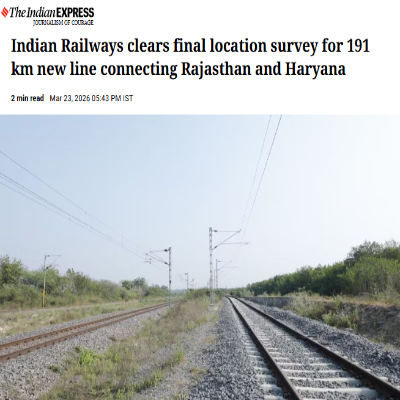
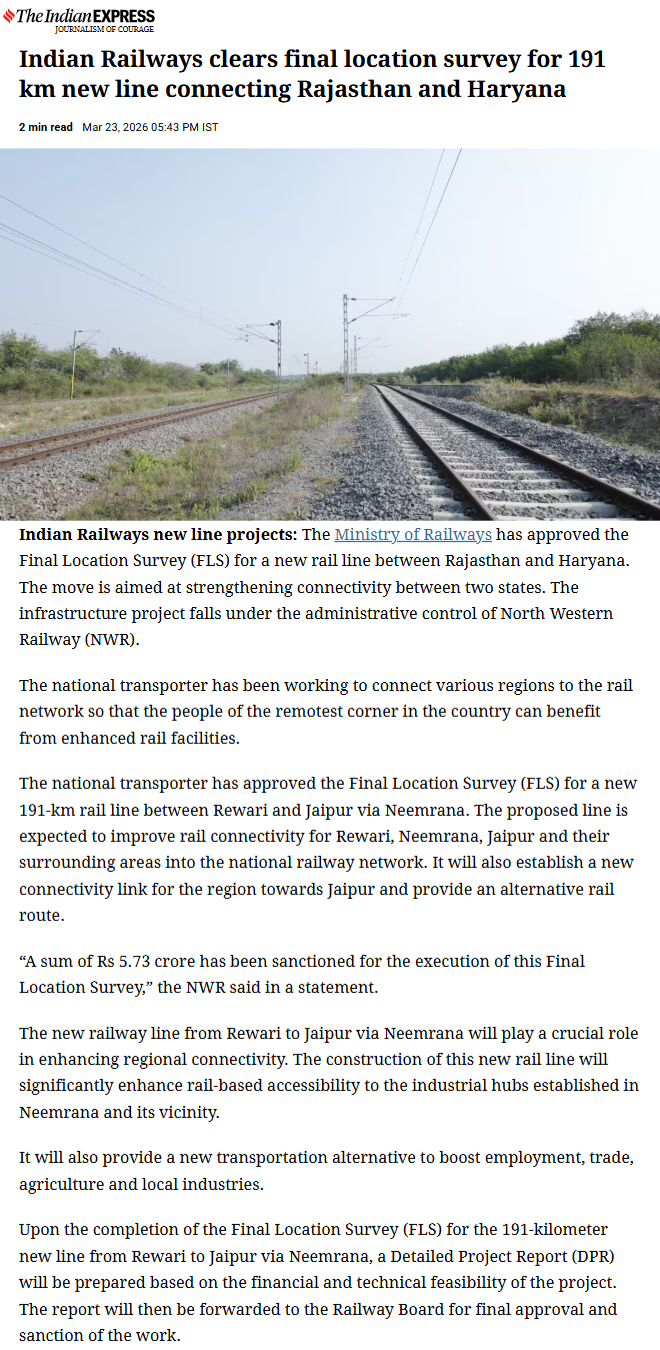
31. Indian Railways clears final location survey for 191 km new line connecting Rajasthan and Haryana
- On March 23 2026, Indian Railways cleared the Final Location Survey for a 191 km new railway line connecting parts of Rajasthan and Haryana to enhance regional rail connectivity.
- Indian Railways approved the project and will conduct the survey through technical teams, assessing alignment, feasibility, and costs to plan the construction of the new rail line between the two states.
- The proposed line aims to improve passenger and freight movement, support economic development, and strengthen infrastructure, forming part of broader railway expansion plans in northern India.
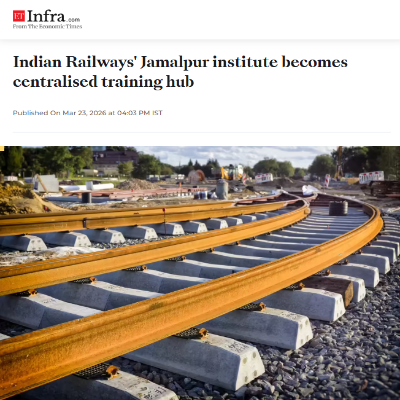
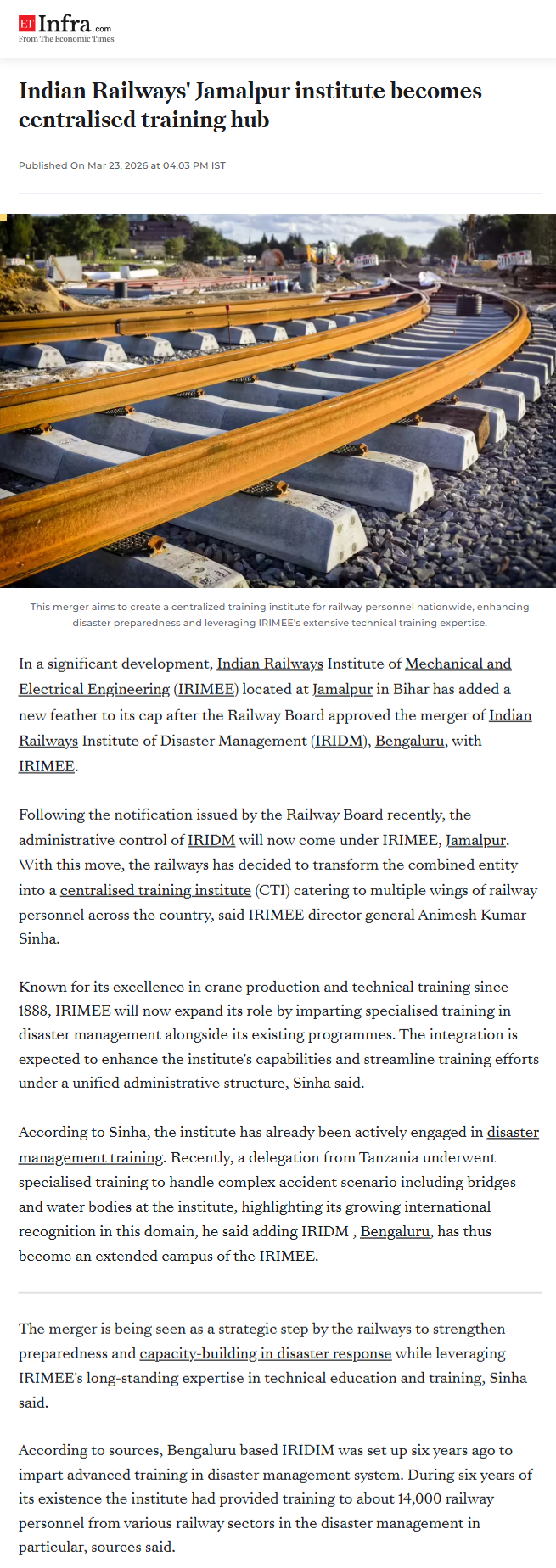
32. Indian Railways' Jamalpur institute becomes centralised training hub
- On March 23, 2026, Indian Railways designated the Jamalpur Institute in Bihar as a centralised training hub to strengthen workforce training and support modernization across the railway network.
- Indian Railways is implementing this by centralising training programs at Jamalpur, upgrading infrastructure, and conducting specialised technical and managerial courses to standardise skill development for railway personnel.
- The initiative aims to improve operational efficiency, safety, and technical expertise, positioning the historic institute as a key centre for advanced railway training and capacity building aligned with future infrastructure and technology needs.
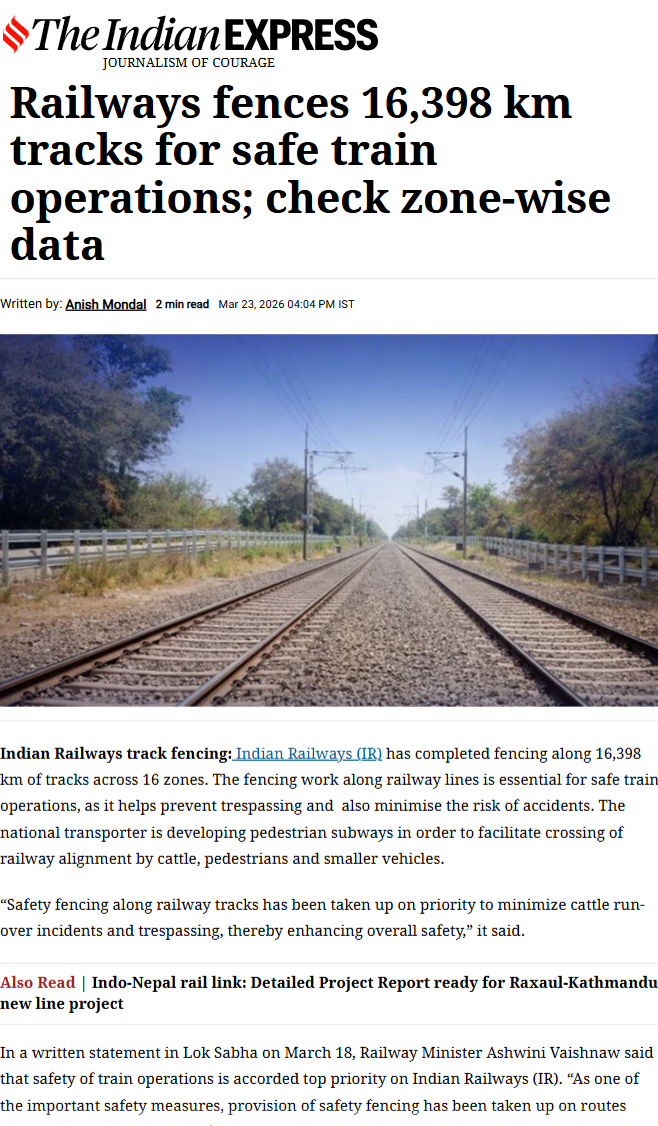
33. Railways fences 16,398 km tracks for safe train operations; check zone-wise data
- On March 23 2026, Indian Railways fenced 16,398 km of tracks across multiple railway zones in India to enhance safety and ensure smoother and safer train operations nationwide.
- Indian Railways implemented track fencing by installing physical barriers along vulnerable sections, prioritizing high-density and accident-prone routes to prevent trespassing, cattle intrusion, and reduce railway accidents.
- The fencing covers several zones with varying lengths, focusing on safety improvement, reduced fatalities, and operational efficiency, forming part of ongoing railway modernization and infrastructure upgrades across the national network.
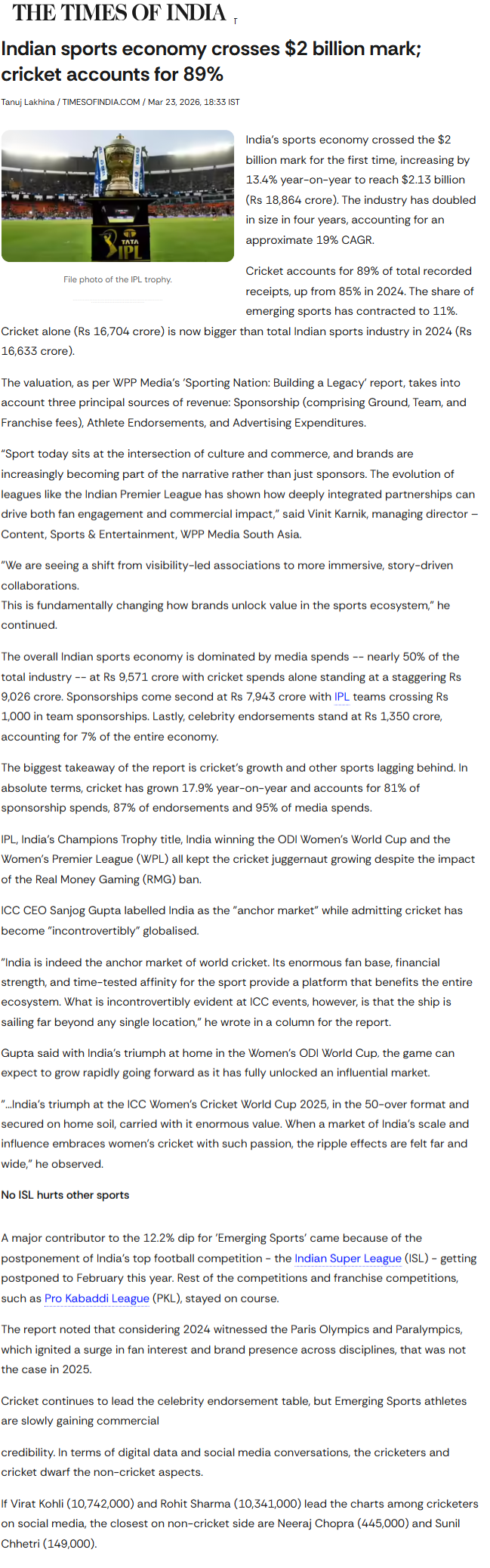
34. Indian sports economy crosses $2 billion mark; cricket accounts for 89%
- On March 23 2026, India’s sports economy surpassed $2 billion, according to national reports, highlighting significant growth in the sector, with cricket dominating revenue generation across the country.
- Sports bodies, leagues, broadcasters, and sponsors drove growth through media rights deals, advertising, sponsorships, and league-based models, with cricket contributing the majority share due to its popularity and commercial ecosystem.
- Cricket accounts for about 89% of the sports economy, while other sports contribute marginally, indicating a skewed structure and the need for diversification despite rising investments and growing interest in non-cricket sports.
Click here to find 174 similar incidents of Bharat Economic Growth -> Indian Economy
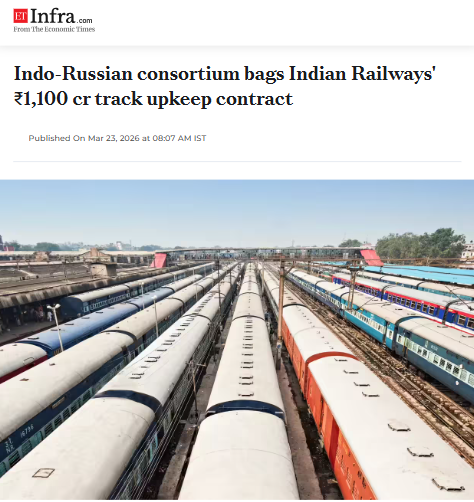
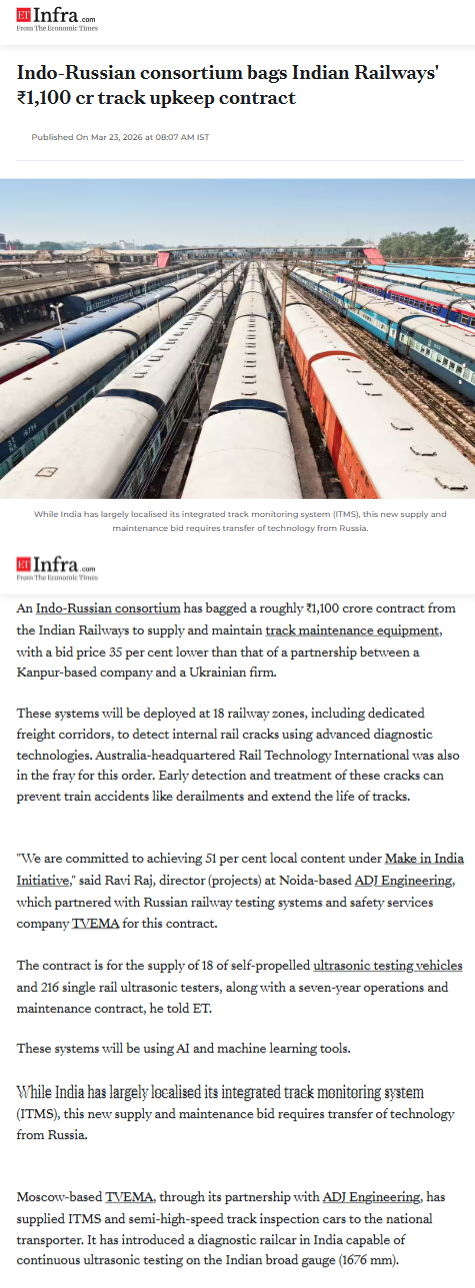
35. Indo-Russian consortium bags Indian Railways' ₹1,100 cr track upkeep contract
- On 23 March 2026, It was reported that, Indian Railways awarded a ₹1,100 crore contract to supply and maintain ultrasonic track inspection systems across 18 railway zones, including dedicated freight corridors, to detect internal rail cracks and prevent derailments.
- Noida-based ADJ Engineering, in partnership with Russian firm TVEMA, won the contract with a bid 35% lower than competitors, using AI and machine learning-enabled ultrasonic vehicles and testers with planned technology transfer.
- The contract includes 18 self-propelled ultrasonic vehicles, 216 rail testers, and a seven-year maintenance deal, with a commitment to 51% local content under Make in India, enhancing track monitoring and safety infrastructure.
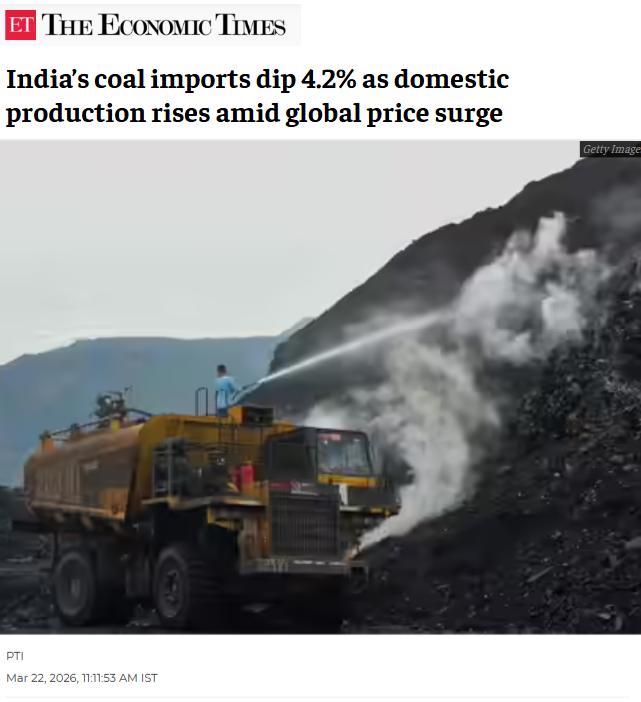
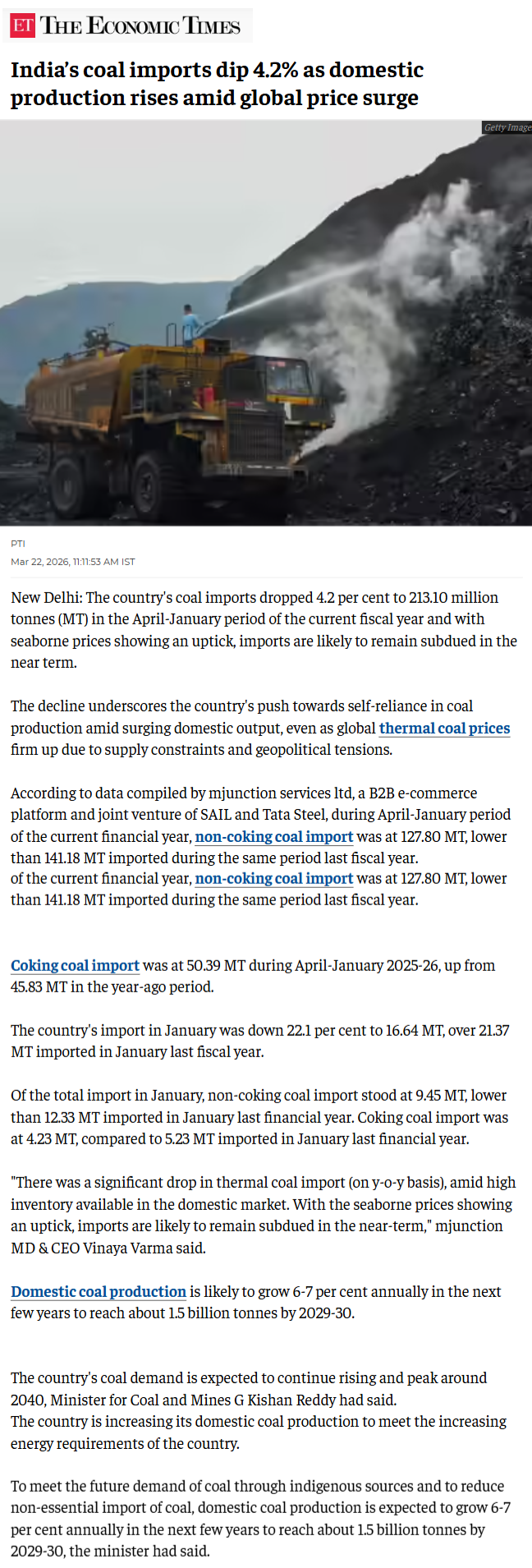
36. India’s coal imports dip 4.2% as domestic production rises amid global price surge
- On March 22, 2026, It was reported that the country's coal imports dropped 4.2 per cent to 213.10 million tonnes (MT) in the April-January period of the current fiscal year and with seaborne prices showing an uptick, imports are likely to remain subdued in the near term.
- According to data compiled by mjunction services ltd, a B2B e-commerce platform and joint venture of SAIL and Tata Steel, during April-January period of the current financial year, non-coking coal import was at 127.80 MT, lower than 141.18 MT imported during the same period 2025.
- Coking coal import was at 50.39 MT during April-January 2025-26, up from 45.83 MT in the year-ago period. The country's import in January was down 22.1 per cent to 16.64 MT, over 21.37 MT imported in January last fiscal year.
Click here to find 68 similar incidents of Bharat Economic Growth -> Reduced Imports
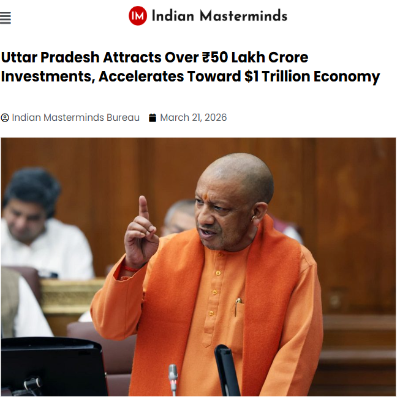
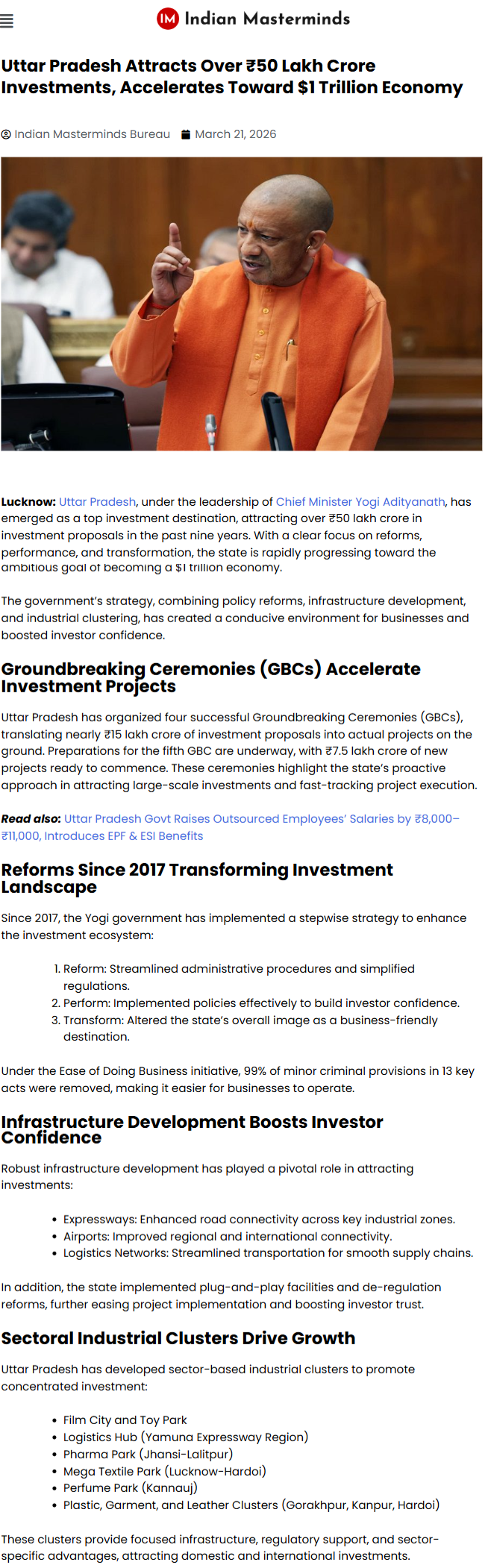
37. Uttar Pradesh Attracts Over ₹50 Lakh Crore Investments, Accelerates Toward $1 Trillion Economy
- On March 21, 2026, in Uttar Pradesh, the state attracted investment proposals exceeding ₹50 lakh crore, strengthening its roadmap toward becoming a $1 trillion economy through infrastructure growth and industrial expansion.
- The Government of Uttar Pradesh, led by the Chief Minister of Uttar Pradesh, is driving growth via investor-friendly policies, improved law and order, digital single-window clearances, and initiatives like Nivesh Mitra to boost domestic and global investments.
- The state’s GSDP is projected to reach ₹36 lakh crore with ~10.8% CAGR; MoUs worth ₹2.94 lakh crore were signed globally, and sectors like infrastructure, manufacturing, and services are key drivers of sustained economic expansion.
Click here to find 174 similar incidents of Bharat Economic Growth -> Indian Economy
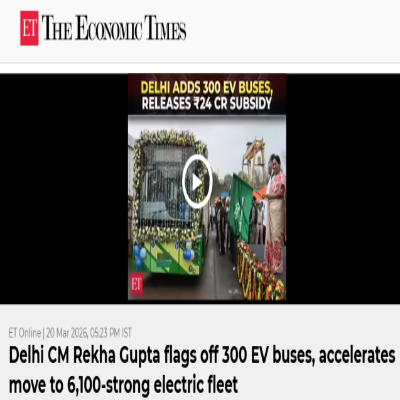
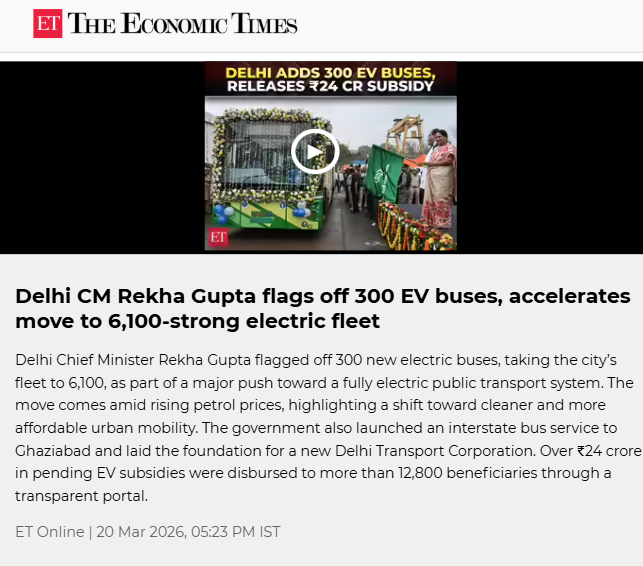
38. Delhi CM Rekha Gupta flags off 300 EV buses, accelerates move to 6,100-strong electric fleet
- On March 20, 2026, Delhi CM Rekha Gupta flagged off 300 electric buses in Delhi, advancing the city’s transition to a 6,100-strong electric public transport fleet to reduce pollution and promote sustainable mobility.
- The initiative is led by the Delhi government, implementing the EV rollout through state-run transport agencies, integrating modern charging infrastructure, and procuring buses via government contracts to expand the electric fleet efficiently.
- The new buses include environment-friendly, energy-efficient models with advanced features, supporting Delhi’s goal of lowering vehicular emissions, enhancing commuter comfort, and aligning with national renewable energy and climate action targets.
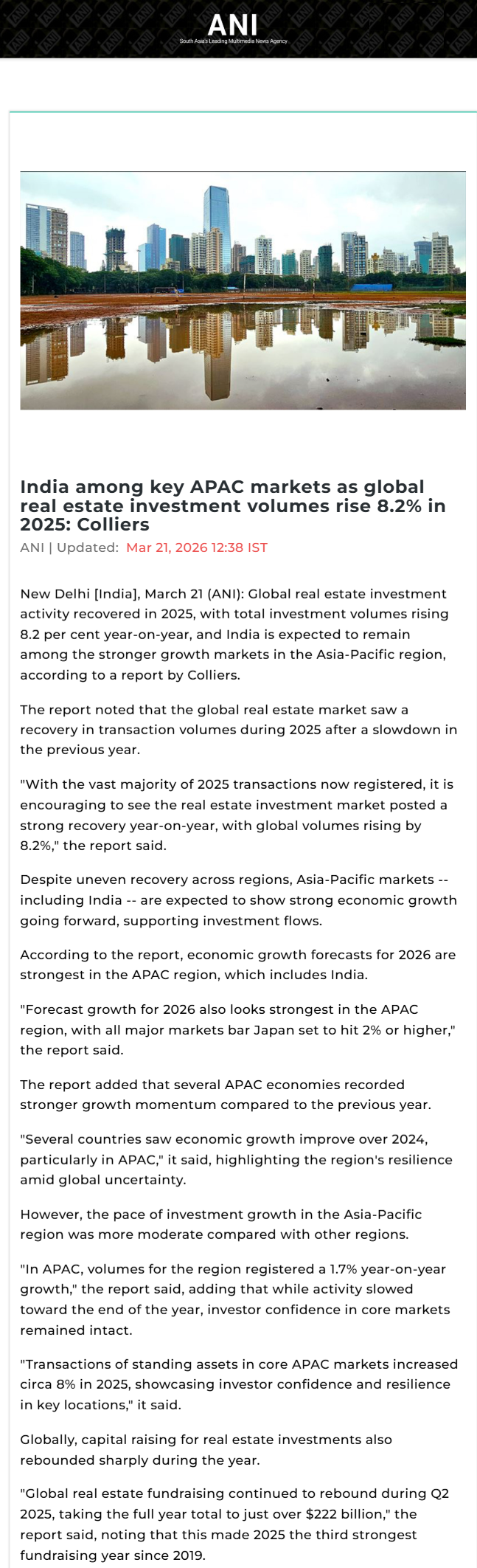
39. India among key APAC markets as global real estate investment volumes rise 8.2% in 2025: Colliers
- On March 21, 2026, it was reported that in 2025, across the Asia-Pacific (APAC) region, real estate investment volumes rose 8% year-on-year to USD 162 billion across nine major markets, reflecting improving market conditions and stronger deal activity.
- India emerged as a key APAC market, recording ~29% growth in investments, driven by strong domestic demand, cross-border capital inflows, and improved investor confidence.
- India’s institutional real estate investments reached about USD 8.5 billion in 2025, with foreign investors contributing ~43%, while office assets dominated inflows, highlighting strong occupier demand and sectoral growth.
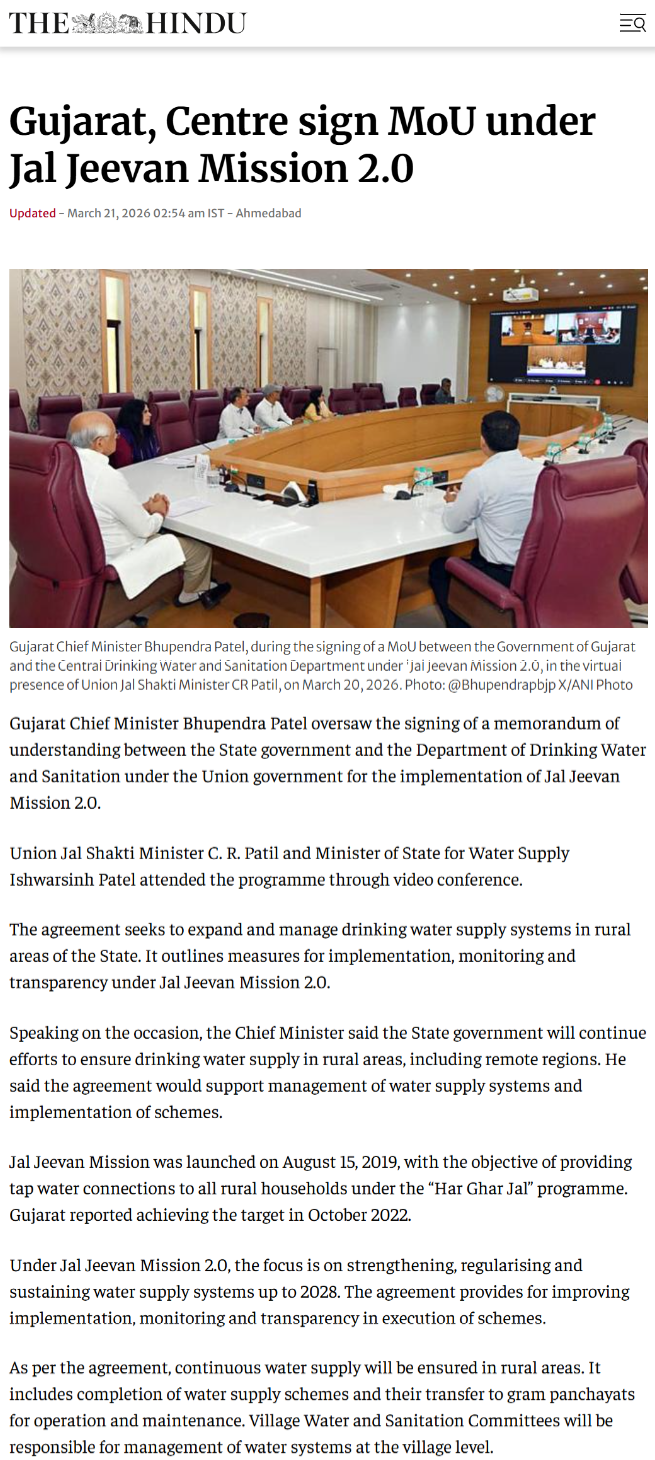
40. Gujarat, Centre sign MoU under Jal Jeevan Mission 2.0
- On March 21 2026, the Gujarat government and the Centre signed an MoU in Gujarat under Jal Jeevan Mission 2.0 to improve rural drinking water supply systems.
- The Government of Gujarat and the Central Government collaborated through an MoU, implementing projects to expand piped water supply, infrastructure development, and service delivery mechanisms.
- The initiative aims to ensure safe and adequate drinking water to rural households, strengthen water infrastructure, and support sustainable water management under the national Jal Jeevan Mission framework.