 Loading...
| Jan 01, 1970 | Daily Report |
| RISING BHARAT | News Count (102898) | |
2631. DRDO tests drogue parachutes for Isro's Gaganyaan Mission
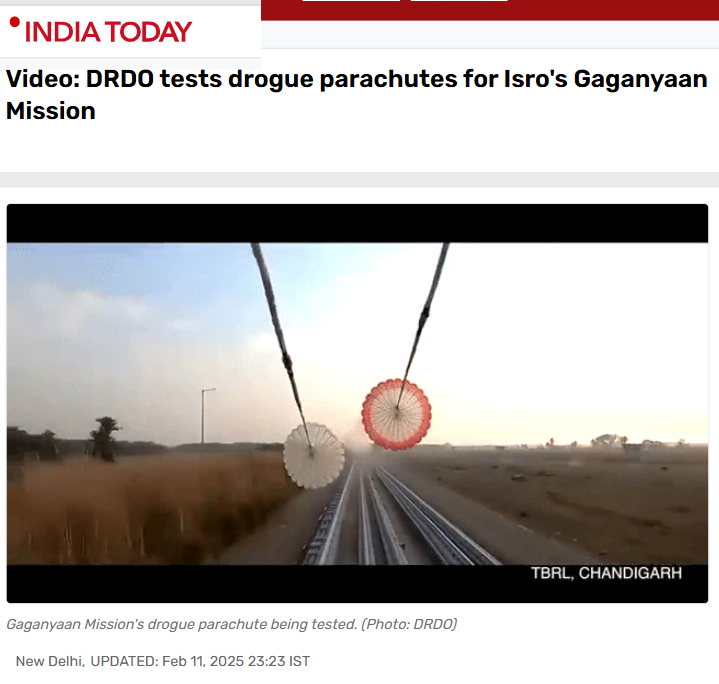
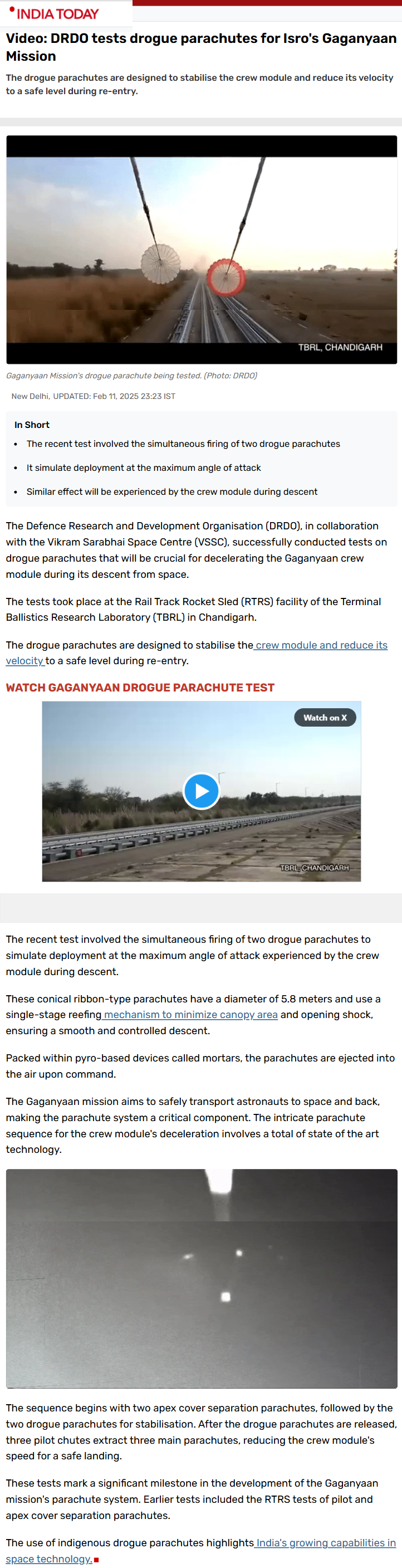
- On 12 february 2025 the Defence Research and Development organisation (DRDO), in collaboration with the Vikram Sarabhai Space Centre (VSSC), successfully conducted tests on drogue parachutes that will be crucial for decelerating the Gaganyaan crew module during its descent from space.
- The tests took place at the Rail Track Rocket Sled (RTRS) facility of the Terminal Ballistics Research Laboratory (TBRL) in Chandigarh.
- The Gaganyaan mission aims to safely transport astronauts to space and back, making the parachute system a critical component. The intricate parachute sequence for the crew module's deceleration involves a total of state of the art technology.
- The drogue parachutes are designed to stabilise the crew module and reduce its velocity to a safe level during re-entry.


2632. DRDO Displays Full-Scale AMCA Model, Next-Gen Missiles And Fighter Tech
- On 11 february 2025 the Defence Research and Development Organisation (DRDO) is participating in Aero India 2025, showcasing its latest advancements in defence technology at the Air Force Station Yelahanka in Bengaluru.
- For the first time, DRDO is presenting a full-scale model of India's first 5.5 Generation stealth fighter, the Advanced Medium Combat Aircraft (AMCA).
- The India Pavilion, dedicated to indigenous defence manufacturing, is highlighting India’s Make-in-India success story by featuring a range of state-of-the-art military technologies developed by DRDO, Defence PSUs, private industries, and start-ups

2633. Jammu Kashmir’s Panchayat Infra Strengthened with Rs 350 Cr Allocation: GoI
- On February 12, 2025, official data revealed that the Government of India has allocated ₹350.56 crore over the past three years for strengthening Panchayat infrastructure in Jammu & Kashmir and Ladakh under the Rashtriya Gram Swaraj Abhiyan (RGSA). The funds aim to enhance rural governance and digital infrastructure development in the region.
- Of the total allocation, ₹290.23 crore has been earmarked for constructing Panchayat Bhawans, ₹164.9 crore for establishing Common Service Centres (CSCs), and ₹6.31 crore for equipping Panchayats with computers to improve digital governance. Year-wise allocations include ₹104.6 crore (2022-23), ₹100 crore (2023-24), and ₹85.63 crore (2024-25) for Panchayat Bhawans. The CSCs received ₹55.3 crore in both 2022-23 and 2023-24, while the 2024-25 allocation slightly decreased to ₹54.3 crore.
- Jammu & Kashmir has made notable strides in digital governance, with 7,795 Gram Panchayats onboarded on the eGramSwaraj platform. Among them, 7,729 Panchayats actively conduct online transactions, reflecting significant progress in e-governance adoption. Meanwhile, Ladakh’s Panchayat digital transformation is progressing gradually, with a limited but growing adoption of e-governance tools.

2634. Nearly 1,000 Startups Thrive in Jammu and Kashmir as Government Expands Support
- On February 12, 2025, the Ministry of Commerce and Industry informed the Lok Sabha that 988 startups have been officially recognized in Jammu & Kashmir under the Startup India initiative as of December 31, 2024. This marks significant growth in the region’s entrepreneurial ecosystem, fueled by government incentives, funding access, and policy support.
- Launched on January 16, 2016, the Startup India initiative has provided financial aid, mentorship, and market access to emerging businesses. To enhance funding opportunities, the government has partnered with venture debt firms such as Stride Ventures and introduced schemes like the Fund of Funds for Startups (FFS), Startup India Seed Fund Scheme (SISFS), and the Credit Guarantee Scheme for Startups (CGSS). These efforts have enabled early-stage startups to scale operations and expand into new markets.
- Jammu & Kashmir’s startup landscape is diversifying across key sectors, including agriculture, handicrafts, tourism, and technology. The government is also focusing on global market expansion, fostering international collaborations, and promoting initiatives like the Startup Mahakumbh and the Bharat Startup Knowledge Access Registry (BHASKAR) to encourage networking and knowledge sharing among entrepreneurs.
Click here to find 60 similar incidents of FOCUS on JAMMU KASHMIR, LADAKH -> Government Schemes

2635. Over 91,000 Self-Help Groups Mobilised in Jammu Kashmir Under Rural Development Schemes
- On February 11, 2025, the Ministry of Rural Development revealed that 91,445 Self-Help Groups (SHGs) have been mobilized in Jammu & Kashmir, directly benefiting 797,805 households under various rural development schemes. The announcement was made in response to a question in the Lok Sabha, highlighting the impact of SHGs in financial inclusion, women’s empowerment, and sustainable livelihoods.
- The SHGs in Jammu & Kashmir operate primarily under Deendayal Antyodaya Yojana – National Rural Livelihoods Mission (DAY-NRLM) and Mahatma Gandhi National Rural Employment Guarantee Act (MGNREGA). These initiatives focus on organizing economically weaker women into SHGs, equipping them with resources and training to undertake income-generating activities. To further strengthen financial independence, the government has introduced sub-schemes such as the Mahila Kisan Sashaktikaran Pariyojana, Start-up Village Entrepreneurship Programme, and Deendayal Upadhyay Gramin Kaushalya Yojana, setting a goal for SHG members to earn at least ₹1 lakh annually.
- The government has also taken steps to boost SHG product sales by partnering with e-commerce platforms like Amazon, Flipkart, and Meesho under dedicated programs such as Flipkart Samarth and Amazon Saheli. Additionally, the eSaras platform has been launched to market SHG products nationwide, providing a digital marketplace for rural entrepreneurs.
Click here to find 60 similar incidents of FOCUS on JAMMU KASHMIR, LADAKH -> Government Schemes


2636. Meghalaya set to host 39th National Games in 2027
- On February 10, 2025, Meghalaya Sports Minister confirmed that the state has received official approval to host the 39th National Games in 2027. The announcement follows a meeting with Union Sports Minister, where Meghalaya’s bid to host the prestigious sporting event was given the green signal.
- The decision comes as the 38th National Games are currently being held in Uttarakhand. Hosting the next edition in 2027 is expected to be a huge boost for Meghalaya’s sports ecosystem, encouraging youth participation and infrastructural development. Minister emphasized that the state government is fully committed to investing in sports, ensuring that athletes receive the best facilities and training opportunities.
- Additionally, the sports minister lauded Meghalaya’s athletes for their strong performances at the ongoing National Championships in Uttarakhand, reinforcing the state’s growing presence in the national sports arena. The hosting of the National Games in 2027 is expected to drive economic growth, infrastructure improvements, and talent development, further positioning Meghalaya as a key player in India’s sports landscape.
Click here to find 759 similar incidents of North East India -> Infrastructure Development


2637. Meghalaya: Shillong's Concert Boom Drives ₹4,000 Crore Tourism Investment
- On February 10, 2025, the Meghalaya government announced a ₹4,000 crore investment in tourism infrastructure, leveraging Shillong’s booming live music scene to boost economic growth. The city, known as India’s "Rock Capital", has evolved into a major concert destination, attracting both tourists and investors.
- The city's rise as a music hub has significantly benefitted hotels, restaurants, and transport services, especially during high-profile concerts. Shillong has previously hosted performances by Bryan Adams, Akon, and Clean Bandit, and is now set to welcome Ed Sheeran’s Mathematics Tour, Mr. Big’s Farewell Tour, and Nick Carter’s Who I Am World Tour in February 2025. These events are expected to further boost local businesses and drive tourism-related revenue. The Cherry Blossom Festival’s success has already demonstrated Shillong’s potential as a leading cultural tourism destination.
- To support the growing influx of visitors, the government is expanding Shillong Airport’s runway to accommodate larger aircraft from Delhi, Mumbai, and Bengaluru. The investment plan includes the development of new hotels, homestays, and event venues to sustain the growing demand. Additionally, the Meghalaya Grassroots Music Project (MGMP) is providing performance opportunities and financial support to local musicians, ensuring that homegrown talent benefits from the city’s concert-driven economy.
Click here to find 103 similar incidents of North East India -> Tourism Industry
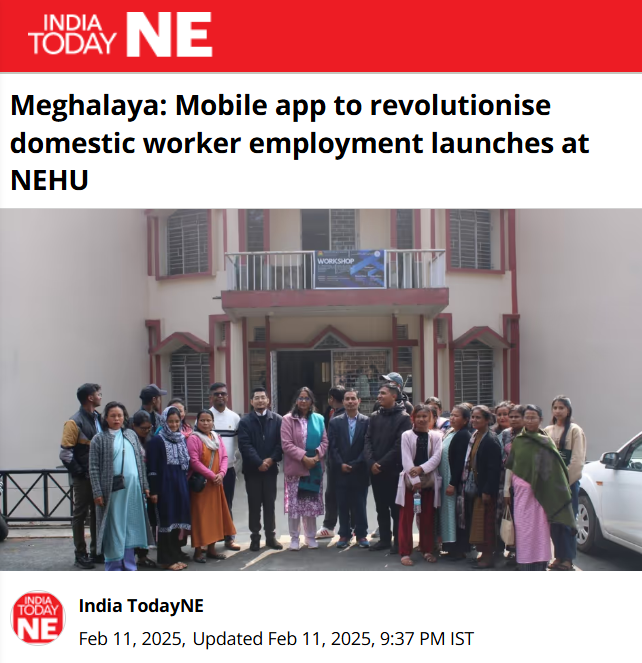
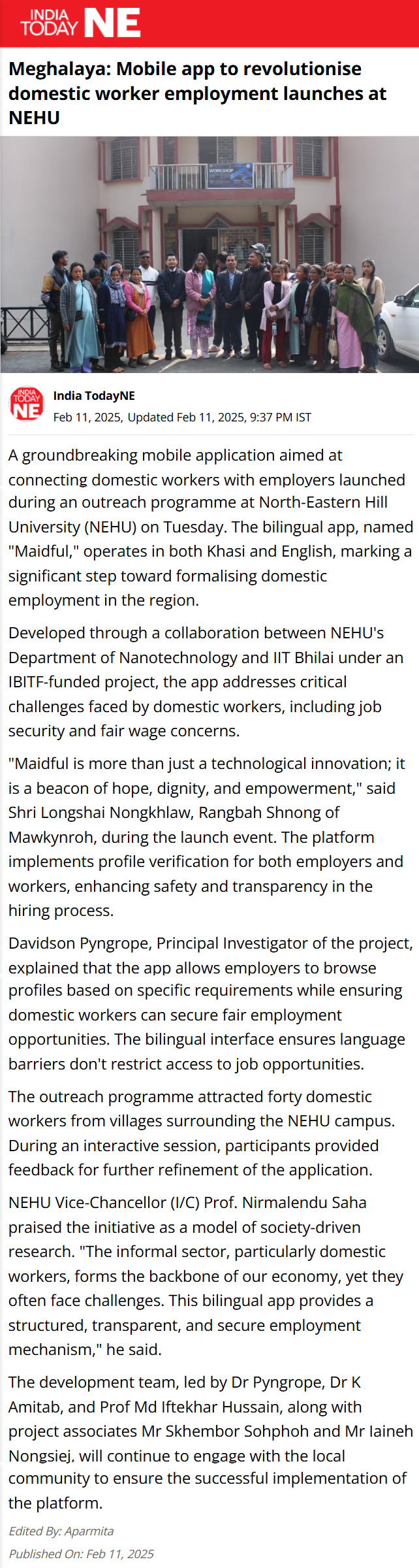
2638. Meghalaya: Mobile App to Revolutionise Domestic Worker Employment Launches at NEHU
- On February 11, 2025, a groundbreaking mobile application named "Maidful" was launched at North-Eastern Hill University (NEHU) to connect domestic workers with employers, addressing concerns over job security, fair wages, and employment transparency. The app, which operates in Khasi and English, aims to formalise domestic employment and improve conditions for workers.
- Developed through a collaboration between NEHU’s Department of Nanotechnology and IIT Bhilai, the app was funded under an IBITF project. It features profile verification for both employers and workers, ensuring safety, transparency, and structured hiring processes. The bilingual interface makes job opportunities accessible to a wider population. Principal Investigator Davidson Pyngrope highlighted that employers can browse profiles based on specific requirements, while domestic workers can secure stable and fair employment.
- The outreach programme at NEHU attracted 40 domestic workers from surrounding villages, allowing for community feedback and app refinements.
Click here to find 45 similar incidents of North East India -> Employment Generation
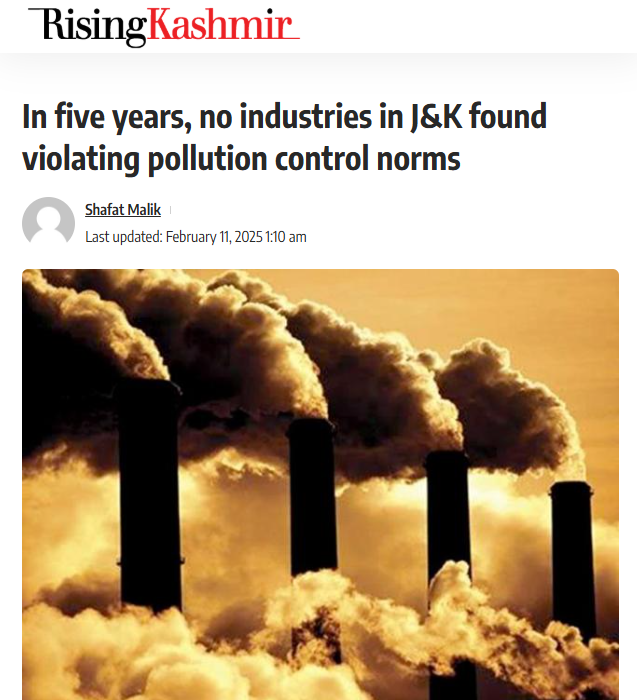
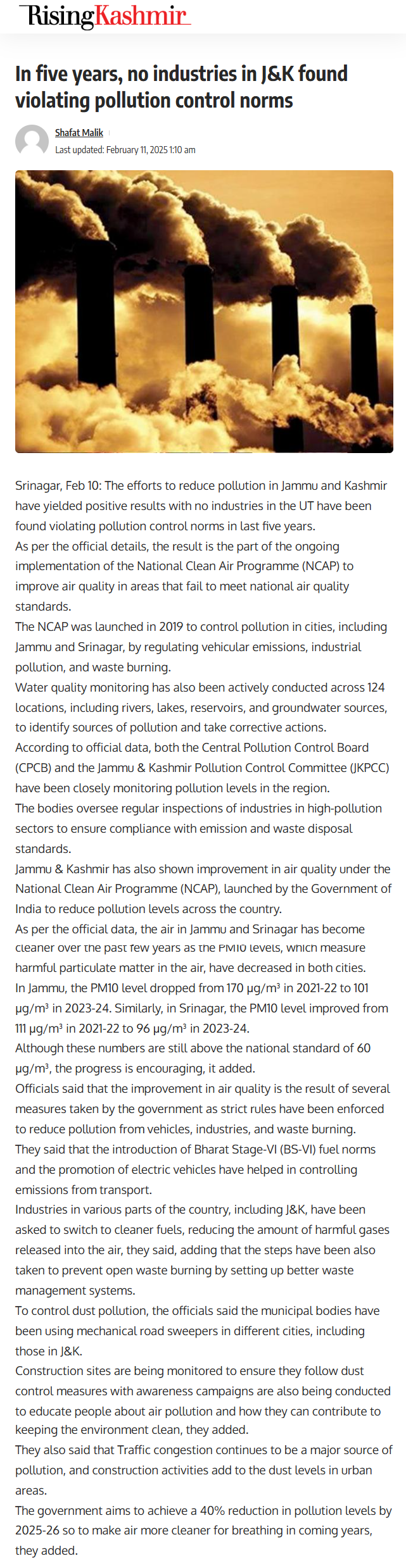
2639. In Five Years, No Industries in J&K Found Violating Pollution Control Norms
- On February 11, 2025, official data confirmed that no industries in Jammu & Kashmir have been found violating pollution control norms in the last five years, reflecting successful pollution reduction efforts in the region. This progress is part of the National Clean Air Programme (NCAP), launched in 2019 to improve air and water quality by regulating vehicular emissions, industrial pollution, and waste management.
- Water quality monitoring has been actively conducted across 124 locations, including rivers, lakes, reservoirs, and groundwater sources, ensuring pollution sources are identified and addressed. The Central Pollution Control Board (CPCB) and the J&K Pollution Control Committee (JKPCC) oversee regular industrial inspections to ensure compliance with emission and waste disposal standards. Air quality has also improved significantly—PM10 levels in Jammu have dropped from 170 µg/m³ in 2021-22 to 101 µg/m³ in 2023-24, while in Srinagar, levels improved from 111 µg/m³ to 96 µg/m³. While still above the national standard of 60 µg/m³, these improvements mark steady progress in reducing air pollution.
- The implementation of BS-VI fuel norms, promotion of electric vehicles, industrial transition to cleaner fuels, prevention of open waste burning, and adoption of mechanical road sweepers have played a vital role in pollution reduction. Construction sites are now closely monitored for dust control, and awareness campaigns educate citizens on maintaining clean air. Despite progress, traffic congestion and construction dust remain challenges, with the government aiming for a 40% reduction in pollution levels by 2025-26 to make the air even cleaner.
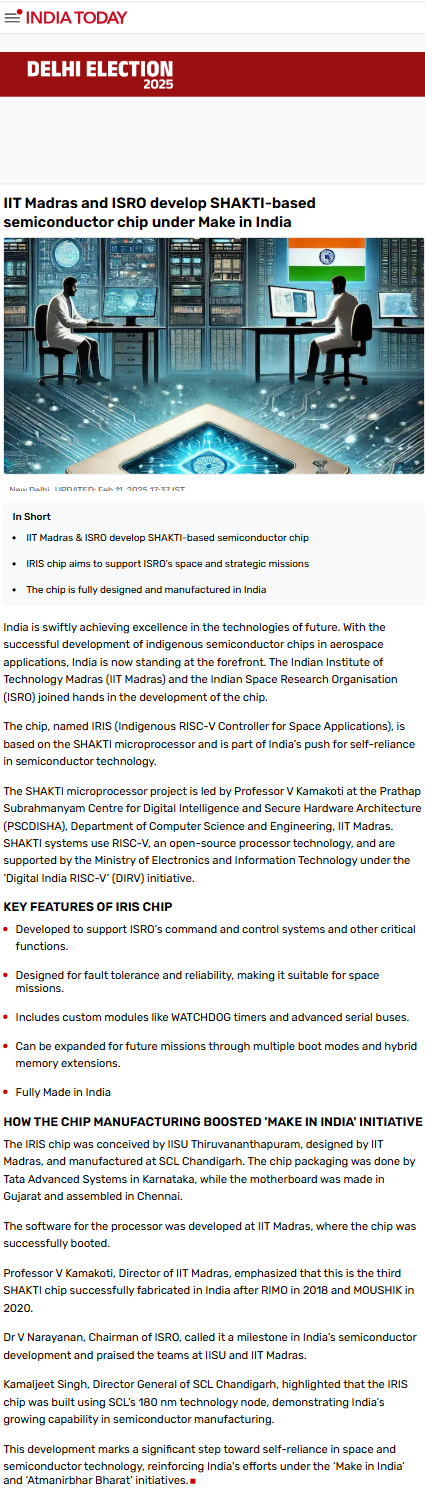
2640. IIT Madras and ISRO develop SHAKTI-based semiconductor chip under Make in India
- On February 11, 2025, India is swiftly achieving excellence in the technologies of future. With the successful development of indigenous semiconductor chips in aerospace applications, India is now standing at the forefront.
- . The Indian Institute of Technology Madras (IIT Madras) and the Indian Space Research Organisation (ISRO) joined hands in the development of the chip. The chip, named IRIS (Indigenous RISC-V Controller for Space Applications), is based on the SHAKTI microprocessor and is part of India’s push for self-reliance in semiconductor technology.
- The SHAKTI microprocessor project is led by Professor V Kamakoti at the Prathap Subrahmanyam Centre for Digital Intelligence and Secure Hardware Architecture (PSCDISHA), Department of Computer Science and Engineering, IIT Madras.