 Loading...
| Jan 01, 1970 | Daily Report |
| RISING BHARAT | News Count (102251) | |


441. India’s Pharma Exports Touch $30.47 Billion in FY25, Up 9.4%: PHARMEXCIL
- On 5 January 2026, PHARMEXCIL informed Commerce Secretary that India’s pharmaceutical exports reached $30.47 billion in FY 2024–25, growing 9.4 % year-on-year, with India remaining the third-largest pharma producer globally.
- The figures cover FY 2024–25, and India supplies medicines to over 150 countries. The domestic pharma market, now $60 billion, is projected to reach $130 billion by 2030.
- PHARMEXCIL held meetings with officials to align policies, boost industry–academia collaboration, and support initiatives like Chintan Shivir and iPHEX 2026, focusing on innovation, capacity building, market access, and global competitiveness, reinforcing India’s position as the “pharmacy of the world.”
Click here to find 860 similar incidents of Bharat Economic Growth -> Increasing Exports
442. Tripura Launches ₹48.94 Cr Tourism Projects Under Swadesh Darshan 2.0
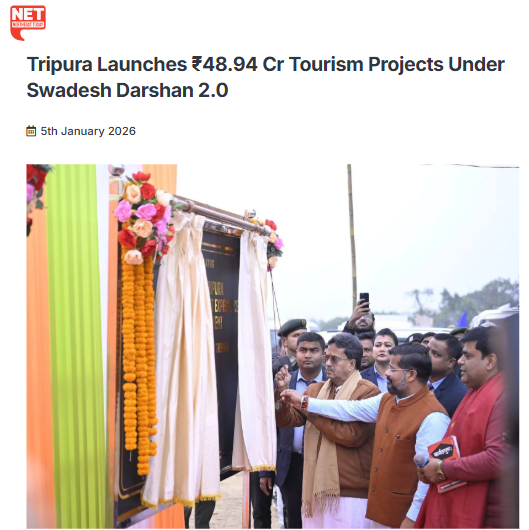
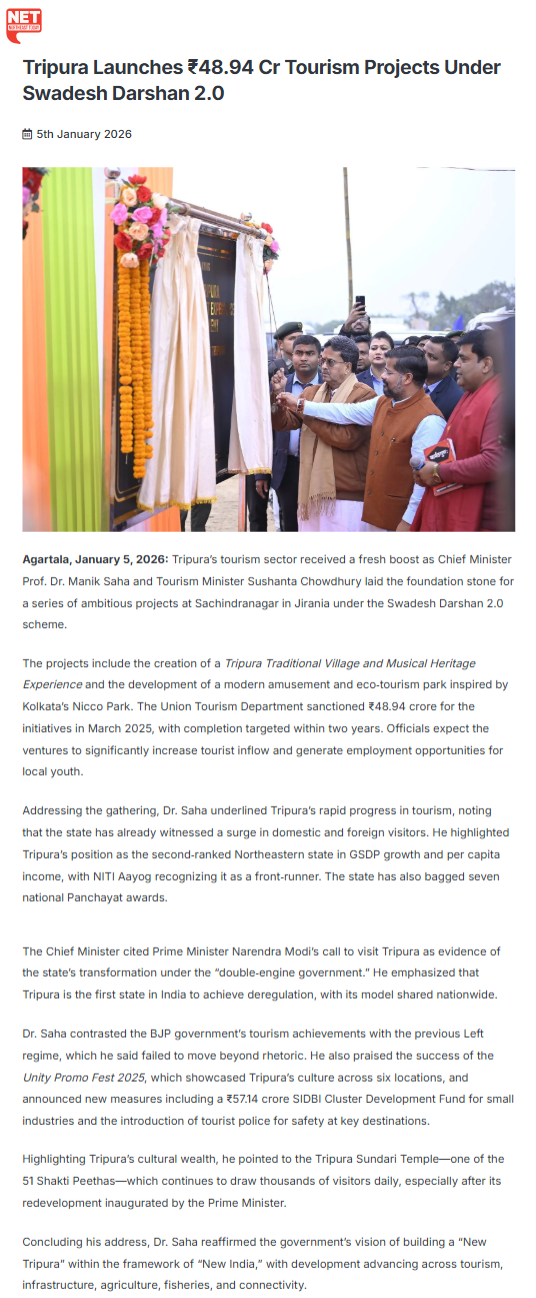
- On 5th January 2026, Tripura Chief Minister and Tourism Ministerlaid the foundation stone for ₹48.94 crore tourism projects at Sachindranagar, Jirania under the Swadesh Darshan 2.0 scheme, including a Tripura Traditional Village, Musical Heritage Experience, and a modern amusement and eco‑tourism park inspired by Kolkata’s Nicco Park.
- Sanctioned by the Union Tourism Department in March 2025, the projects are planned for completion within two years. They aim to enhance Tripura’s tourism infrastructure, attract more domestic and foreign visitors, and leverage sites like the Tripura Sundari Temple, a prominent Shakti Peetha.
- These initiatives are designed to boost tourist inflow, create employment for local youth, and promote Tripura’s cultural and ecological heritage. Additional measures include a ₹57.14 crore SIDBI Cluster Development Fund for small industries and the introduction of tourist police to improve safety at key destinations, contributing to the state’s vision of “New Tripura” within “New India”.
Click here to find 241 similar incidents of Make in India / Atmanirbhar -> Tourism
443. Indian Army sets up solar power plant in North Sikkim border village
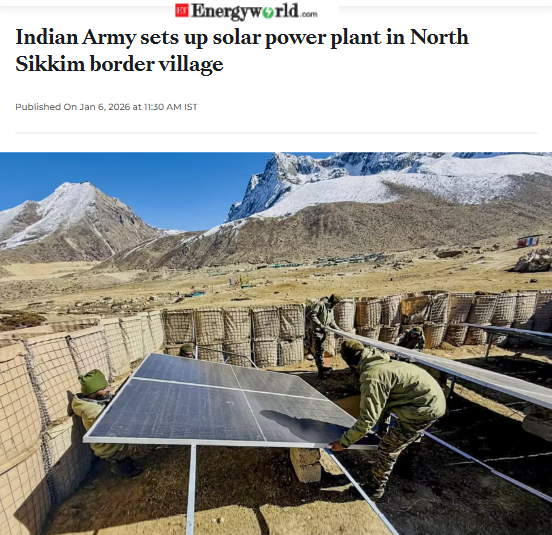
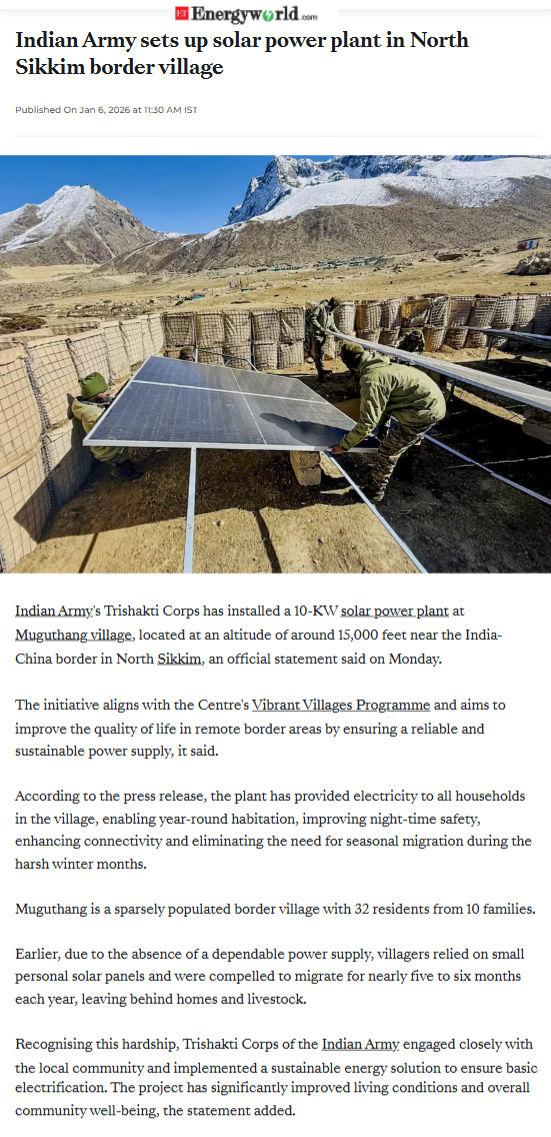
- On January 6,2026,the Indian Army’s Trishakti Corps has installed a 10‑kilowatt solar power plant in Muguthang village, a remote settlement near the India‑China border in North Sikkim, bringing a reliable source of electricity to all homes in the area.
- Commissioned in January 2026, the plant now operates at an altitude of around 15,000 feet, providing year‑round electricity to the village’s 32 residents from 10 families, which was previously without dependable power and forced to endure seasonal migration during harsh winters.
- Implemented under the Centre’s Vibrant Villages Programme, the project was developed in consultation with the local community to ensure basic electrification, enhance night‑time safety, improve connectivity, and significantly improve living conditions, enabling residents to stay in their homes throughout the year.
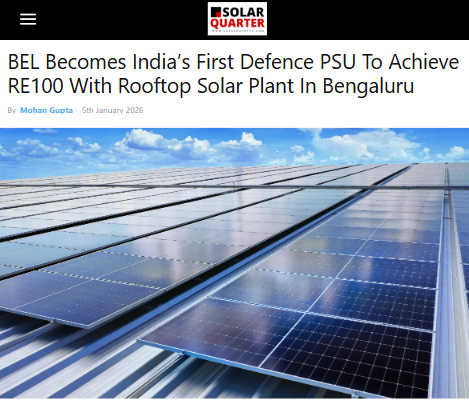
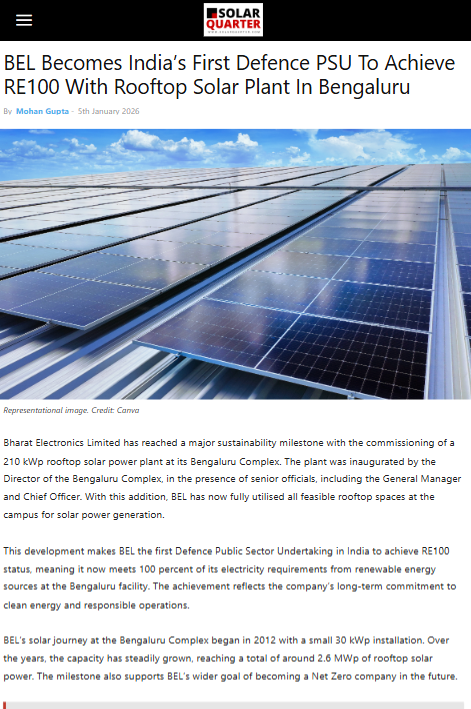
444. BEL Becomes India’s First Defence PSU To Achieve RE100 With Rooftop Solar Plant In Bengaluru
- On December 05, 2026 It was reported that, at the Bengaluru Complex, Bharat Electronics Limited commissioned a 210 kWp rooftop solar power plant, fully utilising all feasible rooftop spaces for solar generation.
- The plant was inaugurated by the Director of the Bengaluru Complex in the presence of senior officials, enabling BEL to achieve RE100 status by sourcing 100% of its electricity needs at the campus from renewable energy.
- BEL’s solar capacity at the campus has grown from 30 kWp in 2012 to about 2.6 MWp today; the milestone supports its long-term goal of becoming a Net Zero company and sets a benchmark for Defence PSUs.
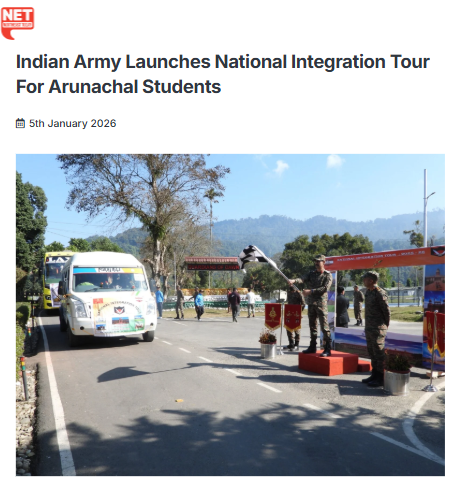
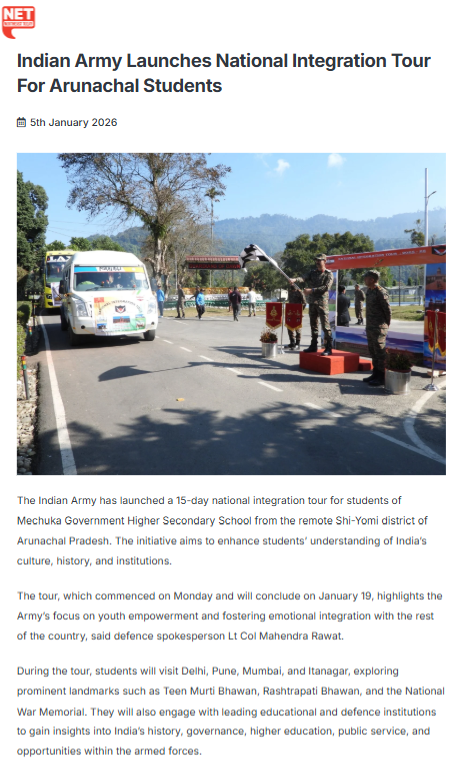
445. Indian Army Launches National Integration Tour For Arunachal Students
- On January 5, 2026 the Indian Army began a 15-day national integration tour for students of Mechuka Government Higher Secondary School from Shi-Yomi district, Arunachal Pradesh, concluding on January 19.
- The initiative, explained by defence spokesperson Mahendra Rawat, is being conducted through guided educational travel, institutional visits, and interactions aimed at youth empowerment and emotional integration with the nation.
- Students will visit Delhi, Pune, Mumbai, and Itanagar, including landmarks like Teen Murti Bhawan, Rashtrapati Bhawan, and the National War Memorial, while engaging with defence and educational institutions to learn about governance, history, and armed forces careers.
Click here to find 447 similar incidents of Government Initiatives for Citizens -> Citizen

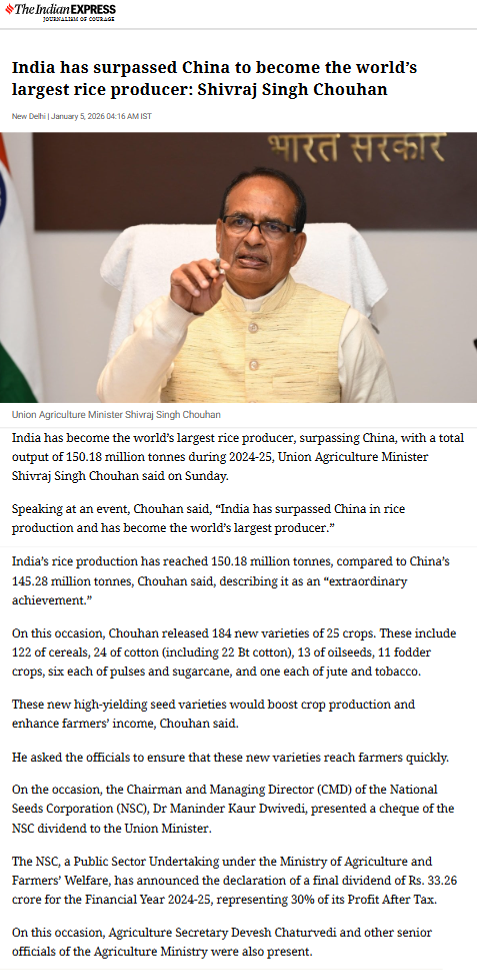
446. India has surpassed China to become the world’s largest rice producer: Shivraj Singh Chouhan
- On January 4, 2026 in India, Union Agriculture Minister announced that India became the world’s largest rice producer in 2024–25 with an output of 150.18 million tonnes, surpassing China.
- The achievement was driven by Indian farmers and agricultural institutions through improved farming practices and seed innovation, with the government supporting rapid dissemination of advanced, high-yield crop varieties to farmers nationwide.
- India produced 150.18 million tonnes of rice versus China’s 145.28 million; 184 new crop varieties were released, and National Seeds Corporation declared a ₹33.26 crore dividend for FY 2024–25, reflecting strong sector performance.
Click here to find 860 similar incidents of Bharat Economic Growth -> Increasing Exports
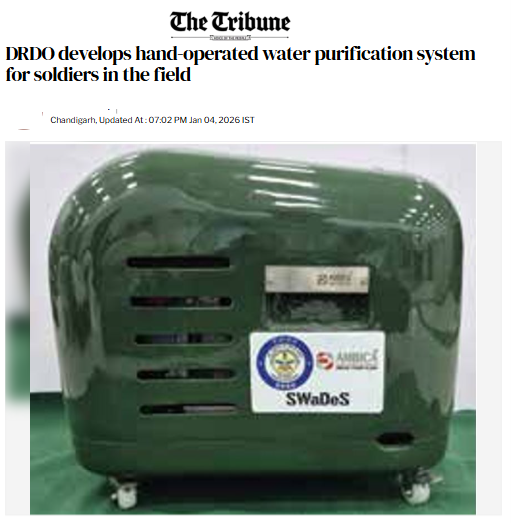
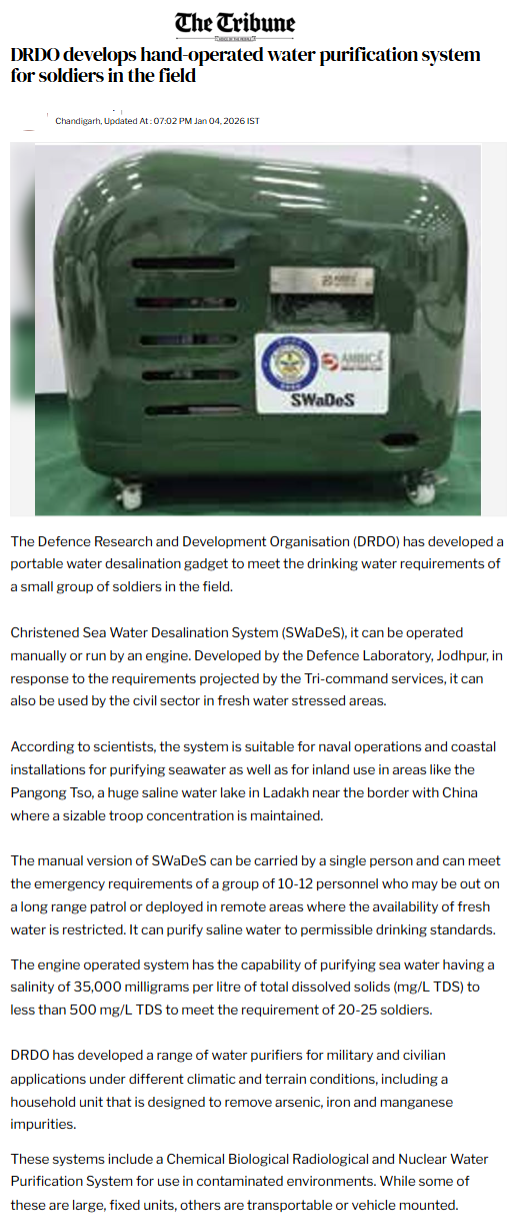
447. DRDO develops hand-operated water purification system for soldiers in the field
- On January 4,2026,DRDO has developed the Sea Water Desalination System (SWaDeS) through its Defence Laboratory, Jodhpur, to provide portable drinking water solutions for soldiers by converting saline and seawater into potable water, based on the operational requirements of the tri-services.
- Developed in January 2026, the system is designed for deployment in coastal, naval and inland saline regions such as Pangong Tso in Ladakh, where availability of fresh water is limited for troops stationed in remote and high-altitude areas.
- The manual version supports 10–12 soldiers in emergencies, while the engine-operated version purifies seawater with 35,000 mg/L TDS to below 500 mg/L TDS, supplying safe drinking water to 20–25 personnel; the technology can also be used in civilian water-stressed areas.
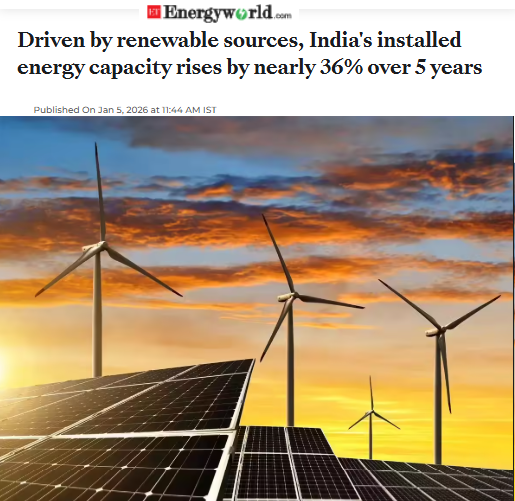
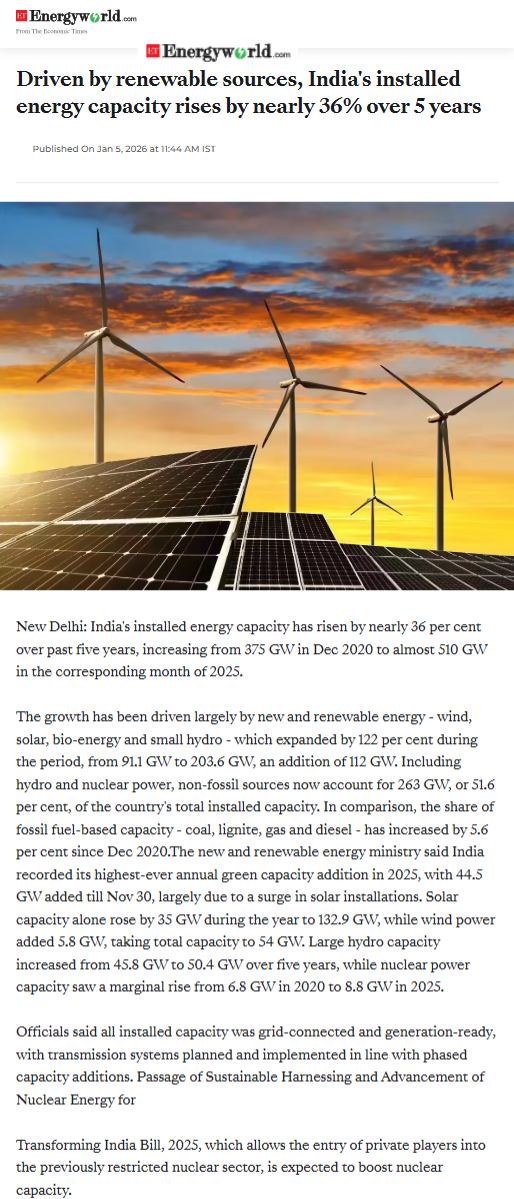
448. Driven by renewable sources, India's installed energy capacity rises by nearly 36% over 5 years
- On January 5,2026,it was Reported that India’s installed power capacity increased from 375 GW in December 2020 to nearly 510 GW by December 2025, registering about 36% growth, mainly driven by rapid expansion in renewable energy.
- Renewable sources such as solar, wind, bio-energy and small hydro grew by 122% to 203.6 GW, pushing non-fossil fuel capacity (including hydro and nuclear) to 51.6% of the total, marking a major clean-energy milestone.
- In 2025, India added a record 44.5 GW of green capacity, led by solar power, with all new projects grid-connected; the 2025 nuclear energy bill allowing private participation is expected to boost future capacity growth.
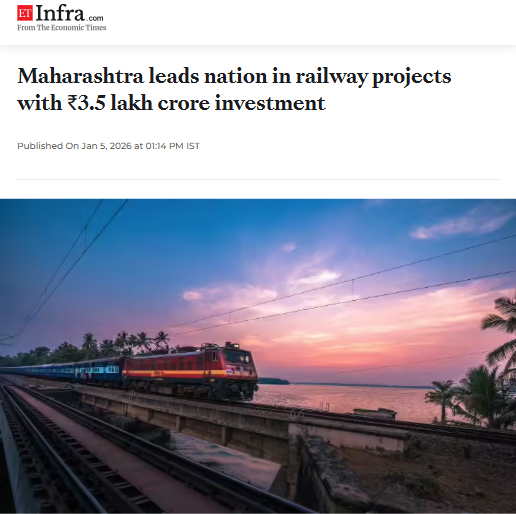
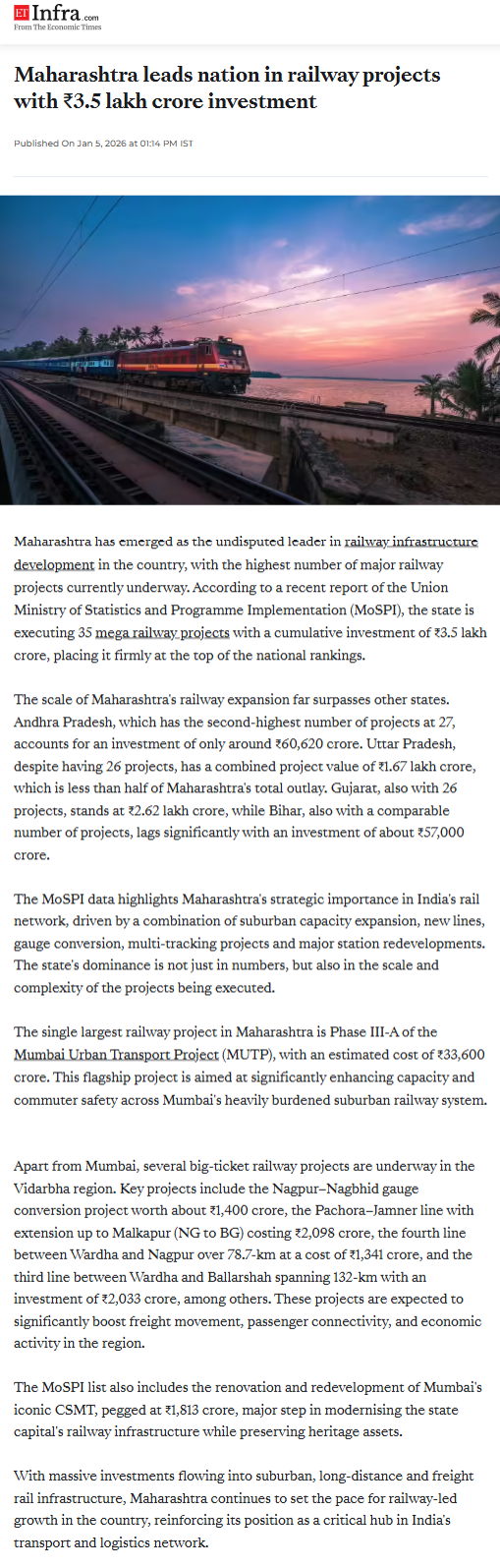
449. Maharashtra leads nation in railway projects with ₹3.5 lakh crore investment
- On January 5,2026,it was Reported that Maharashtra leads India in railway projects with 35 mega projects worth ₹3.5 lakh crore (2026), covering suburban expansion, new lines, multi-tracking, and station redevelopment, making it the top state in rail infrastructure.
- Key projects include MUTP Phase III-A (₹33,600 cr) for Mumbai suburban capacity, Vidarbha gauge conversions and new lines, and CSMT station redevelopment (₹1,813 cr), boosting commuter safety, freight movement, and connectivity.
- Maharashtra’s investment far exceeds other states Andhra Pradesh ₹60,620 cr, Uttar Pradesh ₹1.67 lakh cr, Gujarat ₹2.62 lakh cr showing strategic focus on regional rail growth and economic development.
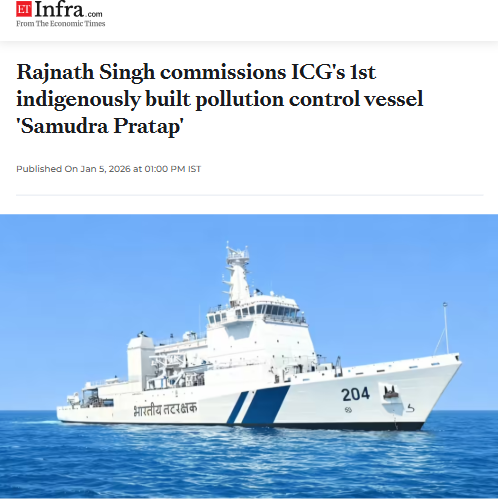

450. Rajnath Singh commissions ICG's 1st indigenously built pollution control vessel 'Samudra Pratap'
- On January 5, 2026, Defence Minister commissioned the Indian Coast Guard’s first indigenously built pollution control vessel, ICGS Samudra Pratap, at Goa Shipyard Limited (GSL), Goa. The 114.5‑m, 4,200‑tonne ship has over 60% indigenous content.
- The vessel will enhance marine pollution control, maritime law enforcement, search and rescue, and protect India’s Exclusive Economic Zone, showcasing India’s self-reliance in shipbuilding.
- Equipped with pollution response systems, advanced automation, fire-fighting equipment, and guns, the ship can sail 22+ knots with 6,000 nautical miles endurance. It will be based at Kochi and includes both men and women officers in frontline roles.